Quick answer
Best Alternatives to Sugar can be part of a balanced Indian diet, but health claims need context. The most useful questions are how much you eat, how the food is prepared, what you eat with it, and whether you have a condition that changes your dietary needs. This guide focuses on practical, evidence-informed choices rather than miracle-food claims.
🔬 Why Refined Sugar Is Particularly Harmful for Indians
Refined white sugar is chemically sucrose — 50% glucose + 50% fructose. Stripped of all nutrients during refining, it provides only 'empty calories.' The specific harms for Indians are compounded by our genetics:
Insulin resistance susceptibility: Indians have genetically higher insulin resistance than Western populations at equivalent BMI. Sugar consumption — which spikes insulin repeatedly throughout the day — worsens this underlying susceptibility, accelerating progression to type 2 diabetes.
Fructose and fatty liver: The fructose component of sucrose is metabolised exclusively in the liver. Excess fructose (from sugar in chai, sweets, juices, and packaged foods) directly contributes to non-alcoholic fatty liver disease (NAFLD), which affects 27% of Indians.
Advanced Glycation End-products (AGEs): Excess blood sugar reacts with proteins in a process called glycation, forming harmful AGEs that accelerate aging, damage blood vessels, nerves, kidneys, and eyes. Indians with high sugar diets and genetic diabetes susceptibility face this damage at younger ages than Western populations.
📊 Sugar Alternatives: Comprehensive Comparison Chart
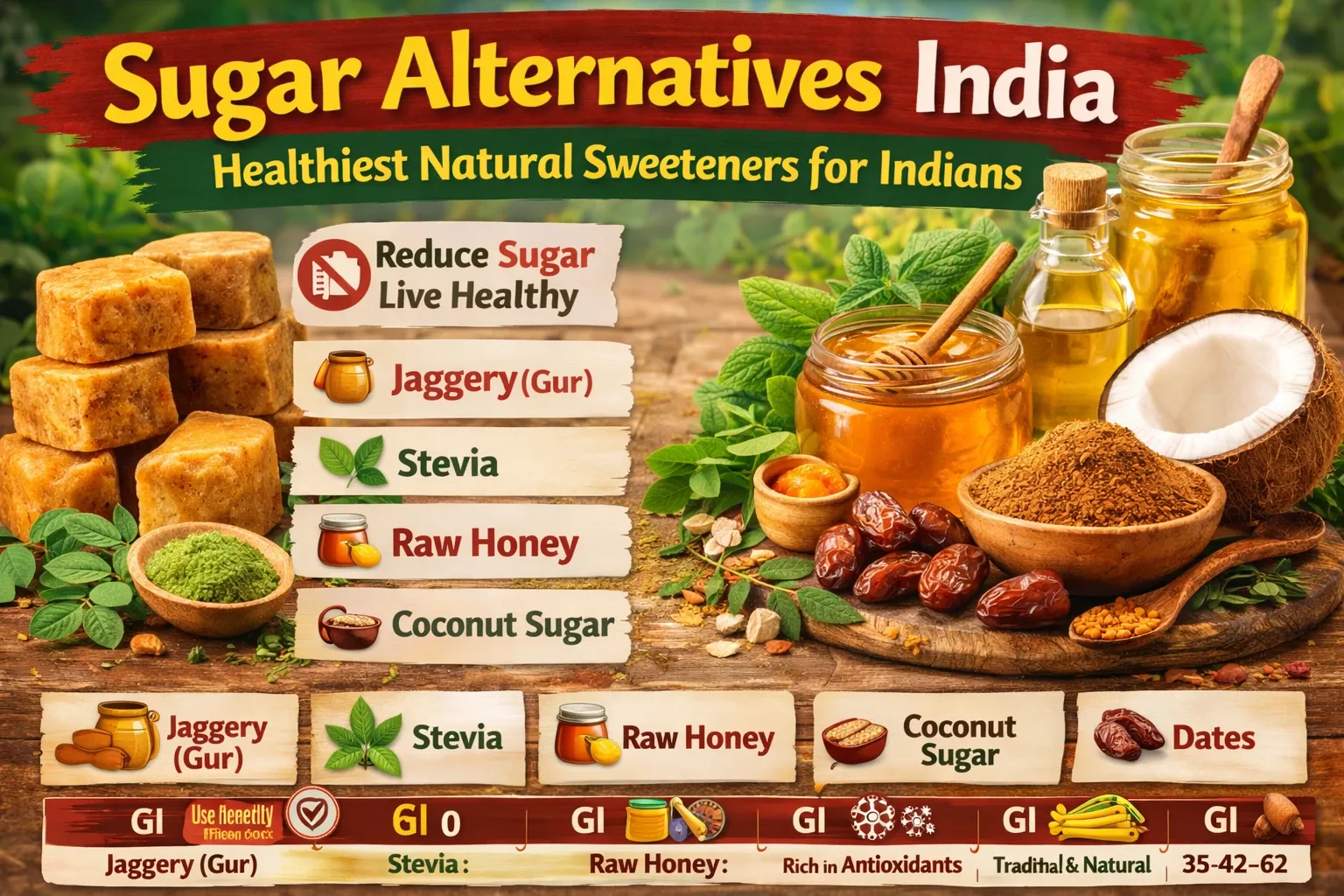
| Sweetener | GI (Glycaemic Index) | Calories/tsp | Sweetness vs Sugar | Key Benefit | Key point |
|---|---|---|---|---|---|
| White Sugar | 65 (reference) | 16 | 1× (reference) | None | ⭐ |
| Jaggery (Gur) | 84 | 15 | 0.7× | Iron, minerals, antioxidants | ⭐⭐⭐ |
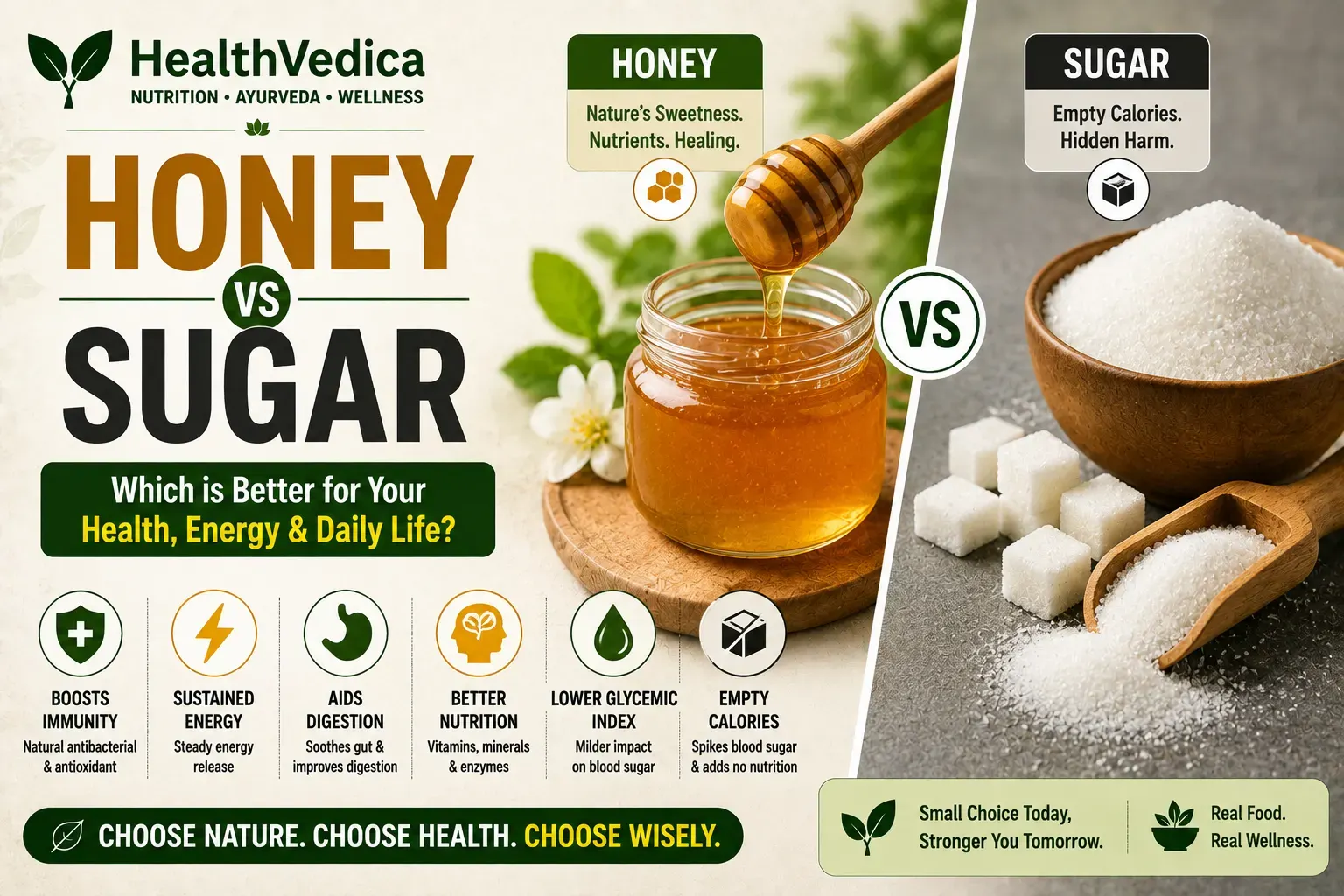
| Raw Honey | 58 | 21 | 1.5× | Antioxidants, antimicrobial | ⭐⭐⭐⭐ |
| Coconut Sugar | 35–54 | 15 | 0.9× | Inulin, low GI | ⭐⭐⭐⭐ |
| Dates (whole) | 42–62 | 20/date | Variable | Fibre, potassium, magnesium | ⭐⭐⭐⭐⭐ |
| Stevia | 0 | 0 | 200–300× | Zero calories, zero GI | ⭐⭐⭐⭐⭐ |
| Monk Fruit (Luo Han Guo) | 0 | 0 | 100–250× | Zero calories, antioxidants | ⭐⭐⭐⭐⭐ |
| Mishri (Rock Sugar) | ~65 | 16 | 1× | More crystalline, less processed | ⭐⭐ |
| Artificial Sweeteners (Aspartame, Sucralose) | 0 | 0 | 200–600× | Zero calories (but concerns exist) | ⭐⭐ |
✅ Best Sugar Alternatives for Indians
1. Dates (Khajur) — Nature's Perfect Sweetener
Whole dates are our top recommendation for Indians seeking to reduce sugar. Unlike all other sweeteners, dates come packaged with fibre (6.7g per 100g), potassium (696mg), magnesium, B vitamins, and antioxidants. The fibre slows sugar absorption, resulting in a moderate glycaemic response despite their natural sugar content. Two Medjool dates provide 30–35 calories of natural sweetness plus nutrition. Use dates to sweeten: energy balls/ladoos, smoothies, chutneys (tamarind-date), porridges, and Indian desserts like halwa. Blend soaked dates into a smooth paste as a direct sugar substitute in baking.
2. Stevia — Zero-Calorie Natural Option
Stevia is extracted from the leaves of Stevia rebaudiana — a South American plant. The active compounds (steviosides and rebaudiosides) are 200–300× sweeter than sugar with zero calories, zero glycaemic impact, and actually demonstrated blood sugar-lowering properties in clinical studies. Stevia reduces blood glucose, imsuggests insulin sensitivity, and may reduce blood pressure. For diabetics and weight-loss seekers, stevia is the gold-standard sweetener. Available in India as stevia powder, liquid drops, and stevia-sweetened products. Choose pure stevia extract without added maltodextrin or artificial sweeteners. The slight bitter aftertaste of stevia can be reduced by using it in combination with a small amount of jaggery.
3. Jaggery (Gur) — India's Traditional Smart Sweetener
Jaggery has a higher glycaemic index than white sugar (84 vs 65), which surprises many people. However, it retains iron (11mg/100g — significant for Indian women with anaemia), calcium, phosphorus, and antioxidants lost in white sugar refining. It also contains small amounts of B vitamins and minerals from sugarcane. For people who are not diabetic or overweight, jaggery is a meaningful upgrade from white sugar — providing real micronutrients alongside sweetness. For diabetics, jaggery is not a safe alternative due to its high GI. Use jaggery in traditional preparations where its earthy flavour enhances the dish: pongal, til ladoo, chikki, tamarind-jaggery chutneys, and traditional Indian sweets.
4. Coconut Sugar — Lowest GI Plant-Based Option
Made from the sap of coconut palm flowers, coconut sugar retains inulin (a prebiotic fibre), iron, zinc, calcium, and potassium absent from refined sugar. Its glycaemic index (35–54) is significantly lower than white sugar (65), making it a better choice for blood sugar management. It has a natural caramel-like flavour that works excellently in Indian sweets, chai, and baking. The main limitation: it's expensive (₹400–600 per kg) and contains comparable calories to sugar. Use it as a 1:1 sugar replacement in recipes.
5. Raw Honey (Shehad) — Ayurveda's Golden Sweetener
Raw, unprocessed honey (not commercially heated honey) contains flavonoids, organic acids, enzymes, and antimicrobial compounds. Its glycaemic index (58) is lower than white sugar, and its superior sweetness (1.5× sweeter) means you use less. Ayurveda prescribes honey extensively — but always raw and never heated (heating honey above 40°C creates hydroxymethylfurfural, which Ayurveda considers toxic). Use honey in post-cooking applications: drizzle on roti, add to yoghurt, use in marinades, or mix into room-temperature beverages. Pure, unheated honey is best — local varieties (Kashmiri, Nilgiri, Sundarbans) are superior to commercially blended products.
🌿 Ayurvedic Perspective on Sweeteners
Ayurveda classifies sweet taste (Madhura Rasa) as nourishing, building, and calming — essential in appropriate quantities. Classical texts describe six natural sweeteners: Sharkara (sugarcane sugar) — mildly useful; Guda (jaggery) — more nutritious than refined sugar; Madhu (honey) — most therapeutic, used raw; Kshira Sharkara (mishri/rock sugar) — lightest, most Sattvic sweetener, excellent for children and Vata; Khajur (dates) — nourishing, building; Draksha (raisins) — mild, balancing.
Ayurveda strictly prohibits heating honey — a recommendation now validated by chemistry (HMF formation). Modern stevia and coconut sugar would likely be classified as Laghu (light) and suitable for Kapha types.
🚫 Sweeteners to Approach with Caution
Artificial sweeteners (Aspartame, Sucralose, Saccharin): Despite zero calories, emerging research shows artificial sweeteners may alter gut microbiome composition, paradoxically increase sweet cravings, and may not reduce diabetes risk as expected. A 2023 WHO report concluded there is insufficient evidence to recommend artificial sweeteners for weight management and raised long-term safety concerns. The Indian context: avoid sucralose and aspartame in packaged foods; choose natural zero-calorie options (stevia, monk fruit) instead.
Agave Syrup: Often marketed as healthy, agave syrup is 70–90% fructose — higher than high-fructose corn syrup. The low GI is misleading because fructose doesn't raise blood glucose the same way, but it directly contributes to fatty liver and metabolic syndrome. Avoid agave.
💡 Practical Sugar Reduction Strategy for Indians
Chai revolution: India's sugar is largely consumed in daily chai. Progressively reduce: from 2 tsp to 1.5 tsp to 1 tsp to ½ tsp to 0 over 4 weeks. Add ½ tsp cinnamon to chai — natural sweetness without sugar. Try adding 2–3 drops stevia liquid — eliminating sugar entirely with no taste compromise.
Cooking substitutions: Replace sugar in halwa and Indian sweets with date paste (blend 10 soaked dates into a smooth paste — use equal weight to sugar). Use jaggery in traditional savoury-sweet preparations (chutneys, rasam, pongal). Use coconut sugar for baked goods. Sweeten lassi and chaas with 1–2 ripe bananas instead of sugar.
Read labels: Sugar hides in Indian packaged foods under 20+ names: sucrose, glucose syrup, maltose, dextrose, corn syrup, fructose, cane juice, fruit concentrate. The most effective intervention: cook from scratch using whole ingredients and control every sweetener addition yourself.
Sources and context
Nutrition guidance in this article is framed around Indian dietary guidance from ICMR–National Institute of Nutrition (ICMR-NIN). Where Ayurveda is discussed, it is presented as a traditional framework and kept separate from modern clinical evidence. The Ministry of AYUSH's published guidance emphasises factors such as food quality, preparation, quantity, timing and individual suitability; these principles are useful context, but they should not be treated as a substitute for diagnosis or medical treatment.
Important: Nutrition needs vary with age, pregnancy, medications and medical conditions. If you have diabetes, kidney disease, coeliac disease, a food allergy or another diagnosed condition, use personalised advice from a qualified clinician or dietitian.