Quick answer
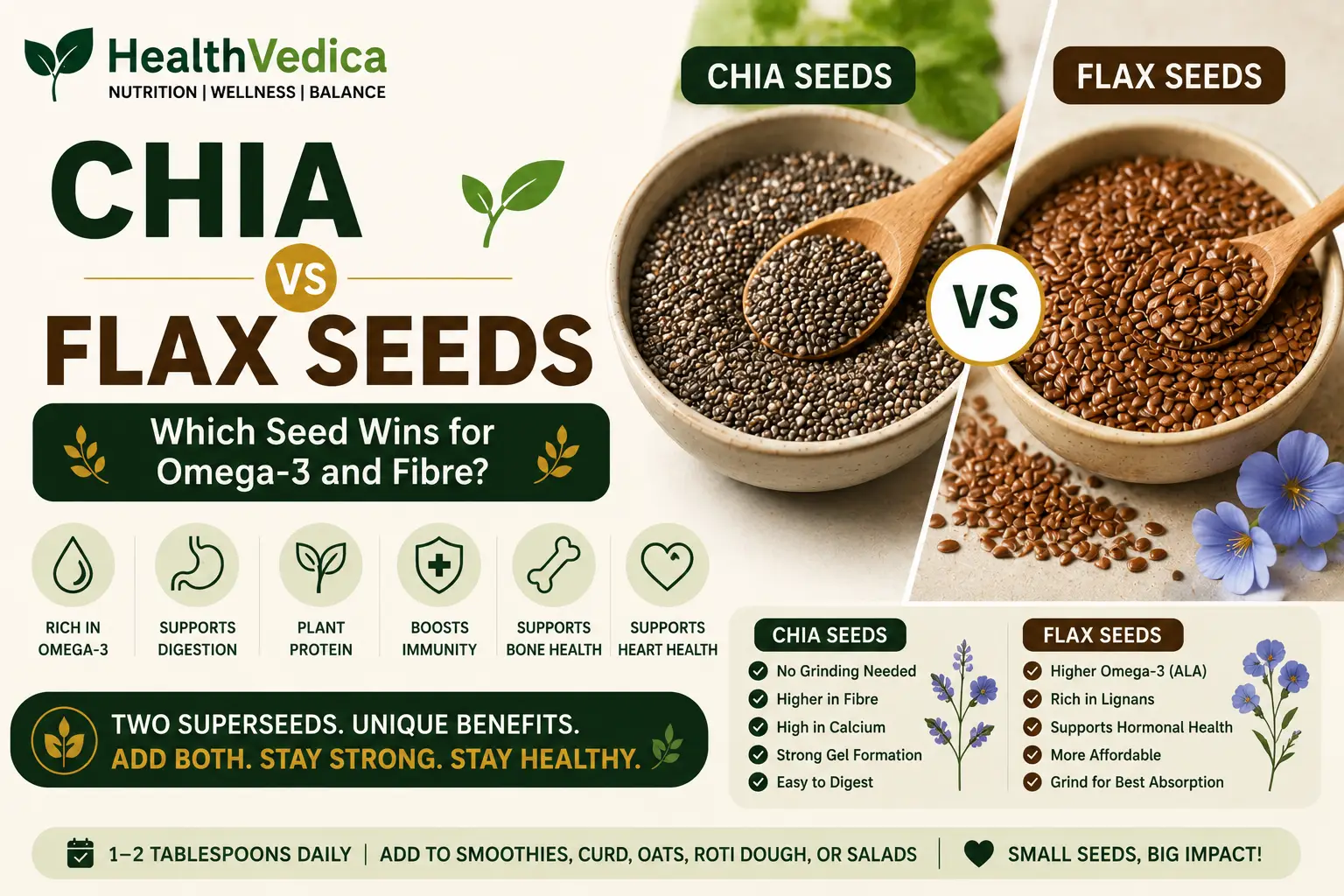
There is no single food that is automatically healthier for everyone. Chia vs Flax Seeds Comparison are useful choices in different situations, and the better option depends on your overall diet, portion size, cooking method and personal needs. This guide compares the two foods in plain language so you can make an informed choice.
📊 Chia vs Flax Seeds: Nutritional Comparison (per 100g)
| Nutrient | Chia Seeds | Flax Seeds (Alsi) | Advantage |
|---|---|---|---|
| Omega-3 (ALA) | 17.8g | 22.8g | Flax seeds (slightly higher) |
| Fibre | 34g | 27g | Chia |
| Protein | 16.5g | 18.3g | Flax seeds |
| Calcium | 631mg | 255mg | Chia (significant) |
| Lignans (phytoestrogens) | Low | Very high | Flax seeds (notably) |
| Need to grind for absorption | No, digestible whole | Yes, whole seeds pass undigested | Chia |
| Gel-forming when soaked | Yes, strongly | Mildly | Chia |
✅ Where Chia Wins
No grinding required: Chia seeds can be absorbed by the body whether whole or ground, while flax seeds must be ground for the body to access their nutrients — whole flax seeds largely pass through the digestive system undigested due to their hard outer shell. This makes chia significantly more convenient for casual daily use.
Calcium content: Chia contains roughly 2.5 times the calcium of flax seeds, making it a more meaningful contributor to bone health alongside its other benefits.
Gel-forming texture: Chia's strong gel-forming property when soaked in liquid makes it excellent for puddings, smoothie thickening, and as an egg substitute in baking — a texture flax does not replicate as effectively.
✅ Where Flax Seeds Win
Higher omega-3 content: Flax seeds contain marginally more ALA omega-3 per 100g than chia, making them a very slightly more concentrated source, though the practical difference is small given both are eaten in similar tablespoon-sized portions.
Lignans for hormonal health: Flax seeds contain dramatically higher levels of lignans, plant compounds with phytoestrogen activity that have been studied for potential benefits in hormonal balance and certain cancer risk reduction, particularly breast cancer research. This is flax seed's standout distinguishing feature that chia does not share to the same degree.
Cost: Flax seeds (alsi) are typically more affordable and widely available in Indian markets compared to chia, which is often imported or sold at a premium.
🍽️ Which Should You Choose?
For pure convenience and calcium, chia has the edge — it requires no preparation and can be added directly to food or soaked for pudding. For lignan-related hormonal health benefits and cost-effectiveness, flax seeds (ground) are the better choice. Critically, flax seeds must always be ground (a coffee grinder works well, or buying pre-ground alsi powder) — whole flax seeds eaten without grinding provide minimal nutritional benefit since the seed coat resists digestion. Chia has no such requirement. Many households benefit from keeping both: ground flax stirred into atta or smoothies, and chia for puddings or soaked drinks.
Sources and context
Nutrition guidance in this article is framed around Indian dietary guidance from ICMR–National Institute of Nutrition (ICMR-NIN). Where Ayurveda is discussed, it is presented as a traditional framework and kept separate from modern clinical evidence. The Ministry of AYUSH's published guidance emphasises factors such as food quality, preparation, quantity, timing and individual suitability; these principles are useful context, but they should not be treated as a substitute for diagnosis or medical treatment.
Important: Nutrition needs vary with age, pregnancy, medications and medical conditions. If you have diabetes, kidney disease, coeliac disease, a food allergy or another diagnosed condition, use personalised advice from a qualified clinician or dietitian.