🩺 Can Food Help Hair Growth?
Yes — nutrition matters for the hair cycle, especially when hair shedding is related to protein, iron or other nutrient insufficiency. But food cannot guarantee thicker hair if the main cause is genetic hair loss, thyroid disease, hormonal imbalance, autoimmune disease or another medical condition.
The practical target is nutritional adequacy, not a shopping list of 'hair growth superfoods'.
🧬 Hair Is Built From Protein
Hair is largely keratin, a structural protein. Inadequate total protein or very restrictive dieting can contribute to shedding. Indian vegetarian diets can still provide enough protein when built around dal, beans, dairy, soy, eggs if eaten, nuts and seeds.
🩸 Iron Deserves Attention — Especially With Heavy Periods
Iron deficiency can contribute to diffuse hair shedding. For people with heavy menstrual bleeding, restrictive diets or symptoms suggestive of deficiency, testing is more useful than guessing. Do not take high-dose iron supplements solely because hair is falling; too much iron can also be harmful.
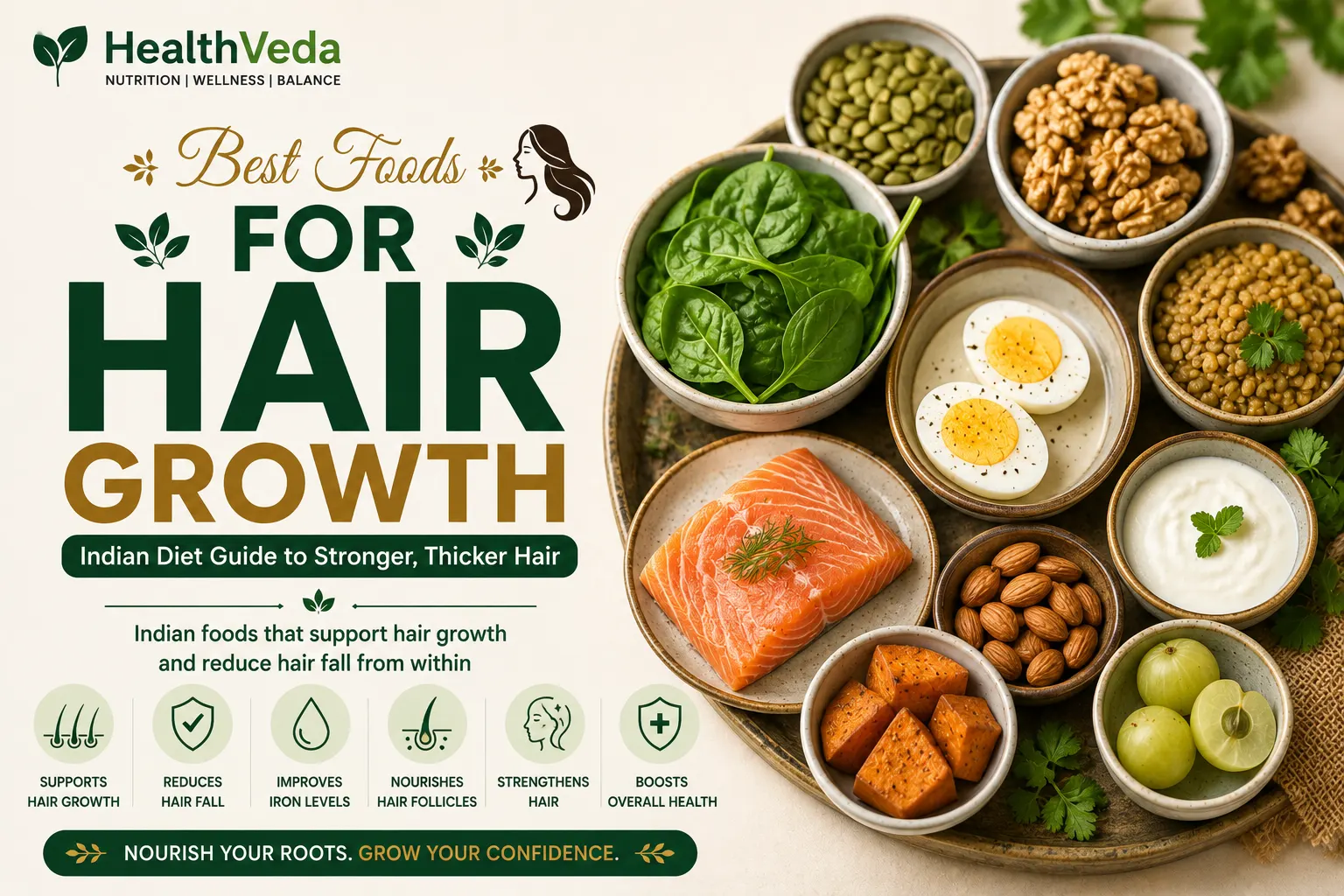
📊 Hair-Supportive Indian Foods
| Food | Nutrients | Practical Use |
|---|---|---|
| Dal, beans, chana | Protein, iron, zinc | Daily meals |
| Eggs | High-quality protein, B vitamins | Boiled, omelette or curry |
| Curd/milk | Protein, calcium, B12 depending on food | With meals |
| Pumpkin seeds | Zinc, magnesium, healthy fats | Small snack portion |
| Walnuts | Healthy fats, ALA | Small handful |
| Leafy greens | Folate, carotenoids and other micronutrients | Sabzi, dal, soup |
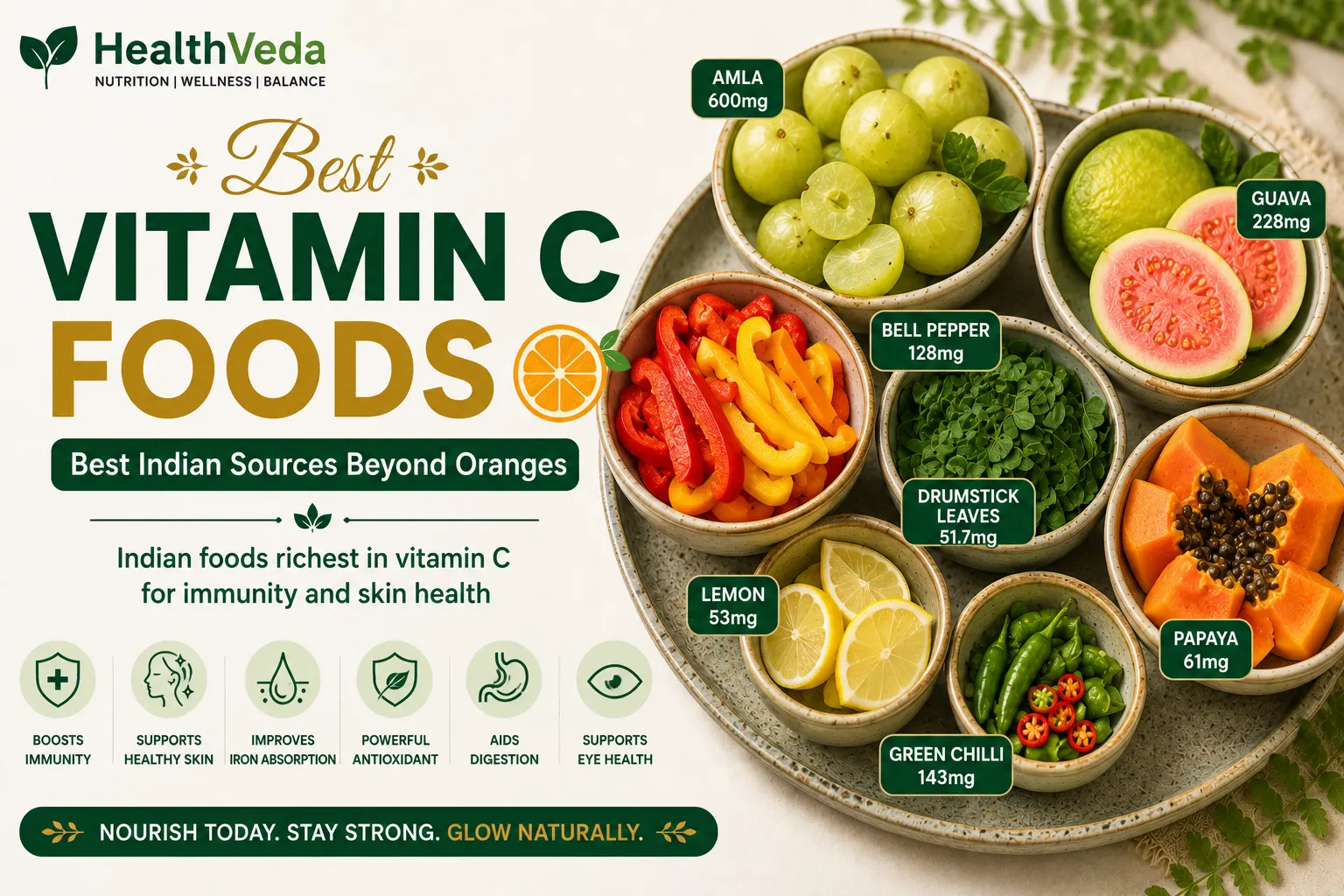
| Amla/guava/citrus | Vitamin C | Pair with plant-iron foods |
🥗 The Iron + Vitamin C Trick
Pair plant-based iron sources such as dal, beans or leafy greens with vitamin-C-rich foods such as amla, guava, lemon or other citrus. Vitamin C can improve the absorption of non-heme iron from plant foods.
💊 What About Biotin?
Biotin deficiency is uncommon in people eating a varied diet. High-dose biotin supplements are therefore not automatically the answer to hair fall, and biotin can interfere with some laboratory tests. Treat a documented deficiency rather than assuming every shedding problem is a biotin problem.
⚠️ When Hair Fall Needs a Doctor
Get evaluated for sudden heavy shedding, bald patches, scalp inflammation, severe itching, hair loss with fatigue or weight changes, or hair loss with irregular periods/acne/excess facial hair. Thyroid disease, iron deficiency, postpartum changes, androgen-related hair loss and autoimmune conditions all need different approaches.
🍽️ Simple Daily Hair-Nutrition Pattern
Breakfast: eggs or moong/besan chilla + vegetables.
Lunch: dal/beans + vegetables + whole grain + curd.
Snack: fruit + small portion of nuts/seeds.
Dinner: paneer/tofu/fish/chicken/beans + vegetables + whole grain.
Hydration: drink according to thirst and climate; do not expect water alone to stop hair fall.
⏳ Give Hair Time
Hair cycles are slow. Even when a nutritional cause is corrected, shedding and regrowth may take months to change. Take progress photos in similar lighting rather than judging day-to-day hair loss.
✅ Bottom Line
Build healthy hair from an adequate diet, not supplements by default. Prioritize protein, iron-rich foods, zinc-containing foods, vegetables, fruit and overall dietary variety — then investigate persistent hair loss rather than endlessly changing your diet.
📚 Trusted Sources & Further Reading
This guide is educational and is not a substitute for diagnosis or treatment. Nutrient and dietary guidance is aligned where applicable with Indian nutrition guidance and major clinical references.