Quick answer
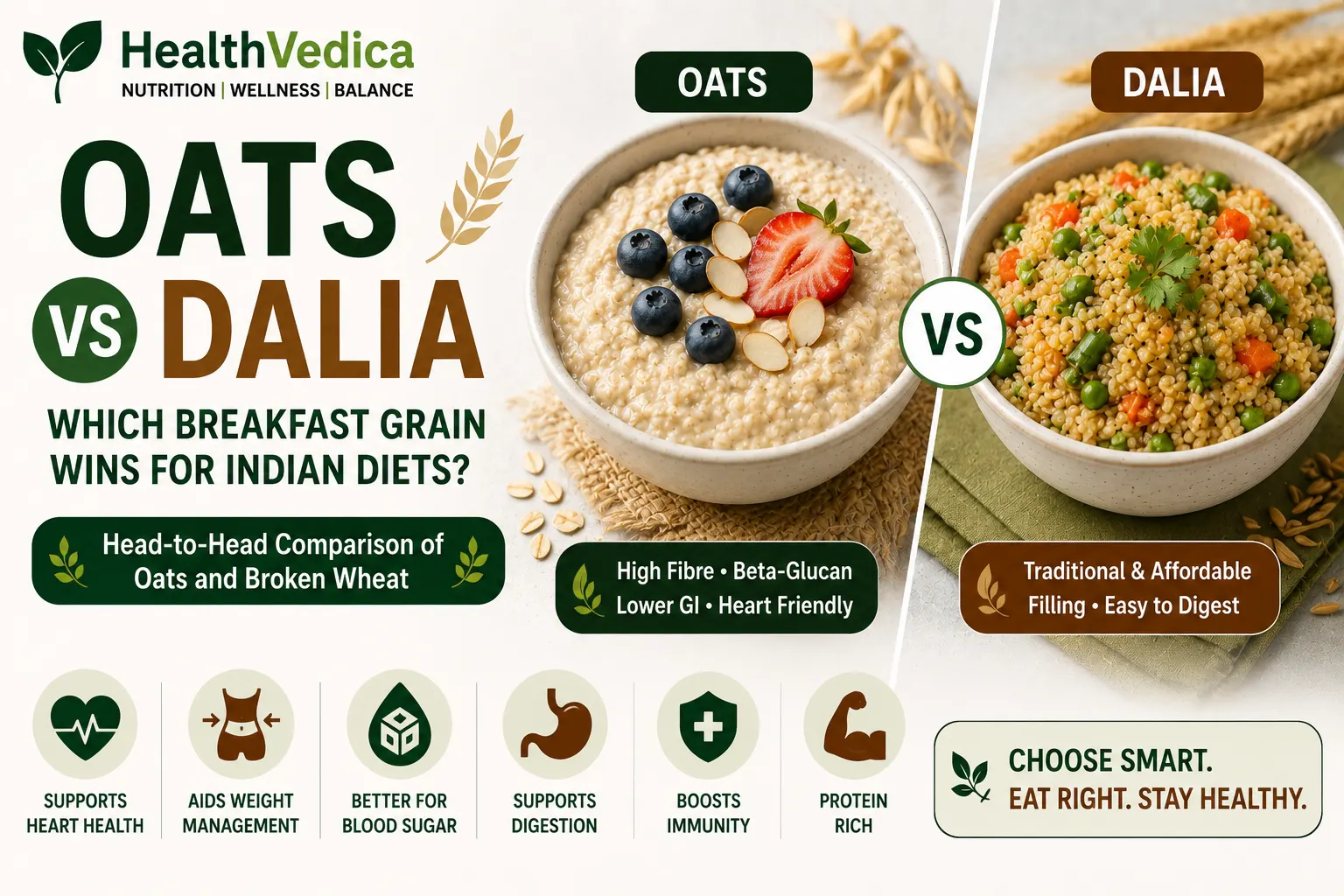
There is no single food that is automatically healthier for everyone. Oats vs Dalia Comparison are useful choices in different situations, and the better option depends on your overall diet, portion size, cooking method and personal needs. This guide compares the two foods in plain language so you can make an informed choice.
📊 Oats vs Dalia: Nutritional Comparison (per 100g, dry/raw)
| Nutrient | Oats | Dalia (broken wheat) | Advantage |
|---|---|---|---|
| Protein | 13.2g | 12.0g | Oats (slightly) |
| Fibre | 10.1g | 1.9g | Oats (5x higher) |
| Beta-glucan (soluble fibre) | Present, cholesterol-lowering | Minimal | Oats |
| Glycaemic Index | ~55 (rolled oats) | ~65-70 | Oats |
| Iron | 4.7mg | 3.5mg | Oats |
| Gluten | Gluten-free (check cross-contamination) | Contains gluten | Oats |
| Cost & accessibility | Higher cost, packaged | Lower cost, widely available | Dalia |
✅ Where Oats Wins
Cholesterol management: Oats contain beta-glucan, a specific type of soluble fibre with well-documented cholesterol-lowering effects, forming a gel-like substance in the gut that binds bile acids and reduces LDL cholesterol absorption. Dalia lacks this specific fibre type.
Lower glycaemic impact: Oats generally produce a gentler blood sugar response than dalia, making them a somewhat better choice for those specifically managing blood sugar, though preparation method (cooking time, added sugar) affects this significantly for both.
Gluten-free option: Oats are naturally gluten-free (though cross-contamination during processing is common, so those with celiac disease should look for certified gluten-free oats), while dalia is wheat-based and contains gluten.
✅ Where Dalia Wins
Cost and accessibility: Dalia is significantly cheaper and more widely available across India than packaged oats, making it a more sustainable everyday choice for many households.
Cultural fit and satiety: Dalia's traditional preparation as a savoury khichdi-style dish with vegetables and dal fits naturally into Indian meal patterns and tends to be more satisfying as a complete meal compared to a typically sweeter oats preparation.
Simplicity: Dalia requires no imported processing and has been part of Indian food culture for generations without the marketing premium attached to oats.
🍽️ Which Should You Choose?
If cholesterol management or blood sugar control is the priority, oats has a measurable scientific edge due to beta-glucan content. If cost, accessibility, and a savoury, filling breakfast that fits traditional Indian taste are the priority, dalia is an excellent and underrated choice. Importantly, both can be prepared in unhealthy ways — flavoured instant oats loaded with sugar, or dalia cooked with excess ghee — so the preparation method matters as much as the grain choice itself. A savoury vegetable dalia or a plain oats upma with vegetables and minimal added sugar are both genuinely healthy breakfast options.
Sources and context
Nutrition guidance in this article is framed around Indian dietary guidance from ICMR–National Institute of Nutrition (ICMR-NIN). Where Ayurveda is discussed, it is presented as a traditional framework and kept separate from modern clinical evidence. The Ministry of AYUSH's published guidance emphasises factors such as food quality, preparation, quantity, timing and individual suitability; these principles are useful context, but they should not be treated as a substitute for diagnosis or medical treatment.
Important: Nutrition needs vary with age, pregnancy, medications and medical conditions. If you have diabetes, kidney disease, coeliac disease, a food allergy or another diagnosed condition, use personalised advice from a qualified clinician or dietitian.