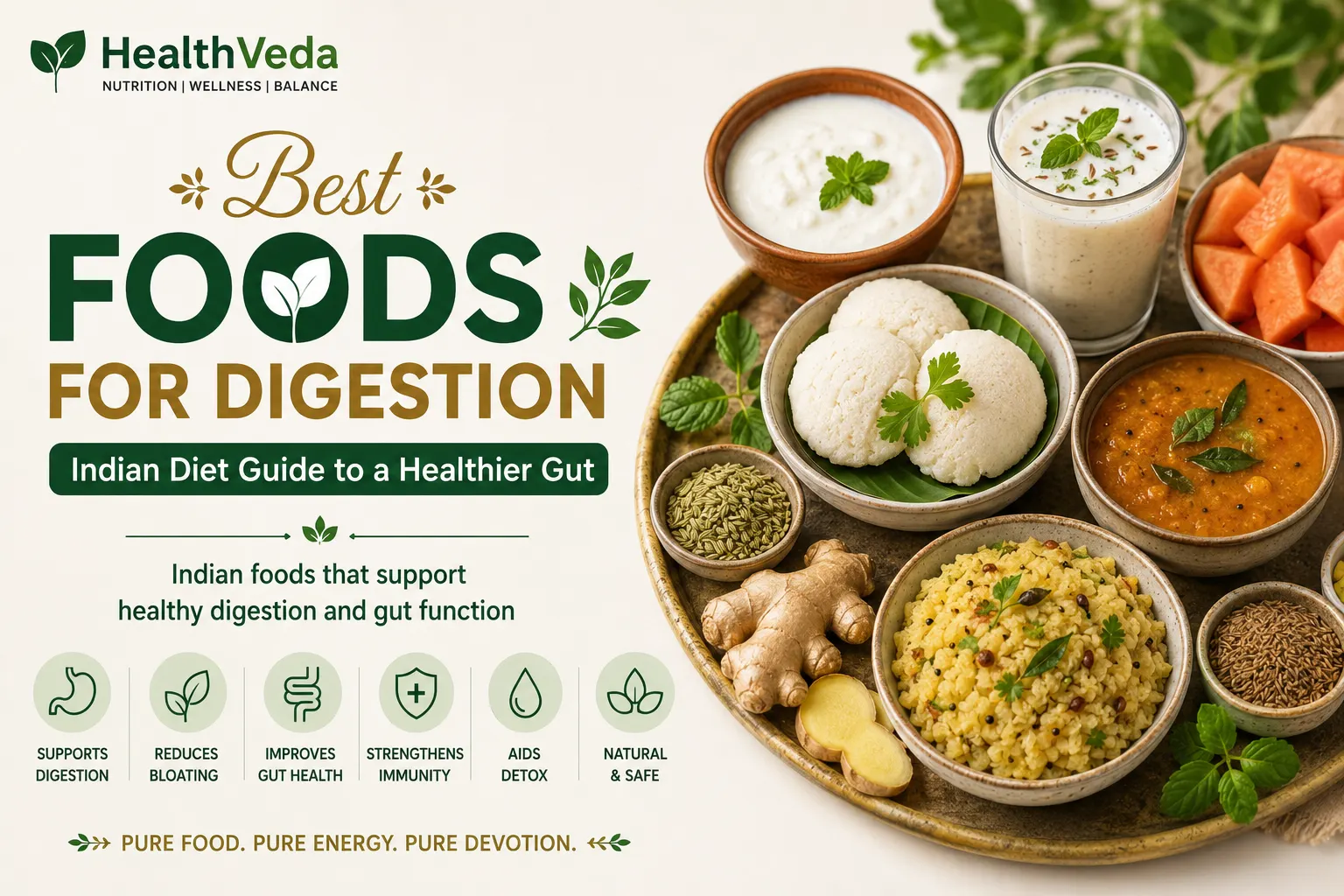
🌿 Traditional Indian Food Culture Already Understands Digestion
Good digestion usually starts with simple habits: enough fibre and fluids, regular meals, a varied diet and foods you personally tolerate well. Fermented foods, pulses, whole grains, vegetables and familiar spices can all fit into a digestion-friendly Indian eating pattern. Persistent or severe digestive symptoms should not be managed with food alone.
Quick takeaways: Digestion usually benefits from regular meals, adequate fibre and fluids, varied plant foods and tolerable fermented foods. Persistent pain, vomiting, bleeding or unexplained weight loss needs medical assessment.
🔬 The Mechanisms Behind Good Digestion
Fermented foods and probiotics: Fermentation introduces beneficial bacteria that support gut microbiome diversity, which is increasingly linked to better digestion, reduced bloating, and even broader metabolic and immune benefits. Idli, dosa, dhokla, and curd are all naturally fermented Indian foods with this benefit built in.
Digestive spices: Several Indian spices have specific, studied digestive effects — cumin (jeera) and ajwain stimulate digestive enzyme secretion, ginger speeds gastric emptying and reduces nausea, and fennel (saunf) has carminative properties that reduce gas and bloating.
Fibre for gut bacteria and motility: As covered in fibre-specific contexts, adequate fibre intake both feeds beneficial gut bacteria and supports regular bowel movements, addressing two digestion-related concerns simultaneously.
Meal timing and eating pace: Eating slowly and chewing thoroughly improves mechanical digestion and reduces the air swallowing that contributes to bloating — a simple behavioural factor independent of food choice that significantly affects digestive comfort.
📊 Best Indian Foods for Digestion
| Food | Digestive Benefit | How to Use |
|---|---|---|
| Curd/dahi | Probiotics support gut bacteria balance | Daily, plain, after meals |
| Ginger | Speeds gastric emptying, reduces nausea | Tea, cooking, raw with lemon |
| Cumin (jeera) | Stimulates digestive enzymes | Jeera water, tadka |
| Fennel (saunf) | Reduces gas and bloating | After meals, tea |
| Ajwain | Relieves bloating and indigestion | Tea, tempering |
| Buttermilk (chaach) | Probiotics, hydration, cooling | Daily, especially with meals |
| Papaya | Contains papain enzyme aiding protein digestion | Daily fruit |
| Bananas | Gentle fibre, supports regularity | Daily fruit, especially ripe |
| Fermented foods (idli, dosa) | Natural probiotic content from fermentation | Regular breakfast rotation |
🚫 What Disrupts Digestion
Eating too quickly without adequate chewing increases swallowed air and reduces mechanical breakdown of food before it reaches the stomach, both contributing to bloating. Excessive intake of fried, very oily food slows gastric emptying and can cause discomfort, particularly when combined with large portion sizes. Highly processed foods low in fibre but high in refined carbohydrates can disrupt gut bacteria balance over time, favouring less beneficial bacterial populations. Chronic stress also measurably affects digestion through the gut-brain connection, meaning digestive issues aren't always purely about food choices.
🍽️ Practical Daily Digestion Plan
Morning: Warm water with a small piece of ginger or jeera water on an empty stomach is a traditional practice that gently activates digestion before the first meal.
With meals: A side of curd or buttermilk, along with adequate vegetable and fibre content, supports digestion through the main meal itself.
After meals: A small amount of fennel seeds (a traditional practice at many Indian restaurants and homes) can help reduce bloating and freshen breath simultaneously.
Eating pace: Slowing down and chewing food thoroughly — independent of what is being eaten — measurably reduces bloating and improves overall digestive comfort, making it one of the simplest, most underrated digestion interventions available.
Evidence note: This article is an educational nutrition guide. General diet guidance is aligned where applicable with ICMR-NIN Dietary Guidelines for Indians, WHO healthy-diet guidance, and relevant Ministry of Ayush materials. Ayurvedic concepts are presented as traditional perspectives and are not a substitute for medical diagnosis or treatment.