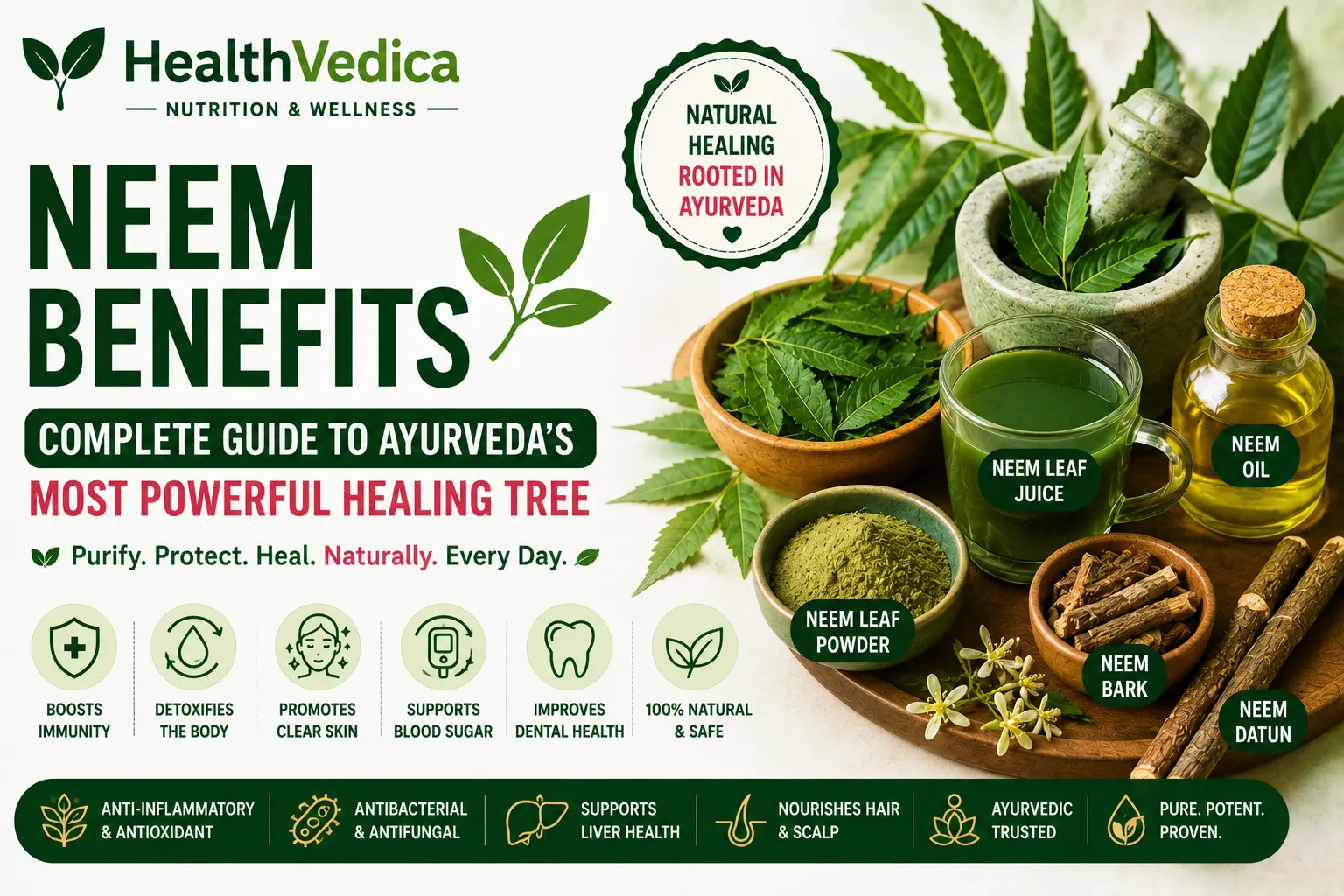
🌿 Neem: India's Village Pharmacy
Neem has a long history of use in Ayurveda and Indian traditional practices. Different parts of the neem plant are used in different ways, but traditional use is not the same as proof of a medical treatment. Neem products can also have safety concerns, especially when taken orally or used in children. This guide separates traditional uses from what can reasonably be concluded from modern evidence.
Quick takeaways: Neem has a long history in Ayurveda, but 'natural' does not automatically mean safe. Oral neem products can have risks and should be used cautiously, especially with medicines or pregnancy.
Neem is so deeply embedded in Indian culture that it has been used for everything from toothbrushes (datun) to pesticides, from blood purifiers to contraceptives, from wound healers to air purifiers. Indian villages where neem trees line streets have measurably lower rates of certain infections — a traditional observation now supported by air antimicrobial studies showing neem volatiles reduce airborne bacterial counts.
The WHO has listed neem among the most important plants to be conserved for future research. India's Council of Scientific and Industrial Research (CSIR) has conducted extensive neem research, validating traditional applications. This guide covers the full evidence base for neem's health applications — from the kitchen and garden to clinical therapeutic use.
🔬 The Chemistry Behind Neem's Power
Neem's extraordinary medicinal properties stem from a complex mixture of terpenoids and limonoids:
Nimbin: Anti-inflammatory, antipyretic (fever-reducing), antiseptic. Inhibits prostaglandin synthesis similarly to aspirin.
Nimbidin: The primary antibacterial and antifungal compound. Active against both gram-positive and gram-negative bacteria, multiple fungi, and selected viruses.
Azadirachtin: Primary compound in neem seeds — most studied for insecticidal properties but also has antifeedant, antimalarial, and antifungal properties.
Gedunin: Potent antimalarial — comparable to standard antimalarial drugs in some studies. Also antifungal and anti-inflammatory.
Quercetin and Kaempferol: Flavonoids providing antioxidant, anti-inflammatory, anticancer, and antiviral properties.
Polysaccharides: Immunomodulatory compounds that activate macrophages and natural killer cells — may directly stimulating innate immunity.
📊 Neem Parts and Their Primary Applications
| Neem Part | Primary Active Compounds | Main Applications | Form Used |
|---|---|---|---|
| Leaves | Nimbin, nimbidin, quercetin | Blood purification, skin disease, diabetes, immunity | Raw, juice, tea, paste, powder |
| Bark | Nimbidin, nimbin, tannins | Dental health, fever, malaria, skin ulcers | Datun, decoction, powder |
| Seeds/Oil | Azadirachtin, nimbin | Skin infections, scalp health, contraceptive | Cold-pressed oil |
| Flowers | Nimbosterol, quercetin | Intestinal worms, digestive, bile flow | Fresh, dried, as food |
| Fruit (pulp) | Gedunin, azadirachtin | Liver health, antimalarial, intestinal | Raw, extract |
| Roots | Margosine, tannins | Fever, liver, intestinal — traditional only | Decoction |
✅ Top Health Benefits of Neem
1. Skin Health — Neem for Every Skin Condition
Neem is India's most comprehensive natural dermatological treatment. Nimbidin's antibacterial activity against Staphylococcus aureus, Propionibacterium acnes (acne bacteria), and Streptococcus species makes it effective for acne, folliculitis, and bacterial skin infections. Antifungal properties address ringworm, athlete's foot, and candidal skin infections. The anti-inflammatory compounds reduce eczema redness and psoriasis scaling. Multiple clinical studies confirm neem leaf extract reduces acne severity comparable to benzoyl peroxide with lower irritation. Internally: 2–4 neem leaves daily (bitter, but blood-purifying) reduces inflammatory acne. Externally: neem leaf paste, neem oil (diluted 1:10 with carrier oil), or neem water as a rinse.
2. Blood Sugar Management
Neem has documented antidiabetic activity through multiple mechanisms: flavonoids increase insulin sensitivity, reduce intestinal glucose absorption, enhance insulin secretion from beta cells, and reduce hepatic glucose output. A CSIR study found neem leaf extract significantly reduced blood glucose in Type 2 diabetics. Clinical studies show neem reduces fasting blood glucose by 15–20% over 12 weeks. Importantly, neem also protects against diabetic complications — neem's antioxidants protect kidneys, retina, and nerves from glucose-mediated oxidative damage. Usage: 4–5 fresh neem leaves chewed on empty stomach in the morning (traditional and effective); neem leaf powder (1–2g daily); or neem capsules (standardised for nimbidin content).
3. Dental and Oral Health
Neem is scientifically India's best oral health plant. Nimbidin and nimbin are potently antibacterial against Streptococcus mutans (cavities) and Porphyromonas gingivalis (gum disease). Multiple randomised trials show neem toothpaste and neem mouthwash match or exceed chlorhexidine for plaque reduction, gingivitis control, and bacterial count reduction. Traditional neem datun (fresh twig toothbrush) provides: mechanical cleaning, continuous antibacterial compound release, and gum strengthening. Chewing a fresh neem twig or using neem-based dental products daily provides comprehensive oral protection rooted in 4,000 years of validated practice.
4. Immunity and Infection Protection
Neem is a proven immunostimulant — neem polysaccharides activate macrophages, natural killer cells, and lymphocytes. This innate immune stimulation is important for protection against bacterial, viral, and fungal infections. Studies show neem leaf consumption increases neutrophil activity (first-line infection defence) and antibody production. During seasonal infection peaks (monsoon season, winter), traditional Indian practice of consuming neem in various forms (chewing leaves, drinking decoction) provides a pharmacologically valid immune boost. Neem also has demonstrated antiviral activity against dengue, chikungunya, and herpes simplex viruses.
5. Liver Health and Blood Purification
Neem is Ayurveda's premier liver tonic and blood purifier (Rakta Shodhaka). Modern research confirms: neem extract protects hepatocytes (liver cells) from chemical toxicity, reduces liver inflammation, improves liver enzyme levels (ALT, AST), and has choleretic (bile-stimulating) effects that improve fat digestion. Neem leaf extract prevents hepatocyte damage in alcohol-induced liver injury models — relevant for Indians with moderate alcohol consumption. The Ayurvedic concept of 'blood purification' may correspond scientifically to improved hepatic support normal body functionsification capacity.
6. Scalp and Hair Health
Neem oil's antifungal activity (against Malassezia furfur — the dandruff-causing fungus) is comparable to commercial antifungal shampoos without the scalp irritation. Nimbidin reduces scalp inflammation; the oil moisturises and prevents hair shaft breakage. Head lice treatment with neem oil has been validated in multiple clinical studies as effective as permethrin-based commercial treatments. For hair growth, neem oil improves scalp circulation and creates an optimal scalp microenvironment. Mixing 2–3 tsp neem oil with coconut oil and applying to scalp 2 hours before washing provides comprehensive scalp health treatment.
🌿 Neem in Ayurveda: Tikta Dravya Par Excellence
Neem is Ayurveda's principal example of Tikta Rasa (bitter taste) — the taste associated with blood purification, fever reduction, anti-inflammatory action, and skin health. Classical properties: Laghu (light), Ruksha (dry), Sheeta (cooling) — making it primarily Kapha and Pitta pacifying. Neem is prescribed across multiple Ayurvedic disease categories: Kushtha Roga (skin diseases), Prameha (diabetes), Jwara (fever), Krimiroga (worm infestations), and Rakta Vikara (blood disorders).
Classical Ayurvedic neem preparations: Nimbadi Churna (powder blend for skin and blood disorders), Neem Ghrita (for skin diseases requiring deep tissue penetration), Panchanimbadi Churna (five-neem formula for chronic skin conditions), and Tikta Ghrita (bitter ghee — combines neem and other bitter herbs in ghee for autoimmune skin conditions).
Traditional Indian seasonal practice: consuming neem leaves and flowers on Ugadi/Gudi Padwa (New Year festival) as part of pachadi — a mixture of neem, jaggery, tamarind, raw mango, and chilli. This tradition of annual neem consumption at the seasonal transition represents ancient public health wisdom — stimulating immunity and clearing winter-accumulated Kapha at the beginning of the new season.
🚫 Neem Precautions and Contraindications
Pregnancy — strictly avoid: Neem has demonstrated abortifacient properties in animal models. Avoid all neem products (leaves, oil, bark) internally during pregnancy. External use of diluted neem oil on small skin areas is likely safe but should be minimised.
Infants — avoid internal use: Neem oil ingestion has caused serious toxicity in small children (vomiting, liver damage). Never give neem oil internally to children under 12; leaf consumption should be minimal and supervised.
Autoimmune conditions: Neem's immunostimulatory properties could theoretically worsen autoimmune conditions. Patients with RA, lupus, or other autoimmune diseases should consult an Ayurvedic physician before regular neem use.
Diabetes medications: Neem's blood sugar-lowering effect compounds diabetes medication — monitor glucose carefully when combining. May allow dose reduction under physician guidance.
Male fertility: High-dose neem leaf extract has shown antifertility effects in animal models. Men trying to conceive should avoid therapeutic doses of neem supplements (culinary amounts are safe).
💡 Practical Neem Usage Guide for Indians
For blood purification and immunity: 4–5 fresh neem leaves, chewed on empty stomach every morning. Initially very bitter — the bitterness reduces with regular practice. Alternatively: 1 tsp neem leaf powder in water.
For blood sugar: 4–5 neem leaves before each meal, or 500mg standardised neem leaf extract capsules before meals.
For skin (internal): Neem leaf decoction (10–12 leaves boiled in 2 cups water, reduced to 1 cup, strained) — drink 100ml daily for inflammatory skin conditions.
For dental health: Fresh neem twig for morning brushing | Neem mouthwash (neem leaf decoction gargled for 2 minutes) | Neem-based toothpaste (Himalaya, Dabur Red, Patanjali)
For scalp: Neem oil + coconut oil (1:3 ratio) applied to scalp 2 hours before washing | Neem leaf water rinse (boiled neem leaves cooled to rinse temperature) as post-shampoo rinse
For skin conditions (external): Fresh neem leaf paste (ground with a little water) applied to affected areas for 20–30 minutes | Diluted neem oil (1:10 with coconut oil) for fungal infections
Evidence note: This article is an educational nutrition guide. General diet guidance is aligned where applicable with ICMR-NIN Dietary Guidelines for Indians, WHO healthy-diet guidance, and relevant Ministry of Ayush materials. Ayurvedic concepts are presented as traditional perspectives and are not a substitute for medical diagnosis or treatment.