🫁 India's Lung Crisis: Why Nutrition Matters More Than Ever
Food supports the nutrients your lungs and immune system need, but no food can remove pollution particles from the lungs or 'clean' them instantly. A varied diet rich in fruits, vegetables, pulses, nuts and seeds can provide vitamin C, carotenoids, vitamin E and other compounds that support normal health. Reducing smoke and pollution exposure remains essential.
Quick takeaways: Nutrition supports normal lung function but cannot 'detox' the lungs or cancel pollution exposure. Avoid tobacco, reduce exposure where possible and seek care for persistent breathing symptoms.
Beyond urban pollution, India has India's highest global burden of asthma (37.9 million patients), COPD (55 million patients), and tuberculosis — all respiratory conditions may directly worsened by pollution, poor nutrition, and indoor cooking smoke (biomass cooking still affects 660 million rural Indians).
While we cannot change the air we breathe immediately, nutrition provides a traditional defensive shield. Certain foods and nutrients may directly neutralise airborne pollutants, protect lung tissue from oxidative damage, reduce inflammation in airways, enhance mucociliary clearance (the lung's self-cleaning mechanism), and support the immune surveillance that prevents respiratory infections.
The science is clear: people who eat antioxidant-rich diets have measurably better lung function, lower rates of asthma exacerbation, and slower COPD progression even in polluted environments. Indian food traditions — rich in turmeric, amla, tulsi, and spices — contain many of the world's most potent lung-protective compounds.
🔬 How Pollution Damages Lungs — and How Food Helps
PM2.5 mechanism: Fine particulate matter (PM2.5) penetrates deep into alveoli (tiny air sacs), enters the bloodstream, and triggers massive oxidative stress and inflammation. This damages lung tissue, narrows airways, impairs gas exchange, and causes systemic cardiovascular damage.
Food's defensive role: Dietary antioxidants (vitamin C, vitamin E, beta-carotene, selenium, quercetin) neutralise the reactive oxygen species generated by pollution exposure. Anti-inflammatory compounds (curcumin, omega-3s, flavonoids) reduce airway inflammation. Magnesium relaxes bronchial smooth muscle, reducing airway constriction. Vitamin D regulates immune response in the lung, preventing exaggerated inflammatory reactions to pollutants and allergens.
Sulforaphane (from broccoli and cruciferous vegetables) may directly activates Nrf2 — the master antioxidant pathway — in lung cells. Studies of smokers and pollution-exposed individuals show broccoli sprout extract significantly reduces airway inflammation and oxidative stress markers.
📊 Lung-Protective Nutrients and Indian Food Sources
| Nutrient | Lung Benefit | Top Indian Sources | Daily Target |
|---|---|---|---|
| Vitamin C | Antioxidant in lung lining fluid | Amla (600mg/100g), guava, lemon | 200–500 mg |
| Vitamin E | Protects cell membranes from oxidation | Almonds, sunflower seeds, canard oil | 15 mg |
| Beta-carotene (Vitamin A) | Maintains airway epithelial integrity | Carrots, pumpkin, sweet potato, papaya | 5,000 IU |
| Selenium | Antioxidant enzyme (GPx) cofactor | Brazil nuts (2/day), tuna, eggs | 55–200 mcg |
| Magnesium | Bronchodilator, relaxes airways | Bajra, spinach, almonds, pumpkin seeds | 310–420 mg |
| Omega-3 Fatty Acids | Reduces airway inflammation | Flaxseeds, fatty fish, walnuts | 1–2 g EPA+DHA |
| Quercetin | Anti-inflammatory, antihistamine | Onions, apples, moringa, green tea | 500 mg |
| Curcumin | NF-kB inhibition, anti-inflammatory | Turmeric with black pepper | 500–1000 mg |
| Sulforaphane | Nrf2 activation, support normal body functionsification | Broccoli, radish, canard seeds | 30–60 mg |
| Vitamin D | Immune regulation in lungs | Sunlight, fatty fish, fortified milk | 1000–4000 IU |
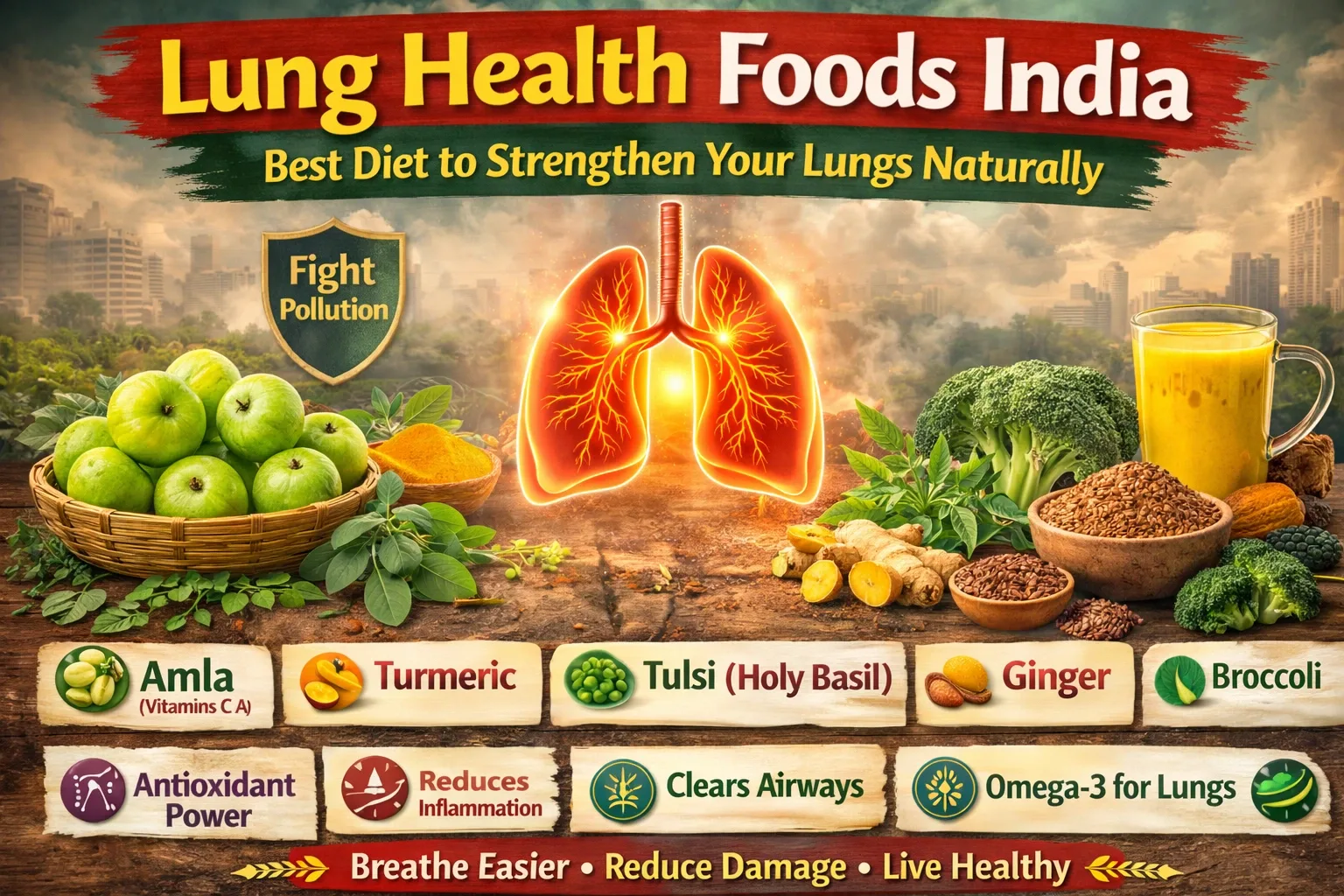
✅ Best Lung-Protective Indian Foods
1. Amla (Indian Gooseberry) — Anti-Pollution Powerhouse
Amla contains 600mg vitamin C per 100g — 20× more than oranges, making it the world's highest natural vitamin C source (fresh). Vitamin C is the primary antioxidant in lung lining fluid (epithelial lining fluid) — the first line of defence against inhaled pollutants and pathogens. Studies show vitamin C supplementation equivalent to 2–3 fresh amla daily significantly reduces pollution-induced DNA damage in blood cells and improves lung function markers. Eat 1–2 fresh amla daily, or take as amla juice (avoid commercial brands with added sugar).
2. Turmeric (Haldi) — India's Lung Protector
Curcumin may directly inhibits NF-kB and COX-2 — the primary inflammatory pathways activated by pollution, smoking, and respiratory infections. Multiple studies show curcumin reduces lung inflammation, protects against tobacco carcinogens, improves bronchial function, and reduces oxidative stress from air pollutants. In COPD patients, curcumin supplementation improves lung function (FEV1). Use turmeric liberally in all cooking — with black pepper (piperine) to increase bioavailability by 2000%. Consider curcumin supplements (500–1000mg) in heavily polluted seasons.
3. Tulsi (Holy Basil) — The Respiratory Herb
Tulsi is India's pre-eminent respiratory herb with an extraordinary scientific dossier. Eugenol, rosmarinic acid, and ursolic acid in tulsi provide bronchodilating (airway-opening), expectorant (mucus-clearing), antibacterial, antiviral, and anti-allergic effects. Studies show tulsi tea reduces eosinophils (allergy-inflammation cells) and IgE (allergic antibody) levels — explaining its effectiveness in asthma. Daily tulsi tea is India's most accessible, affordable lung-protective ritual. Boil 8–10 fresh leaves in water for 5 minutes, strain, add honey and ginger.
4. Ginger (Adrak) — Natural Bronchodilator
Ginger contains 6-gingerol and 6-shogaol — compounds that relax airway smooth muscle (bronchodilation), reduce airway inflammation, and thin mucus for easier expectoration. A study published in the American Journal of Respiratory Cell and Molecular Biology found ginger compounds may directly relaxed airway smooth muscle more effectively than some conventional bronchodilators in laboratory studies. Fresh ginger tea with honey during pollution spikes or respiratory infections is both traditional wisdom and evidence-based medicine.
5. Onions (Pyaaz)
Onions are the richest Indian dietary source of quercetin — a traditional flavonoid that acts as a natural antihistamine (blocks histamine H1 receptors), reduces airway inflammation, and has direct antiviral properties. Population studies consistently show that high onion consumption correlates with lower asthma prevalence and better lung function. Raw onions (in salads) provide maximum quercetin; cooking reduces content by 30–50%. The classic Indian habit of eating raw onion with meals has genuine respiratory health justification.
Evidence note: This article is an educational nutrition guide. General diet guidance is aligned where applicable with ICMR-NIN Dietary Guidelines for Indians, WHO healthy-diet guidance, and relevant Ministry of Ayush materials. Ayurvedic concepts are presented as traditional perspectives and are not a substitute for medical diagnosis or treatment.