⏳ Aging — and Why India Has Ancient Solutions
There is no food that stops or reverses biological aging. The useful goal is healthy aging: maintaining muscle, heart health, brain function, bone health and metabolic health over time. A varied diet rich in plant foods, adequate protein and unsaturated fats can support that goal.
Quick takeaways: There is no food that stops aging. A varied diet rich in plant foods, protein, healthy fats and micronutrients supports healthy aging over the long term.
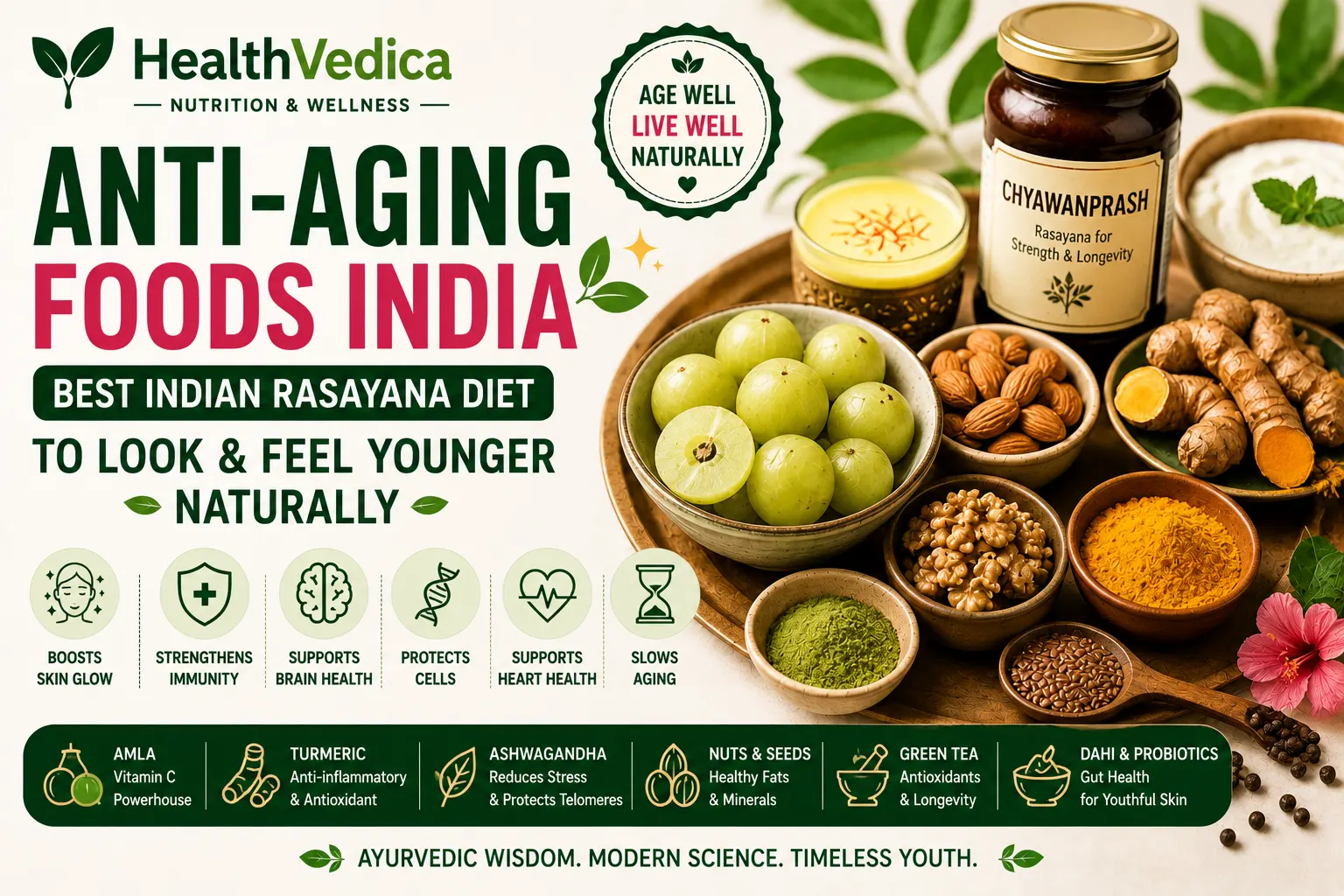
Ayurveda has had a specialised system of anti-aging medicine for over 5,000 years: Rasayana (rejuvenation therapy) — the science of achieving long life, excellent memory, health, youth, and freedom from disease through specific foods, herbs, and practices. The great Ayurvedic Rasayanas — Chyawanprash, Brahmi Ghrita, ashwagandha, amla, and shatavari — are now being validated by molecular biology as genuine anti-aging interventions.
India also has unique epidemiological data: populations in Kerala, Himachal Pradesh, and parts of Tamil Nadu — where traditional diets rich in turmeric, coconut, spices, and vegetables are maintained — consistently show lower rates of neurodegeneration, cardiovascular disease, and certain cancers than urban Indian populations eating modernised diets.
🔬 The Biology of Dietary Anti-Aging
Telomere protection: Telomeres — protective caps at chromosome ends — shorten with each cell division. Short telomeres = older biological age = increased disease risk. Antioxidant-rich diets (high in vitamin C, E, polyphenols) measurably slow telomere shortening. Mediterranean and traditional Indian dietary patterns are associated with longer telomere length in observational studies.
mTOR inhibition: mTOR (mechanistic target of rapamycin) is a master growth signalling pathway. Chronically elevated mTOR (from excess animal protein, sugar, refined carbs) accelerates aging. Intermittent fasting, caloric restriction, and plant-based polyphenols (resveratrol, spermidine, EGCG) inhibit mTOR, extending healthspan in animal models.
AMPK activation: AMPK is the 'energy sensing' enzyme — activated by exercise, fasting, and certain plant compounds (quercetin, berberine, EGCG). AMPK activation improves metabolic efficiency, reduces inflammation, and extends lifespan in multiple organisms.
NAD+ restoration: NAD+ (nicotinamide adenine dinucleotide) — a cellular energy carrier — declines meaningfully with age. Low NAD+ impairs mitochondrial function, DNA repair, and cellular resilience. Dietary precursors (niacin from whole grains and dal, tryptophan from sesame seeds and dahi) support NAD+ synthesis.
Autophagy stimulation: Autophagy — cellular self-cleaning — clears damaged proteins and organelles. It declines with age, contributing to neurodegeneration and cellular dysfunction. Intermittent fasting, spermidine (from wheat germ, mushrooms), and polyphenols stimulate autophagy.
📊 Anti-Aging Compounds in Indian Foods
| Compound | Anti-Aging Mechanism | Indian Sources |
|---|---|---|
| Curcumin | NF-kB inhibition, telomere protection, AMPK activation | Turmeric |
| Withanolides | Cortisol reduction, telomere length, neuroprotection | Ashwagandha |
| Emblicanins | Most potent natural antioxidants, DNA protection | Amla (Amalaki) |
| Quercetin | Senolytic (clears senescent cells), AMPK activation | Onions, moringa, green tea |
| EGCG | mTOR inhibition, AMPK activation, autophagy | Green tea |
| Resveratrol | SIRT1 activation, NAD+ support, telomere protection | Grapes, peanuts, dark berries |
| Beta-carotene | Antioxidant, skin protection, immune support | Carrot, pumpkin, papaya |
| Spermidine | Autophagy induction, cardiovascular longevity | Mushrooms, wheat germ, legumes |
| Sulforaphane | Nrf2 activation, autophagy, cancer prevention | Broccoli, radish, canard seeds |
| Lycopene | DNA protection, UV protection, cancer prevention | Cooked tomatoes, watermelon, guava |
✅ Top Anti-Aging Indian Foods
1. Amla (Amalaki) — Ayurveda's Immortality Fruit
Amla is the single most important Rasayana fruit in Ayurvedic medicine — prescribed for longevity across thousands of years. Modern science reveals why: emblicanins A and B are among the most potent antioxidants ever studied — protecting DNA from oxidative damage, extending cellular lifespan in culture, and reducing markers of biological aging. Amla's vitamin C (600mg/100g) is heat-stable due to tannin complexing — uniquely resistant to degradation that destroys most food vitamin C. Studies show amla supplementation reduces oxidative stress, improves telomere length biomarkers, reduces cholesterol, and improves liver function — all anti-aging effects. One to two amla daily is the cornerstone of any Indian anti-aging protocol.
2. Ashwagandha — Anti-Aging Adaptogen
Ashwagandha (Withania somnifera) is Ayurveda's primary longevity herb — described as providing the strength of ten horses and immunity of iron. Modern longevity research validates these ancient claims: withanolides activate FOXO3a (a gene strongly associated with exceptional longevity in centenarian studies), protect telomeres from cortisol-induced shortening, reduce the senescence-associated secretory phenotype (SASP) of aging cells, and support mitochondrial function. Clinically: ashwagandha reduces biological aging markers, improves muscle strength, cognitive function, and VO2 max — all longevity biomarkers.
3. Turmeric — The Longevity Spice
Curcumin is one of the most studied compounds in longevity science. It inhibits NF-kB (master aging inflammation switch — a phenomenon called 'inflammaging' drives most aging-related diseases), activates AMPK, inhibits mTOR, stimulates autophagy, and protects telomeres from oxidative shortening. Epidemiological data from Bhojpur district (North India) shows the highest turmeric-consuming villages have meaningfully lower rates of Alzheimer's disease — India has one of the world's lowest Alzheimer's rates (4× lower than USA), with turmeric consumption cited as a significant contributing factor.
4. Green Tea — EGCG for Cellular Youth
EGCG is one of the most studied natural compounds in longevity biology. It inhibits mTOR (the aging accelerator), activates AMPK (the longevity enzyme), stimulates autophagy (cellular cleaning), protects telomeres from oxidative damage, and reduces the senescent cell burden. Japanese centenarian populations (who have the world's highest longevity) consistently show high green tea consumption as a dietary pattern. Two to three cups daily provides longevity-relevant EGCG doses.
5. Chyawanprash — Ayurveda's Anti-Aging Formula
Chyawanprash is the world's oldest documented health supplement — its formula unchanged for over 2,500 years. Based primarily on amla (Amalaki), it contains 35–40 additional herbs including ashwagandha, brahmi, shatavari, pippali, cardamom, and cinnamon — each chosen for specific anti-aging, immune-enhancing, and rejuvenating properties. Modern studies show Chyawanprash improves respiratory immunity, increases haemoglobin, improves stamina, reduces oxidative stress, and enhances cognitive function in both elderly and younger populations. 1–2 tsp daily (more in winter, less in summer) is the classical prescription for all adults from age 5 onward.
6. Moringa — Modern Rasayana
The ORAC antioxidant value of moringa (157,000 per 100g) far exceeds blueberries (4,669) and even amla — making it one of the most antioxidant-rich foods on earth. Zeatin (a plant cytokinin in moringa) may directly protects cells from oxidative damage and has been shown to extend cellular lifespan in culture studies. Moringa's anti-aging compounds — quercetin, kaempferol, beta-sitosterol, and isothiocyanates — address multiple aging hallmarks simultaneously. 1 tsp moringa powder daily provides extraordinary antioxidant coverage.
7. Sesame (Til) and Sesame Oil
Sesamin and sesamol in sesame are among the most studied longevity compounds in traditional Asian medicine. Sesamin activates PPAR-alpha (a nuclear receptor that improves fat metabolism and reduces inflammation), extends lifespan in C. elegans (longevity model organism), and protects liver from oxidative damage. Sesame lignans also support hormonal balance in aging women (phytoestrogenic effects). Traditional Indian use of til in winter diet and sesame oil for Abhyanga massage both provide anti-aging sesamin benefits.
🌿 Rasayana Therapy: Ayurveda's Anti-Aging Science
Rasayana therapy is Ayurveda's eighth branch — dedicated to promoting longevity, health, and vitality. Classical Rasayana formulations are extraordinary in their complexity and scope:
Brahma Rasayana: The most complex classical formula with 48 ingredients — ashwagandha, brahmi, amla, shatavari, bala, and many more — prescribed for comprehensive rejuvenation.
Narasimha Rasayana: Combines sesame, ghee, milk, and multiple herbs — specifically for physical strength, longevity, and neuroprotection.
Shatavari Kalpa: Particularly for women's anti-aging — supports hormonal balance through menopause transition, bone density, and cognitive function.
The Rasayana principle of Agni as the foundation of Rasayana: No Rasayana works without strong digestion. Improving Agni (digestive fire) through triphala, ginger, and eating in alignment with circadian rhythms is the prerequisite for all anti-aging nutritional interventions.
🚫 Accelerated Aging Foods to Eliminate
Sugar and advanced glycation: Excess sugar glycates collagen and proteins throughout the body — in skin (wrinkles, sagging), blood vessels (stiffening), kidneys (nephropathy), and brain (neurodegeneration). Reducing sugar is the single most impactful dietary anti-aging intervention for most Indians.
Ultra-processed foods: Associated with accelerated telomere shortening in multiple cohort studies. Contribute to inflammaging, gut dysbiosis, and oxidative stress — accelerating all nine aging hallmarks simultaneously.
Excess animal protein (especially red meat): Chronically elevates mTOR — the primary longevity-suppressing pathway. Plant protein sources (dal, legumes) provide protein without the same mTOR activation. The world's longest-lived populations (Blue Zones) consistently eat predominantly plant-based diets.
💡 Daily Anti-Aging Indian Protocol
Morning Rasayana Ritual: 1 tsp Chyawanprash in warm milk | 2 soaked almonds + 2 walnuts + 2 Brazil nuts | 1–2 fresh amla | Ashwagandha in warm milk (alternate days)
Breakfast: 1 tbsp ground flaxseeds + seasonal fruit + green tea
Lunch: Rainbow plate — 5+ colours of vegetables + dal + millet roti + dahi | Turmeric + black pepper in all cooking
Evening: 1 tsp moringa powder in green tea or water | Sesame til laddoo (1 small) or soaked sesame seeds
Dinner: Light, warm meal before 7 PM (circadian alignment) | Include cruciferous vegetables (sulforaphane) | Small amount of desi ghee for fat-soluble vitamin absorption
Bedtime: Kesar-ashwagandha milk | 20 min early — sleep before 10 PM (growth hormone, cellular repair peak during deep sleep before midnight)
Evidence note: This article is an educational nutrition guide. General diet guidance is aligned where applicable with ICMR-NIN Dietary Guidelines for Indians, WHO healthy-diet guidance, and relevant Ministry of Ayush materials. Ayurvedic concepts are presented as traditional perspectives and are not a substitute for medical diagnosis or treatment.