🌿 Introduction
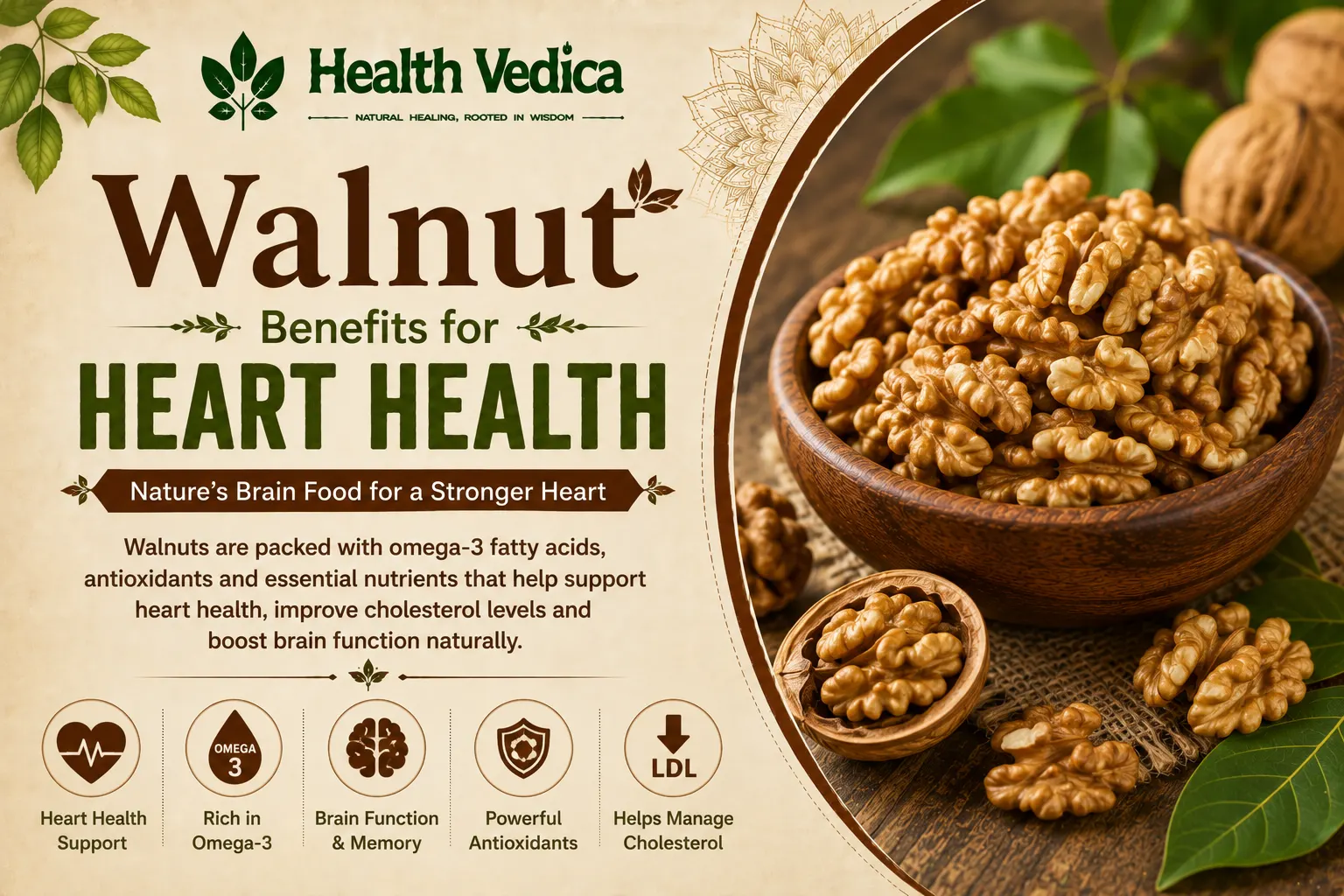
Walnuts, known as Akhrot in India, are often called the ultimate brain food — and for good reason. Their remarkable resemblance to the human brain is nature's own signal of their neurological benefits. Rich in omega-3 fatty acids, polyphenols, and antioxidants, walnuts are among the most nutritionally dense nuts available. Grown abundantly in Jammu & Kashmir and Himachal Pradesh, akhrot has been a part of Indian wellness traditions for thousands of years.
📊 Nutritional Value Per 100g of Walnuts
| Nutrient | Amount | % Daily Value (DV) |
|---|---|---|
| Calories | 654 kcal | 33% |
| Protein | 15.2 g | 30% |
| Total Fat | 65.2 g | 84% |
| Omega-3 (ALA) | 9.08 g | — |
| Omega-6 | 38.1 g | — |
| Carbohydrates | 13.7 g | 5% |
| Dietary Fiber | 6.7 g | 24% |
| Vitamin B6 | 0.54 mg | 32% |
| Folate | 98 mcg | 25% |
| Magnesium | 158 mg | 38% |
| Phosphorus | 346 mg | 49% |
| Copper | 1.59 mg | 177% |
| Manganese | 3.41 mg | 148% |
📉 Glycemic Index
Walnuts have an extremely low glycemic index of 15, making them one of the safest nuts for blood sugar management. Their high fat and fiber content ensures minimal impact on blood glucose.
🕉️ Ayurvedic Properties & Dosha Effect
In Ayurveda, walnuts are Vata-pacifying and classified as Medhya Rasayana (brain rejuvenators). They are Ushna (hot potency), Snigdha (unctuous), and Guru (heavy). Regular consumption in winter months is particularly recommended in Ayurvedic medicine as they generate internal warmth and nourish the nervous system. They may mildly aggravate Pitta and Kapha in excess.
💚 Health & Healing Benefits
Brain & Nervous System: Walnuts contain the highest plant-based omega-3 fatty acid (ALA) content of any nut. ALA supports brain structure, reduces neuroinflammation, and has been linked to improved mood, memory, and protection against depression and cognitive decline.
Heart Health: Regular walnut consumption reduces LDL cholesterol, improves artery function, and decreases inflammatory markers like CRP — significantly lowering the risk of heart disease.
Anti-Inflammatory Properties: Ellagitannins (converted to urolithins in the gut), polyphenols, and omega-3s in walnuts collectively combat chronic inflammation, linked to cancer, arthritis, and diabetes.
Gut Health: Walnuts act as a prebiotic, feeding beneficial gut bacteria like Lactobacillus and Bifidobacterium, improving the gut microbiome and digestive health.
Cancer Prevention: Research suggests compounds in walnuts may inhibit growth of breast, prostate, and colorectal cancer cells due to their antioxidant and anti-inflammatory properties.
Reproductive Health: In men, walnut consumption has been shown to improve sperm quality , vitality, and motility. For women, omega-3s support hormonal balance.
🕉️ Ayurvedic Recipes & Tonic Drinks
Akhrot & Honey Paste: Crush 4–5 walnuts and mix with raw honey and a pinch of black pepper — a powerful brain tonic and immune booster taken in the morning. Walnut & Warm Milk: Blend 5 walnuts with warm milk and a pinch of ashwagandha for a sleep-inducing, stress-relieving nighttime drink. Walnut Chutney: A popular Kashmiri preparation — ground walnuts with garlic , red chili, and salt — an antioxidant-rich condiment.
✅ Best Ways to Eat Walnuts
Eat walnuts raw or lightly dry-roasted without salt or sugar. The brown skin (papery cover) contains concentrated antioxidants — do not peel it off. Add walnuts to oatmeal, yogurt, salads, or smoothies for a nutrition boost.
📅 Daily Recommended Intake
Adults should aim for 5–7 walnut halves (28g) per day. Pregnant women and those with depression or anxiety may benefit especially from regular walnut intake.
⚠️ Precautions
Tree nut allergy sufferers should avoid walnuts. Excessive intake may cause digestive heaviness or increase Pitta. Those on blood thinners should consult a doctor as omega-3s may affect coagulation.