Quick answer
There is no single food that is automatically healthier for everyone. White Bread vs Brown Bread Comparison are useful choices in different situations, and the better option depends on your overall diet, portion size, cooking method and personal needs. This guide compares the two foods in plain language so you can make an informed choice.
📊 White Bread vs Brown Bread: Nutritional Comparison (per 100g)
| Nutrient | White Bread | Brown Bread (whole wheat) | Advantage |
|---|---|---|---|
| Fibre | 2.7g | 6–7g | Brown bread (2–3× higher) |
| Glycaemic Index | ~75 | ~50–65 | Brown bread |
| Protein | 9g | 13g | Brown bread |
| B vitamins (thiamine, niacin) | Partially added back via fortification | Naturally retained | Brown bread |
| Magnesium | 25mg | 82mg | Brown bread |
| Calories | 265 kcal | 247 kcal | Roughly equal |
| Texture & shelf life | Softer, longer shelf life | Denser, shorter shelf life | White bread |
✅ Where Brown Bread Wins
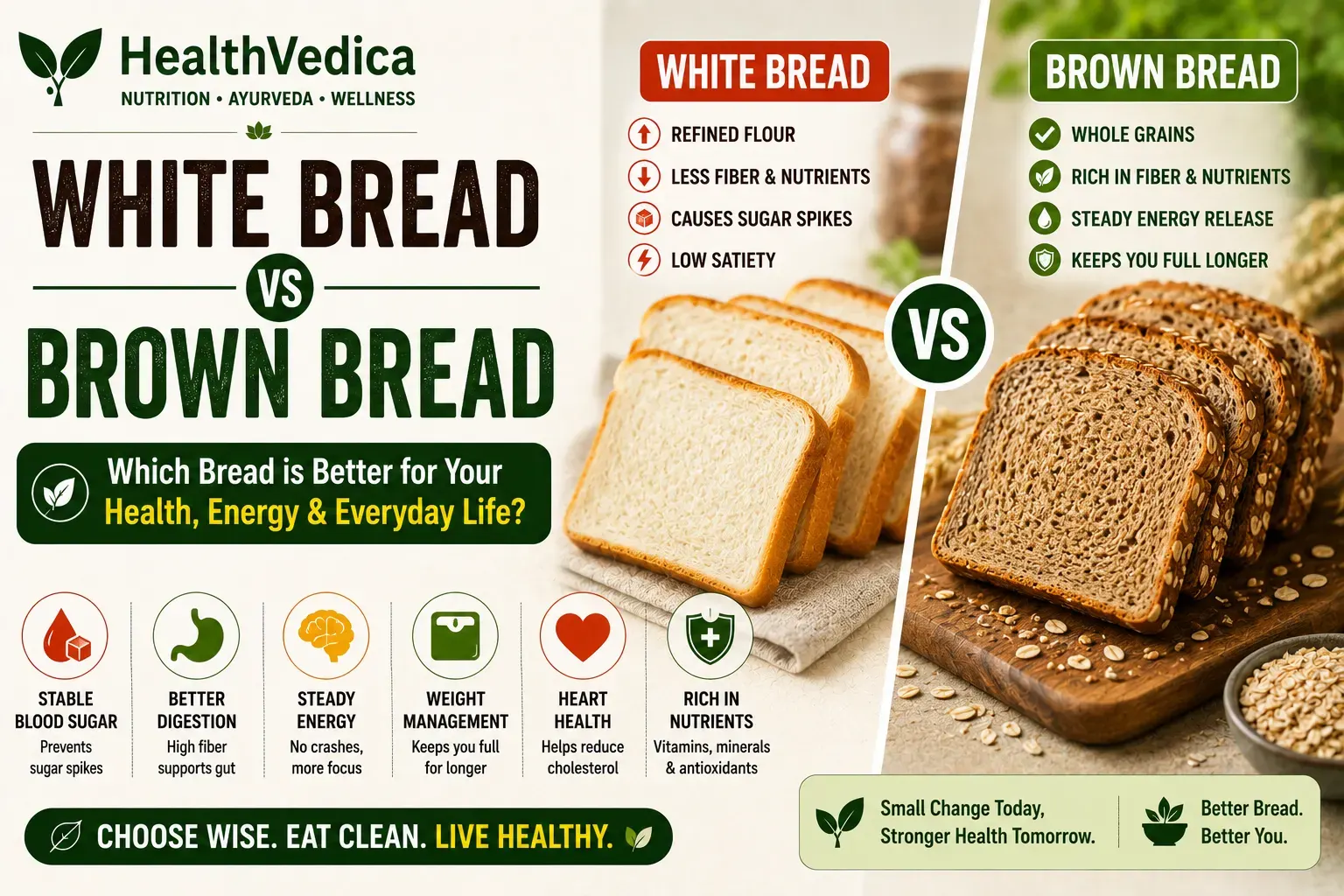
Higher fibre: Genuine whole wheat brown bread contains 2–3 times more fibre than white bread, supporting digestive health, satiety, and steadier blood sugar response.
Lower glycaemic index: The retained bran and germ slow starch digestion, giving brown bread a meaningfully lower GI than white bread, which is relevant for both diabetics and general blood sugar stability.
More micronutrients: Brown bread naturally retains more magnesium, B vitamins, and other minerals that are stripped away during the refining process used for white flour.
✅ Where White Bread Wins
Digestibility for sensitive stomachs: The lower fibre content of white bread can be easier on digestion for people with certain gastrointestinal conditions or during recovery from illness, where high-fibre foods may cause discomfort.
Texture and shelf life: White bread's softer texture and longer shelf life make it more practical for some households, and it is often cheaper to produce and purchase.
Familiarity in recipes: For certain preparations like sandwiches requiring a very soft texture, white bread is sometimes the more functional choice.
🍽️ Which Should You Choose?
For everyday health, genuine whole wheat brown bread is the better default choice due to its higher fibre, lower glycaemic index, and greater micronutrient content. The key caveat is verifying the label actually lists whole wheat flour as the primary ingredient, since many commercial 'brown breads' are simply coloured white bread with minimal fibre difference. White bread can remain an occasional choice or be used for specific digestive needs, but should not be the daily staple for most people.
Sources and context
Nutrition guidance in this article is framed around Indian dietary guidance from ICMR–National Institute of Nutrition (ICMR-NIN). Where Ayurveda is discussed, it is presented as a traditional framework and kept separate from modern clinical evidence. The Ministry of AYUSH's published guidance emphasises factors such as food quality, preparation, quantity, timing and individual suitability; these principles are useful context, but they should not be treated as a substitute for diagnosis or medical treatment.
Important: Nutrition needs vary with age, pregnancy, medications and medical conditions. If you have diabetes, kidney disease, coeliac disease, a food allergy or another diagnosed condition, use personalised advice from a qualified clinician or dietitian.