Quick answer
There is no single food that is automatically healthier for everyone. Brown Sugar vs White Sugar Comparison are useful choices in different situations, and the better option depends on your overall diet, portion size, cooking method and personal needs. This guide compares the two foods in plain language so you can make an informed choice.
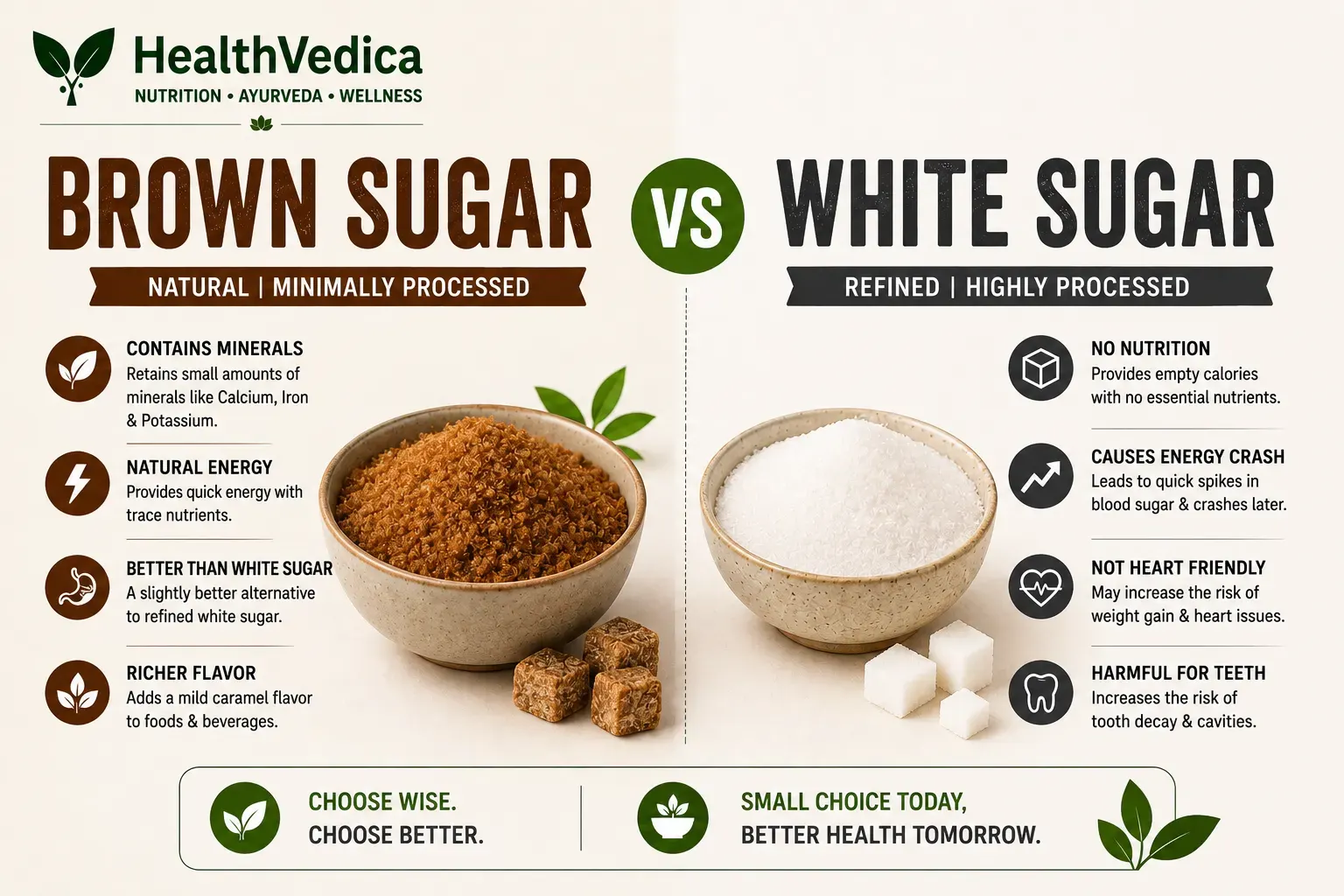
📊 Brown Sugar vs White Sugar: Nutritional Comparison (per 100g)
| Nutrient | Brown Sugar | White Sugar | Advantage |
|---|---|---|---|
| Calcium | 83mg | ~1mg | Brown sugar (small but real) |
| Iron | 1.9mg | ~0mg | Brown sugar |
| Potassium | 133mg | ~2mg | Brown sugar |
| Calories | 380 kcal | 387 kcal | Brown sugar (marginally lower) |
| Glycaemic Index | ~64 | ~65 | Roughly equal |
| Moisture content | Higher (from molasses) | Low | Context-dependent |
| Processing | Refined with molasses added/retained | Fully refined | Brown sugar (marginally less processed) |
✅ Where Brown Sugar Wins
Trace minerals from molasses: The molasses content in brown sugar contributes small but real amounts of calcium, iron, and potassium that pure white sugar does not contain, though these amounts are too small to meaningfully impact daily mineral intake at typical serving sizes.
Slightly lower calories: Due to its higher moisture content from molasses, brown sugar contains marginally fewer calories per 100g than white sugar, though the practical difference at typical serving sizes is negligible.
Flavour depth: Brown sugar's molasses content adds a caramel-like depth of flavour to baked goods and sauces that white sugar's neutral sweetness cannot replicate.
✅ Where White Sugar Wins
Consistency in baking: White sugar's low moisture content and uniform crystal structure make it more predictable in recipes requiring precise texture, such as meringues or certain confectionery, where brown sugar's moisture can alter results.
Longer shelf life without clumping: White sugar does not clump or harden the way brown sugar can when its molasses content dries out, making storage simpler.
Cost: White sugar is typically cheaper to produce and purchase than brown sugar in most markets.
🍽️ Which Should You Choose?
The honest answer is that brown sugar offers only a marginal nutritional advantage over white sugar — the mineral content is real but too small at typical serving sizes to meaningfully change health outcomes. Neither should be considered a health food, and both should be used sparingly regardless of colour. Choosing between them can reasonably come down to flavour preference and recipe requirements rather than health considerations.
Sources and context
Nutrition guidance in this article is framed around Indian dietary guidance from ICMR–National Institute of Nutrition (ICMR-NIN). Where Ayurveda is discussed, it is presented as a traditional framework and kept separate from modern clinical evidence. The Ministry of AYUSH's published guidance emphasises factors such as food quality, preparation, quantity, timing and individual suitability; these principles are useful context, but they should not be treated as a substitute for diagnosis or medical treatment.
Important: Nutrition needs vary with age, pregnancy, medications and medical conditions. If you have diabetes, kidney disease, coeliac disease, a food allergy or another diagnosed condition, use personalised advice from a qualified clinician or dietitian.