💪 You Don't Need Expensive Sports Foods to Fuel a Workout
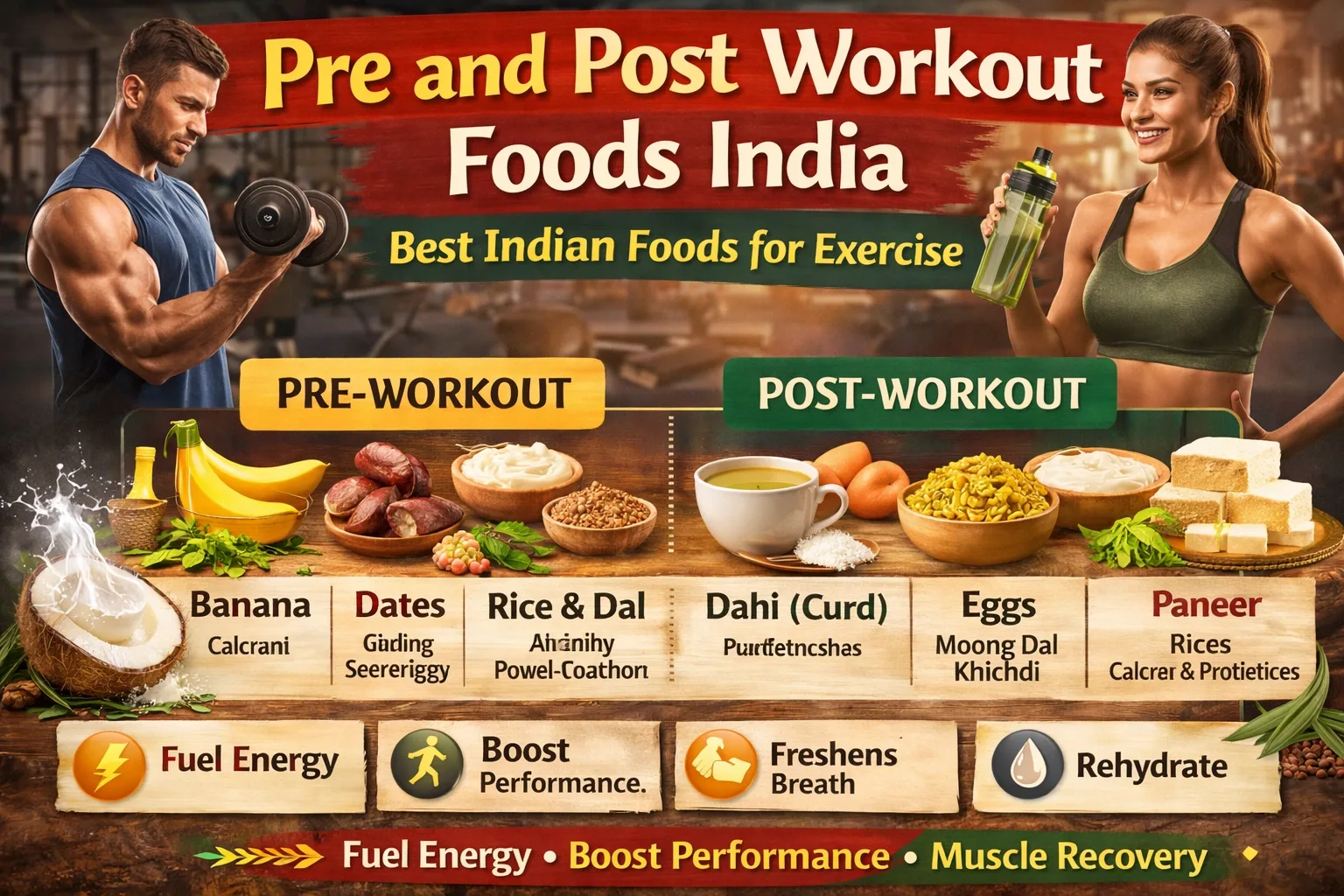
For most gym-goers, runners and recreational athletes, the Indian kitchen already contains excellent workout foods: banana, dates, poha, oats, rice, roti, dal, curd, eggs, paneer, soy and coconut water.
The goal is simple: eat enough carbohydrate to support training, enough protein to support recovery, and enough fluid and electrolytes to replace what you lose through sweat.
⏰ How Meal Timing Changes the Choice
| Time Before Exercise | Good Approach |
|---|---|
| 2–3 hours | Normal balanced meal: rice/roti + dal/egg/fish/paneer + vegetables |
| 60–90 minutes | Lighter meal: oats + milk + banana, poha + curd |
| 15–45 minutes | Small, easy-to-digest carbohydrate: banana or a few dates |
🍌 Best Pre-Workout Foods
Banana: convenient carbohydrate and potassium. Useful when you need something quick.
Dates: concentrated carbohydrate in a small portion, useful before exercise when a large meal would feel uncomfortable.
Poha: a practical carbohydrate-rich Indian meal; add curd or another protein source when timing allows.
Oats + milk + fruit: useful for morning training when you have 60–90 minutes before exercise.
Rice + dal + vegetables: excellent as a larger meal when eaten sufficiently before training.
🥣 What to Eat After a Workout
After training, focus on a protein-rich meal plus carbohydrate according to your activity and energy needs.
- Dahi + fruit: convenient protein and carbohydrate.
- Eggs + rice/roti: complete protein plus carbohydrate.
- Paneer/tofu + roti: vegetarian recovery option.
- Dal + rice + vegetables: simple, affordable and nutritionally balanced.
- Protein shake + fruit: useful when a full meal is not practical.
🧬 How Much Protein After Training?
For many exercising adults, a meal providing roughly 20–40 g of high-quality protein is a practical target, depending on body size and total daily intake.
You do not need to force down protein immediately after the last set. If you ate a protein-containing meal before training, the need for an urgent post-workout shake is even lower.
💧 Hydration: Don't Ignore the Basics
For ordinary workouts, water is usually sufficient. If you exercise for a long duration, sweat heavily or train in hot conditions, sodium and other electrolytes become more relevant.
Coconut water provides fluid and potassium, but it is not a perfect replacement for a sodium-rich sports drink during prolonged heavy sweating. Your hydration strategy should match the duration and intensity of exercise.
🏃 Should You Exercise Fasted?
Fasted exercise is not automatically better for fat loss. It can be comfortable for some people during low-intensity exercise, while others perform better after a small snack.
For demanding strength or high-intensity sessions, a small carbohydrate snack can improve training quality if you are hungry or low on energy.
🚫 Common Indian Gym-Nutrition Mistakes
- Skipping meals because you fear food will “undo” the workout.
- Relying on sugary mass-gainer drinks without tracking total calories.
- Taking multiple supplements while ignoring daily protein and vegetables.
- Believing that a shake must be consumed within 30 minutes.
- Drinking excessive water or caffeine immediately before training.
🌿 Where Ayurveda Can Fit
Traditional Indian food practices can complement modern sports nutrition when used sensibly. Foods such as khichdi, curd, rice, dal and spices can be practical meals around exercise.
Ayurvedic herbs and supplements should be treated differently from ordinary foods. “Natural” does not automatically mean safe, and supplements should be discussed with a qualified professional when you take medicines or have a medical condition.
📅 Simple Indian Workout-Day Plan
60–90 minutes before: Poha with curd or oats with milk and banana.
During: Water; add electrolytes when the session is long or sweating is heavy.
After: Eggs + rice, paneer/tofu + roti, dal + rice, or a protein shake + fruit.
Later meals: Keep protein distributed across the day and include vegetables, fruit and whole grains.
💡 Final Takeaway
The best workout diet is the one you can repeat. You do not need imported sports foods or a complicated supplement stack. Use familiar Indian foods, match meal size to workout timing, get enough total protein and carbohydrate, and hydrate appropriately.