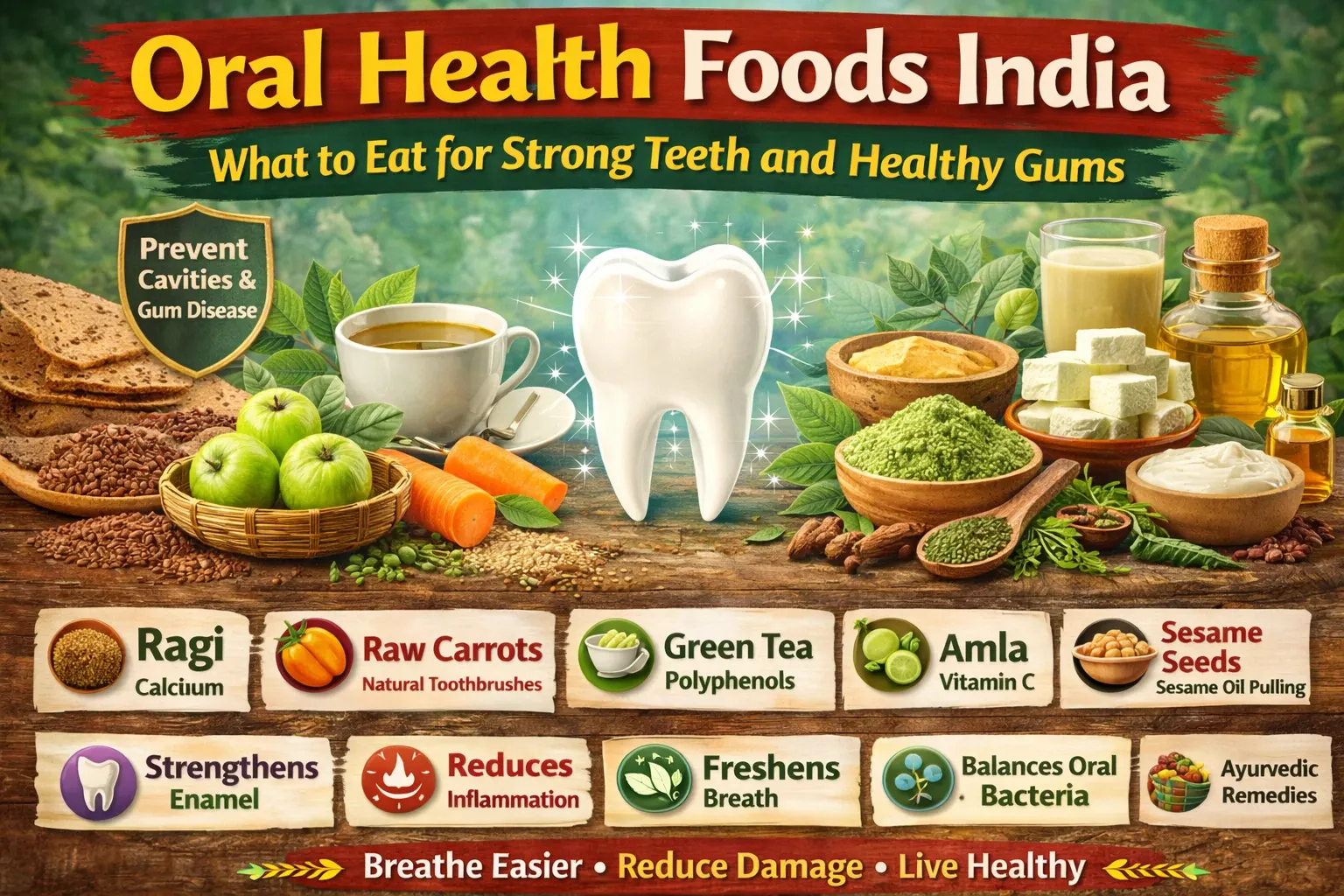
🦷 Oral Health Foods India: Eat for Strong Teeth, Healthier Gums & Fewer Sugar Attacks
Food cannot replace a toothbrush, fluoride toothpaste, interdental cleaning or professional dental treatment. But diet strongly affects the environment in which teeth and gums have to function.
The biggest diet message is not “find a superfood.” It is “reduce repeated free-sugar exposure and build nutrient-dense meals.” WHO identifies free sugars as a major risk factor for dental caries and emphasises fluoride exposure and plaque control as key parts of prevention. [1][2]
🔬 How Food Affects Teeth
Tooth decay: plaque bacteria use free sugars and produce acids that demineralise tooth surfaces. The risk rises when sugar exposure is frequent and plaque removal is inadequate. [2]
Gum health: nutrition matters for tissue maintenance and overall health, but established gum disease needs dental assessment and treatment. Vitamin C, vitamin D, protein and other nutrients support normal tissues; they are not replacements for scaling, periodontal treatment or oral hygiene.
Saliva: chewing stimulates saliva, which helps clear food particles and buffers acids. Crunchy vegetables can therefore be useful as foods, but they are not literally a substitute for brushing.
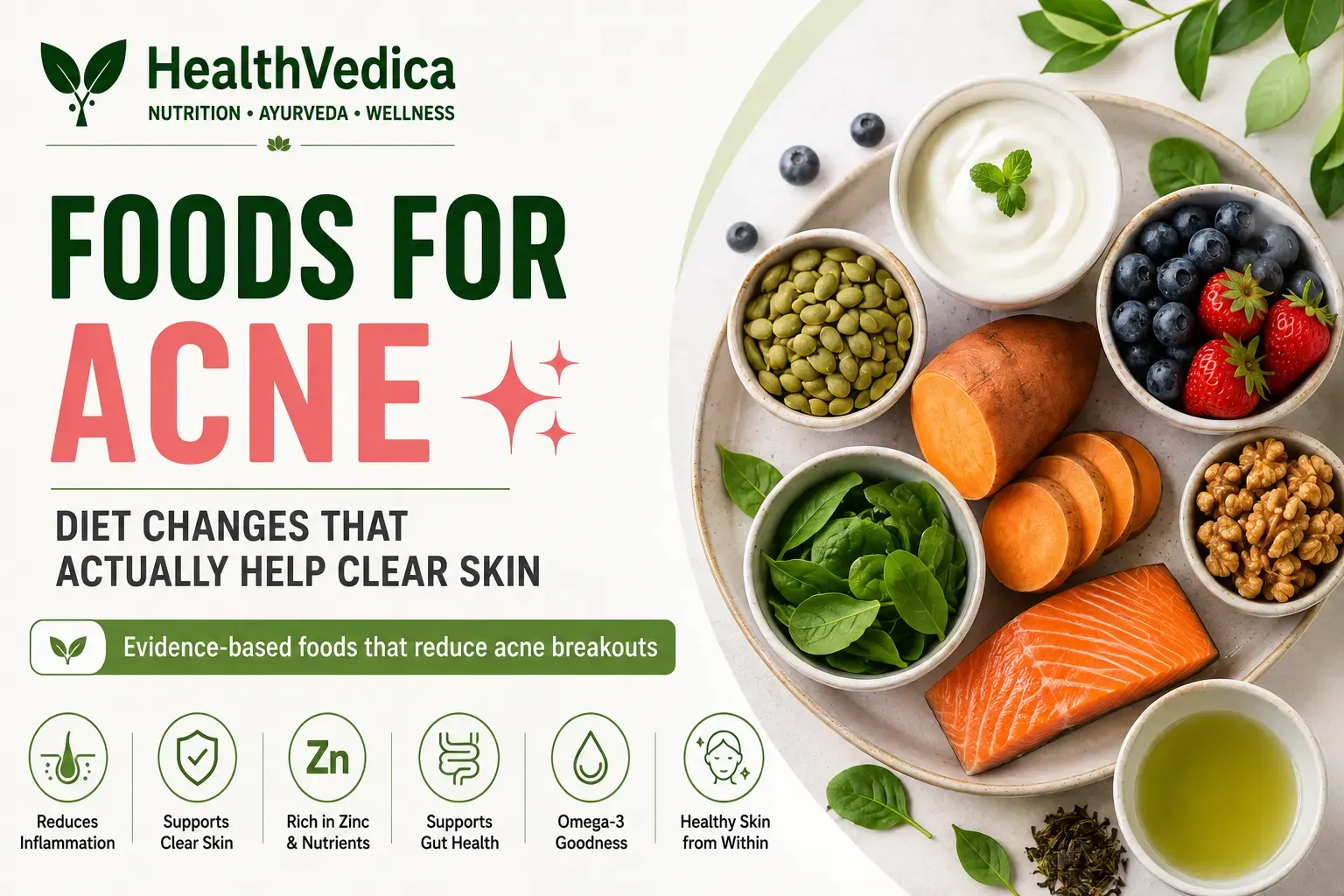
🥗 Best Foods for Teeth & Gum Health
| Food Group | Useful Nutrients / Features | Indian Examples |
|---|---|---|
| Dairy & calcium-rich foods | Calcium, protein; dairy can support tooth mineral balance | Dahi, milk, paneer, suitable fortified alternatives |
| Leafy greens | Folate, carotenoids, magnesium and other micronutrients | Palak, methi, amaranth, drumstick leaves |
| Vitamin-C-rich fruit | Vitamin C supports normal collagen formation | Guava, amla, citrus, capsicum |
| Whole foods with protein | Protein supports tissue maintenance | Dal, eggs, fish, chicken, paneer, curd |
| Nuts & seeds | Minerals and unsaturated fats | Sesame, almonds, pumpkin seeds, walnuts |
| Whole vegetables & fruit | Fibre, micronutrients and chewing/saliva stimulation | Carrot, cucumber, guava, apple, beans |
| Fluoride exposure | Fluoride is one of the key proven tools for caries prevention | Use fluoride toothpaste appropriate to age and dental advice |
⭐ 7 Indian Foods & Habits Worth Keeping
1. Plain curd: a protein- and calcium-containing food that fits a balanced meal without added sugar.
2. Guava and amla: vitamin-C-rich whole foods. Choose the whole fruit more often than sweetened juice.
3. Leafy greens: add micronutrients and fibre to meals.
4. Sesame and nuts: useful mineral-rich foods in normal portions.
5. Vegetables at meals: vegetables increase dietary quality and can stimulate chewing and saliva.
6. Water after meals: a simple way to rinse away loose food residues; it does not replace brushing.
7. Lower-sugar drinks: reducing sweet chai, cola and sweetened beverages can remove a major source of repeated sugar exposure.
🚫 Foods & Habits Most Likely to Hurt Dental Health
| Pattern | Why It Matters | Better Habit |
|---|---|---|
| Frequent sugary chai | Repeated free-sugar exposure increases caries risk | Reduce sugar and frequency; use unsweetened tea more often |
| Soft drinks / sweetened beverages | Sugar and acidity can be harmful when consumed frequently | Choose water more often |
| Sticky sweets | Can stay on tooth surfaces and prolong exposure | Keep portions occasional and rinse with water afterward |
| Constant snacking | Can increase the number of acid challenges | Prefer structured meals/snacks rather than continuous grazing |
| Tobacco / areca nut | Major oral-health risk factors; associated with oral disease and cancer | Avoid completely and seek cessation support |
WHO recommends limiting free sugars to below 10% of energy intake and suggests that below 5% provides additional benefit for dental-caries prevention. ICMR-NIN’s Indian dietary guidance similarly flags high added-sugar intake as unhealthy. [1][2][3]
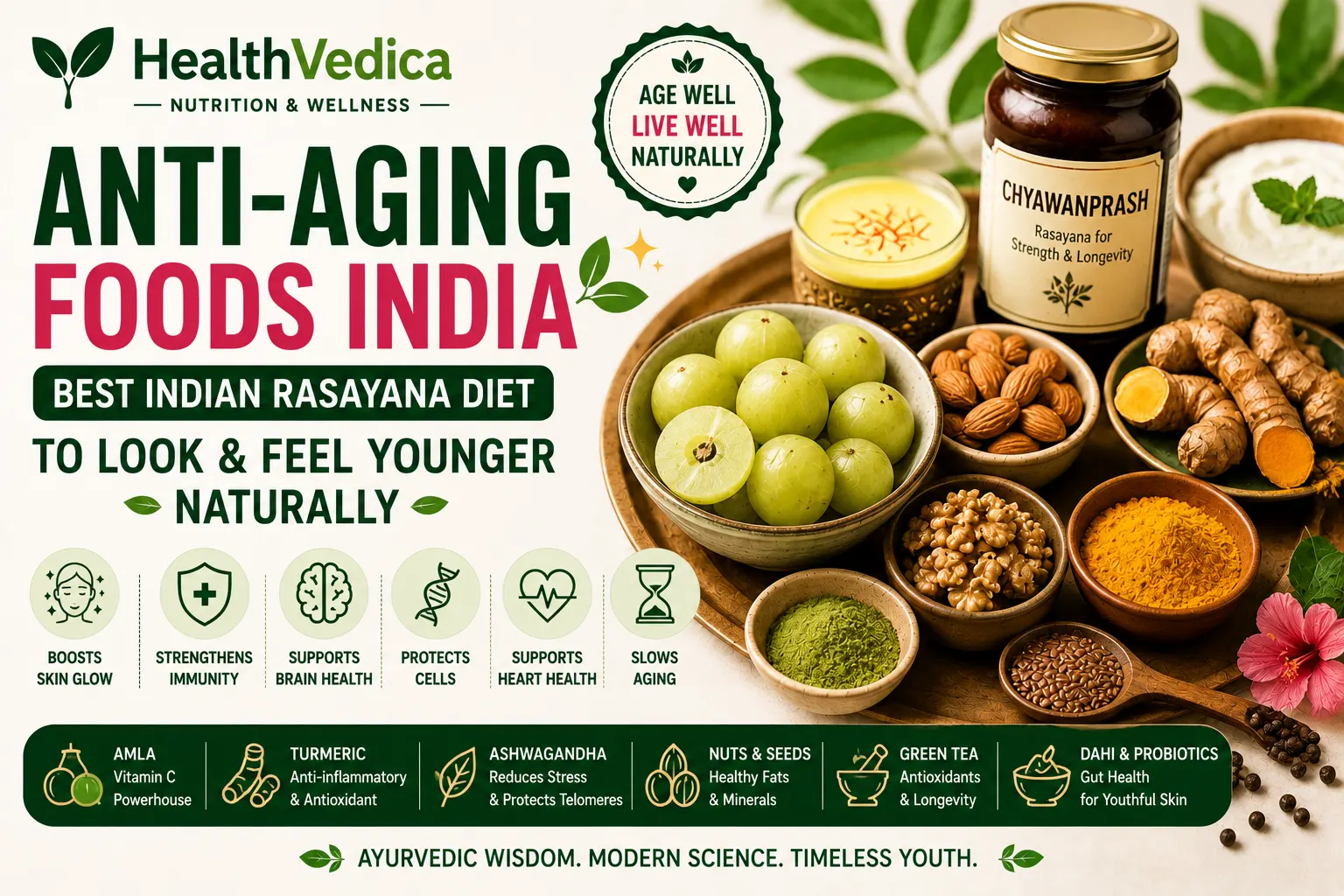
🌿 Ayurveda: Oil Pulling, Neem & Clove — What They Can and Cannot Do
Oil pulling, neem, clove and herbal tooth powders are longstanding Ayurvedic or traditional oral-care practices. They can be presented as adjunctive practices, but your site should not tell readers they replace fluoride toothpaste, flossing or dental treatment.
Oil pulling: small studies have reported reductions in plaque or oral bacterial measures, but the evidence is not strong enough to position it as a replacement for standard preventive dentistry.
Neem and clove: traditional products contain compounds with antimicrobial activity. That is different from proving that a homemade neem stick or clove can prevent every cavity or reverse periodontitis.
Best modern + traditional combination: keep evidence-based brushing with fluoride toothpaste, interdental cleaning and dental check-ups as the foundation; use traditional practices only as optional adjuncts when they are safe and do not delay care.
🪥 The Practical Indian Oral-Care Routine
Morning: brush twice daily with fluoride toothpaste appropriate to age, clean between teeth, and clean the tongue gently.
Meals: eat a balanced meal, keep added sugar modest, and avoid sipping sweet drinks for long periods.
After acidic foods/drinks: rinse with water; avoid aggressive brushing immediately after a strong acid exposure.
Night: brush before bed and clean between teeth. Night-time plaque control is especially important because saliva flow is lower during sleep.
Dental visits: seek professional assessment for bleeding gums, tooth pain, sensitivity, swelling, loose teeth, persistent bad breath, white/red oral patches or non-healing ulcers.
📚 Sources & Editorial Note
The nutrition section uses ICMR-NIN dietary guidance. Oral-health prevention is cross-checked against WHO recommendations emphasizing free-sugar reduction, fluoride exposure and plaque control. Traditional practices are described as adjuncts rather than replacements for dental treatment.