🌿 Introduction
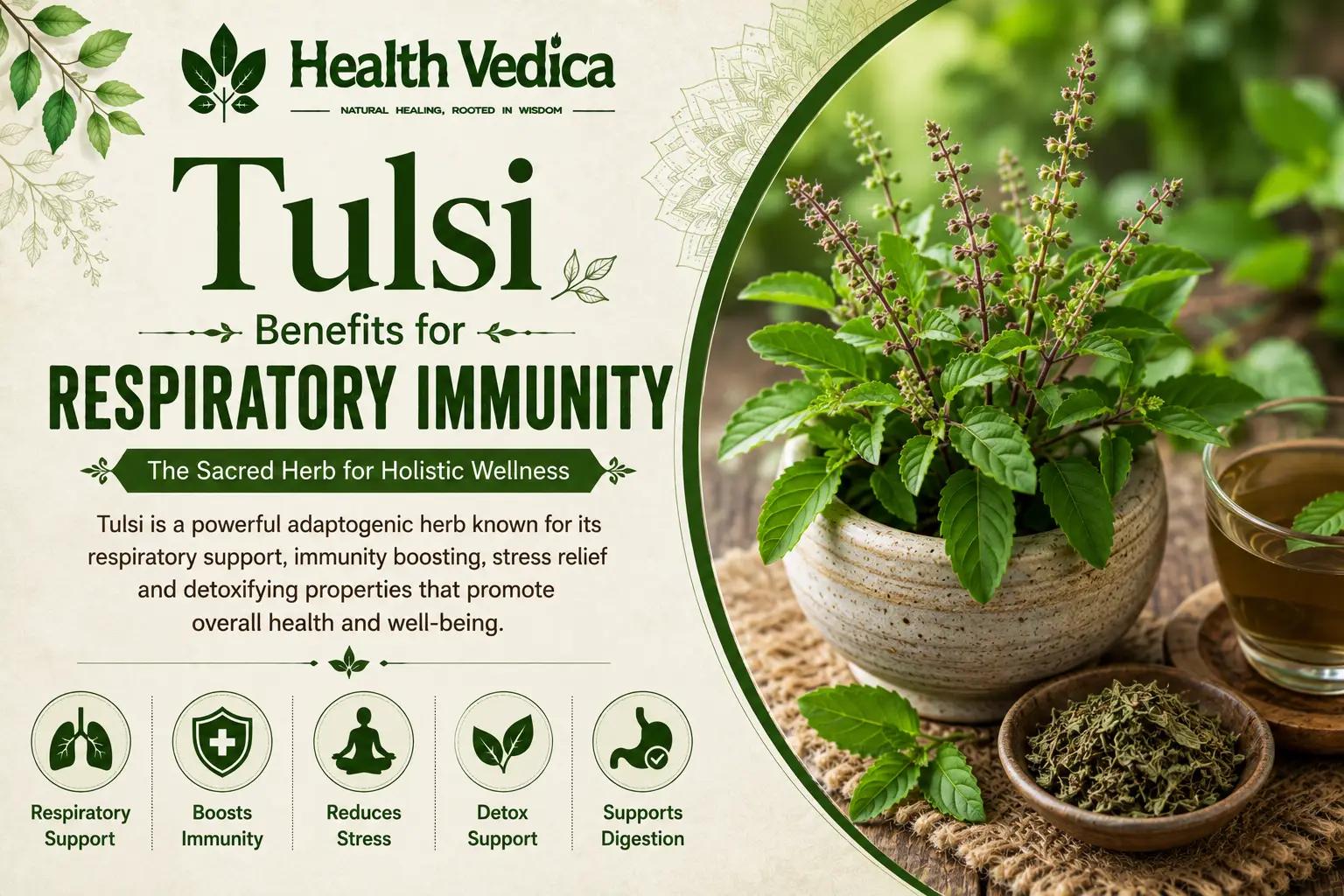
Tulsi (Ocimum tenuiflorum / Ocimum sanctum), the Sacred Holy Basil, is perhaps the most revered plant in all of Indian culture — worshipped in nearly every Hindu household, considered the physical manifestation of the goddess Lakshmi, and recognized by Ayurveda as the 'Queen of Herbs' and 'Mother Medicine of Nature.' This aromatic herb, with its distinctive clove-like fragrance, has been used medicinally for over 5,000 years and is among the most scientifically validated medicinal plants on earth. With over 300+ published clinical studies, Tulsi is proven as an adaptogen, immunomodulator, anti-infective, radioprotector, anti-cancer agent, and environmental purifier. It is the one herb that almost every Indian household grows, consumes, and reveres daily.
🔬 Key Active Compounds
| Compound | Primary Benefit |
|---|---|
| Eugenol (70–90% of oil) | Anti-inflammatory, antimicrobial, analgesic |
| Ursolic Acid | Anti-cancer, anti-arthritic |
| Rosmarinic Acid | Antioxidant, anti-allergic |
| Ocimumosides A & B | Adaptogenic, cortisol reduction |
| Oleanolic Acid | Liver protective, anti-viral |
| Linalool | Anxiolytic, antifungal |
| Carvacrol | Antimicrobial, anti-biofilm |
💊 Nutritional Profile (Per 100g Fresh Leaves)
| Nutrient | Amount | DV% |
|---|---|---|
| Vitamin K | 414 mcg | 345% |
| Vitamin A | 264 mcg RAE | 29% |
| Vitamin C | 18 mg | 20% |
| Iron | 3.2 mg | 18% |
| Calcium | 177 mg | 18% |
| Manganese | 1.1 mg | 48% |
| Protein | 3.2 g | 6% |
🌡️ Ayurvedic Properties & Dosha Effect
Tulsi is Katu (pungent) and Tikta (bitter) with Laghu (light) and Ruksha (dry) properties. It has Ushna Virya (hot potency) and Katu Vipaka (pungent post-digestive). It primarily pacifies Vata and Kapha doshas and may mildly aggravate Pitta in excess. Its primary Ayurvedic actions include Kapha-Vatahara, Dipana (digestive stimulant), Pachana, Shwasahara (respiratory relief), and Kasahara (cough-relieving). It purifies the air, mind, and body — and is considered Sattvic (pure consciousness-promoting) in Ayurveda.
💪 Health & Healing Benefits
Adaptogen & Stress Relief: Tulsi is one of India's most important adaptogenic herbs. Its Ocimumosides reduce cortisol, balance HPA axis function, and improve mental clarity and resilience to psychological stress — clinically shown to reduce anxiety, depression, and cognitive fatigue.
Respiratory Master: Tulsi is the foremost Ayurvedic herb for all respiratory conditions — cough, cold, flu, bronchitis, asthma, and sore throat. Eugenol acts as a bronchodilator and expectorant, while its antimicrobial compounds eliminate respiratory pathogens.
Immunity Supercharger: Tulsi boosts production of antibodies, enhances T-cell and NK-cell activity, increases interferon production, and modulates both innate and adaptive immunity — making it the top choice for seasonal illness prevention.
Anti-diabetic: Tulsi reduces fasting blood glucose by 17.6% and postprandial blood glucose by 7.3% in clinical trials. Its compounds inhibit alpha-glucosidase and improve insulin sensitivity.
Anti-cancer Research: Ursolic acid and eugenol induce apoptosis in cancer cells, inhibit angiogenesis, and have shown promising activity against breast, oral, skin, and liver cancers in multiple studies.
Cardiovascular Health: Tulsi lowers LDL cholesterol, reduces blood pressure, prevents platelet aggregation, and protects cardiac tissue from oxidative damage.
Oral Health: Chewing 2–5 Tulsi leaves daily significantly reduces oral bacteria, prevents cavities, freshens breath, and reduces gingivitis — an ancient and scientifically validated Indian dental practice.
Radioprotection: Uniquely among medicinal herbs, Tulsi has documented radioprotective properties — protecting against radiation-induced DNA damage and oxidative stress. Used supportively in cancer radiotherapy contexts.
🍵 Traditional Preparations
Tulsi Kadha: The quintessential Indian immunity drink — boil 10–15 Tulsi leaves with ginger, black pepper, cinnamon, and cloves in water. Add honey and lemon. Drink warm 2–3 times daily during illness.
Tulsi Tea: Fresh or dried Tulsi leaves brewed as herbal tea — the most popular daily consumption method across India. Available as packaged Tulsi tea from Organic India and other brands.
Tulsi Ark (Distillate): Concentrated Tulsi water distillate — used for fever, respiratory infections, and as a general daily tonic.
Tulsi + Honey: For cough, sore throat, and immune support — a teaspoon of Tulsi juice mixed with raw honey.
Tulsi + Ginger Juice: For digestive support, motion sickness, and respiratory infections.
Panchang Tulsi Swaras: Juice of all five parts of the Tulsi plant (leaves, stem, root, flower, seed) — the most potent classical preparation described in Ayurvedic texts.
✅ Key Advantages
Most scientifically studied Ayurvedic herb. Comprehensive adaptogen for stress and anxiety. Best natural respiratory herb in India. Boosts immunity powerfully. Anti-diabetic and cardioprotective. Anti-cancer research potential. Oral health and dental protection. Radioprotective properties. Widely accessible — grown in millions of Indian homes. Safe for daily use including children.
⚠️ Tips & Precautions
Avoid chewing Tulsi leaves with teeth — its eugenol and tannins may slightly erode enamel over time; swallow whole or consume as tea. High doses may have mild blood-thinning effects — caution before surgery. May reduce fertility in men at very high doses in animal studies — avoid excessive consumption during conception planning. Not recommended in high doses during pregnancy. Those on blood thinners or diabetes medications should monitor parameters. Children can safely consume 2–5 leaves daily. Standard dose: 10–30 fresh leaves/day, or 300–600 mg extract twice daily.