💧 Introduction
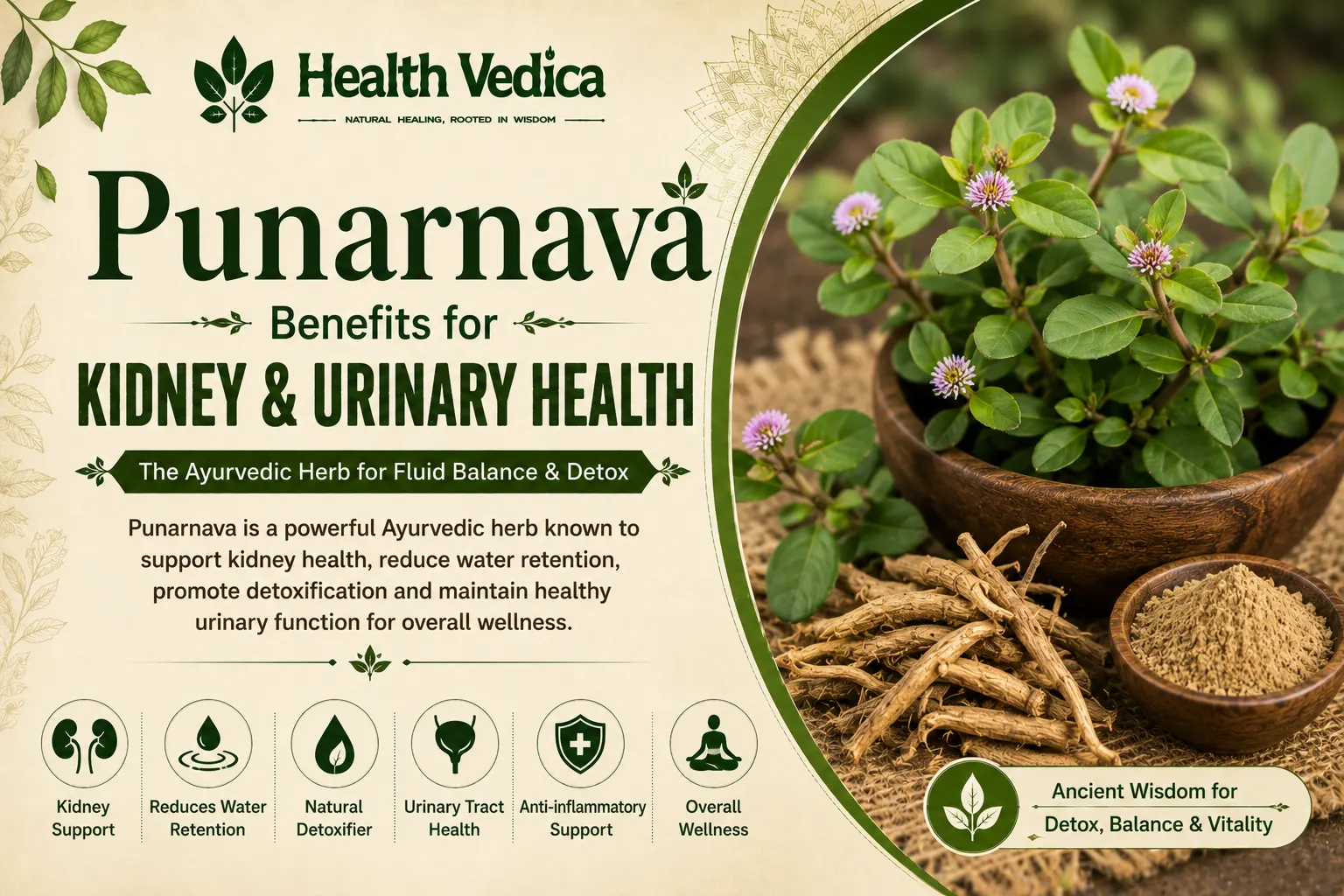
Punarnava (Boerhavia diffusa), whose name literally means 'that which renews the body' (Punah = again, Nava = new), is one of Ayurveda's most powerful rejuvenating and diuretic herbs. This spreading herb with small pink flowers grows abundantly across India and is harvested as both food and medicine. Its extraordinary ability to restore kidney function, reduce water retention, regenerate liver cells, and revitalize energy has earned it Rasayana status in Ayurvedic pharmacology. It is the premier Ayurvedic herb for kidney and liver conditions.
🔬 Key Active Compounds
| Compound | Primary Benefit |
|---|---|
| Punarnavine | Diuretic, anti-inflammatory |
| Boeravinone | Anti-cancer, antioxidant |
| Ursolic Acid | Liver protective, anti-inflammatory |
| Xanthone | Anti-diabetic |
| Rotenoids | Cardiac tonic |
💊 Nutritional Profile (Per 100g Leaves, Edible)
| Nutrient | Amount | DV% |
|---|---|---|
| Protein | 5.9 g | 12% |
| Iron | 14.5 mg | 80% |
| Calcium | 612 mg | 61% |
| Vitamin C | 71 mg | 79% |
| Fiber | 3.7 g | 13% |
🌡️ Ayurvedic Properties & Dosha Effect
Punarnava is Madhura (sweet), Tikta (bitter), and Kashaya (astringent) in taste, with Laghu (light) and Ruksha (dry) qualities. It has a Ushna Virya (hot potency) and Madhura Vipaka (sweet post-digestive). It pacifies all three doshas — making it Tridoshic — though it has the strongest action on Kapha and Vata doshas. Its primary action is on Mutravaha Srotas (urinary channels), Raktavaha Srotas (blood channels), and Yakrit (liver).
💪 Health & Healing Benefits
Kidney Health (Premier): Punarnava is Ayurveda's most important herb for kidney disorders. It is diuretic, reduces creatinine and urea levels, protects nephrons from oxidative stress, and is used in CKD (Chronic Kidney Disease), nephrotic syndrome, and kidney stones.
Edema & Water Retention: Its punarnavine compounds powerfully increase urine output and reduce fluid accumulation — effective in cardiac edema, liver-related edema, PMS-related bloating, and lymphatic swelling.
Liver Regeneration: Punarnava is hepatoprotective and hepato-regenerative — it protects liver cells from damage, reduces liver fibrosis, and improves liver enzyme levels in hepatitis and fatty liver disease.
Anemia: With 80% DV of iron per 100g, combined with vitamin C for enhanced absorption, Punarnava is an excellent vegetarian source for treating iron-deficiency anemia — often prescribed in India for anemia during pregnancy (after first trimester, under guidance).
Heart Health: Its rotenoid compounds strengthen cardiac muscle, reduce cardiac edema, and support healthy blood pressure management.
Anti-diabetic: Xanthone compounds in Punarnava inhibit alpha-glucosidase and improve glucose uptake — supporting blood sugar management in type-2 diabetes.
Eye Health: Classical Ayurveda recommends Punarnava for eye disorders including conjunctivitis and early cataracts — it reduces Pitta inflammation in ocular tissues.
🍵 Traditional Preparations
Punarnavadi Kashayam: Decoction of Punarnava for kidney disorders, edema, and urinary infections — widely used in Kerala Ayurvedic hospitals.
Punarnavadi Guggulu: Combines Punarnava with Guggulu for kidney, edema, and urinary tract disorders.
Punarnava Juice: Fresh plant juice or powder in warm water for daily kidney and liver support.
Punarnava Mandur: Classical iron preparation combining Punarnava with Mandur (iron) for anemia treatment in Ayurveda.
Punarnava Sabzi: The leaves are consumed as a nutritious green vegetable in parts of Rajasthan, Andhra Pradesh, and Maharashtra.
✅ Key Advantages
Best Ayurvedic herb for kidney disorders. Powerful natural diuretic for edema. Liver regeneration and hepatoprotection. High iron content for anemia. Anti-diabetic activity. Cardiac tonic properties. Eye health support. Edible and nutritious as a vegetable.
⚠️ Tips & Precautions
Use with caution in dehydration — being a diuretic, it may worsen fluid loss. Avoid high doses during pregnancy without guidance. May interact with diuretic medications — monitor electrolytes. Standard dose: 3–5 g powder or 20–30 ml fresh juice, twice daily. Always confirm herb identity — many plants are sold as Punarnava; Red (Rakta) Punarnava is considered most potent medicinally.