🌿 Introduction
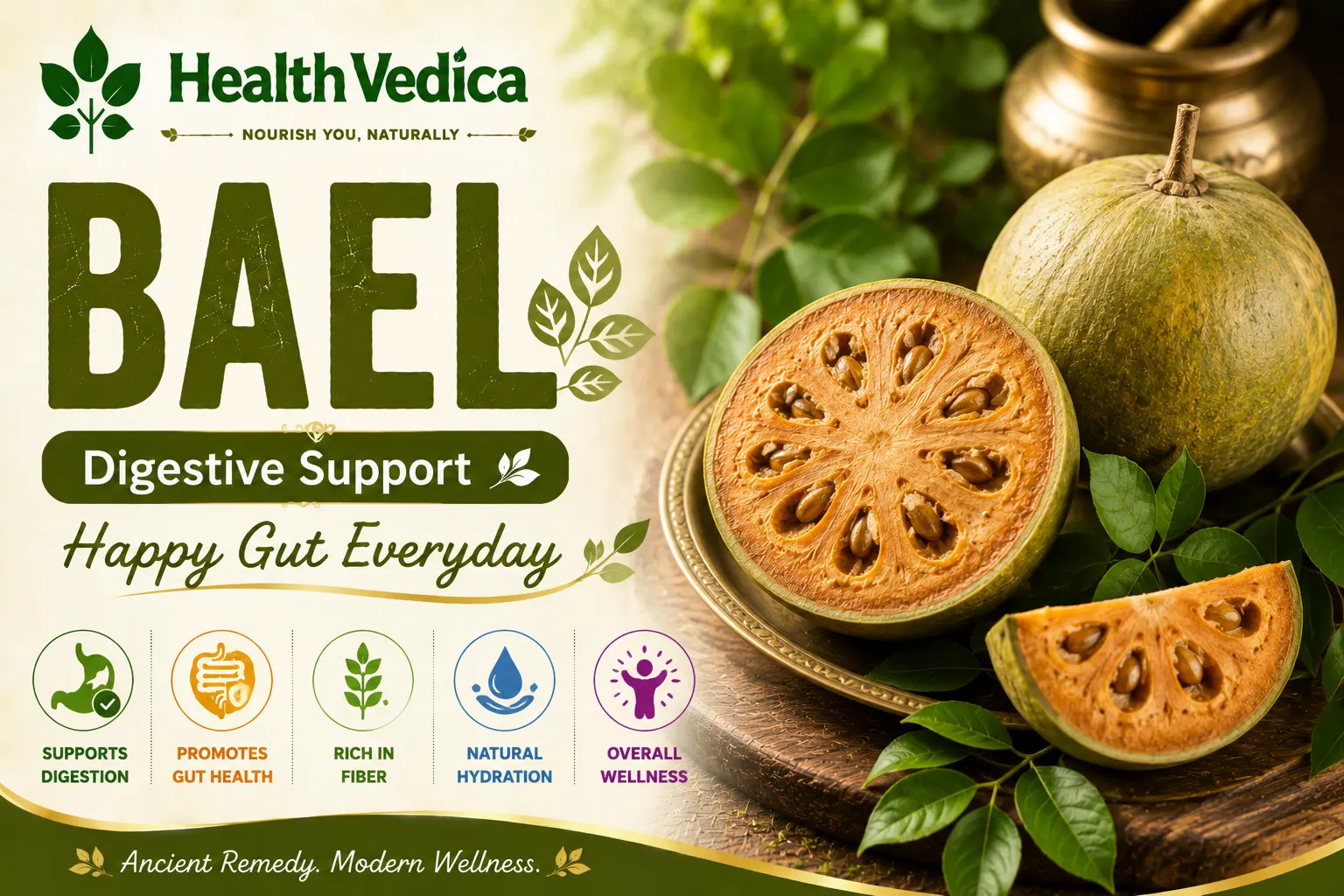
Bael (Aegle marmelos), also known as Bengal Quince, Bilva or Bel, is one of the most revered medicinal fruits in Ayurveda. Native to the Indian subcontinent, the Bael tree is considered sacred and is closely associated with Lord Shiva. Nearly every part of the tree—including the fruit, leaves, bark, roots and flowers—has been traditionally used for health and wellness. The ripe fruit is naturally sweet, aromatic and rich in fibre, while the unripe fruit has long been valued for digestive disorders. Modern research has identified numerous bioactive compounds in Bael that support gut health, immunity, blood sugar management and antioxidant protection.
📊 Nutritional Value Per 100g of Ripe Bael Fruit
| Nutrient | Amount | % Daily Value (DV) |
|---|---|---|
| Calories | 137 kcal | 7% |
| Protein | 1.8 g | 4% |
| Total Fat | 0.3 g | <1% |
| Carbohydrates | 31.8 g | 12% |
| Dietary Fiber | 2.9 g | 10% |
| Vitamin C | 8 mg | 9% |
| Vitamin A | 55 IU | 1% |
| Calcium | 85 mg | 9% |
| Potassium | 600 mg | 13% |
| Magnesium | 30 mg | 7% |
| Iron | 0.7 mg | 4% |
📉 Glycemic Index
Ripe Bael has an estimated moderate glycemic index of around 50–55. Its fibre content helps slow sugar absorption, but portion control remains important for people with diabetes.
🧬 Bioactive Compounds
Bael contains numerous beneficial phytochemicals including marmelosin, aegeline, skimmianine, rutin, coumarins, marmelin, tannins, flavonoids, pectin and various polyphenols. These compounds contribute to its digestive, antioxidant, antimicrobial and anti-inflammatory properties.
💊 Vitamins & Minerals Explained
Bael provides potassium for healthy blood pressure, calcium for bones, vitamin C for immunity and collagen production, dietary fibre for digestive health and several antioxidants that help protect cells against oxidative stress.
🕉️ Ayurvedic Properties & Dosha Effect
In Ayurveda, Bael (Bilva) is considered one of the most important medicinal fruits. Unripe Bael has an astringent taste and is traditionally used to support diarrhoea and intestinal health, while ripe Bael is sweet, nourishing and mildly laxative. Bael helps balance Vata and Kapha Doshas while supporting healthy digestion, strengthening Agni (digestive fire) and promoting intestinal wellness.
💚 Evidence-Based Health Benefits
Supports Digestive Health: Bael is one of Ayurveda's most trusted fruits for maintaining digestive balance. Unripe fruit has traditionally been used for diarrhoea, whereas ripe fruit helps relieve occasional constipation due to its fibre content.
Rich in Antioxidants: Polyphenols, flavonoids and vitamin C help protect body cells from oxidative damage.
May Support Blood Sugar Management: Preliminary studies suggest that compounds in Bael may support healthy glucose metabolism, though more human clinical research is needed.
Supports Immunity: Vitamin C and antioxidant compounds contribute to normal immune function.
Heart Health: Potassium and antioxidants help support healthy blood pressure and cardiovascular wellness.
Liver Protection: Laboratory studies suggest Bael extracts may help protect liver cells from oxidative stress.
Antimicrobial Properties: Experimental research indicates Bael contains natural compounds with antibacterial and antifungal activity.
👨👩👧 Who Should Eat Bael?
Bael is beneficial for individuals seeking better digestive health, natural hydration during summer, antioxidant protection and traditional Ayurvedic wellness. It is particularly popular during hot weather as a refreshing fruit drink.
🚫 Who Should Limit or Avoid Bael?
People with diabetes should consume ripe Bael in moderation because it naturally contains sugars. Individuals experiencing chronic constipation should avoid excessive intake of unripe Bael, which has a stronger binding effect. Those taking diabetes medications should monitor blood sugar when consuming Bael regularly.
🌿 Ayurvedic Remedies & Healthy Recipes
Bael Sharbat: Scoop the ripe pulp, blend it with chilled water and a small amount of jaggery or without added sugar for a refreshing summer beverage.
Bael Herbal Drink: Mix ripe Bael pulp with cardamom and mint for a naturally cooling digestive drink.
Bael Pulp: Eat fresh ripe pulp directly for fibre and digestive support.
Traditional Decoction: Ayurvedic practitioners traditionally prepare decoctions using unripe Bael under professional guidance.
🥗 Best Ways to Eat Bael
Enjoy fresh ripe pulp, homemade Bael juice without excess sugar, smoothies, frozen desserts or herbal beverages. Avoid heavily sweetened commercial syrups.
🍽️ Best Food Combinations
Bael pairs well with cardamom, mint, ginger, lemon, coconut water, yogurt and soaked chia seeds for refreshing summer beverages.
🔥 Ripe vs Unripe Bael
Ripe Bael is naturally sweet, cooling and mildly laxative, making it suitable for regular consumption. Unripe Bael is more astringent and has traditionally been used in Ayurveda for managing diarrhoea and improving gut health under professional guidance.
🧊 Storage Tips
Whole Bael fruits can be stored at room temperature until fully ripe. Once opened, refrigerate the pulp in an airtight container and consume within 2–3 days.
📅 Daily Recommended Intake
100–150 grams of ripe pulp or one glass (200–250 ml) of unsweetened Bael drink daily is generally sufficient for most healthy adults.
⚠️ Precautions
Moderation is important. Excessive consumption of unripe Bael may contribute to constipation in susceptible individuals. Commercial Bael drinks often contain large amounts of added sugar, reducing their health benefits. People taking diabetes medication should monitor their blood sugar regularly.
🔬 Scientific Highlights
Research has demonstrated antioxidant, antimicrobial, anti-inflammatory and gastroprotective properties of Bael. Several laboratory and animal studies support its traditional use for digestive health and metabolic wellness, though additional well-designed human clinical trials are required.
❌ Common Myths & Facts
❌ Myth: Bael and Wood Apple are the same fruit.
✅ Fact: They belong to different botanical species and differ in taste, nutrition and medicinal properties.
❌ Myth: Bael can cure digestive diseases.
✅ Fact: Bael has a long history of traditional use for digestive health and encouraging scientific evidence, but it should not replace appropriate medical treatment.
❌ Myth: Everyone with diabetes can drink unlimited Bael juice.
✅ Fact: Although Bael contains fibre and beneficial phytochemicals, ripe fruit also contains natural sugars. Portion control remains important.
🌍 Fun Facts
- Bael is one of the few fruits mentioned extensively in ancient Ayurvedic texts.
- The leaves of the Bael tree are traditionally offered to Lord Shiva during worship.
- A mature Bael tree can continue producing fruits for several decades.
- The hard shell of the fruit naturally protects its aromatic pulp for long periods.