🌶️ Introduction
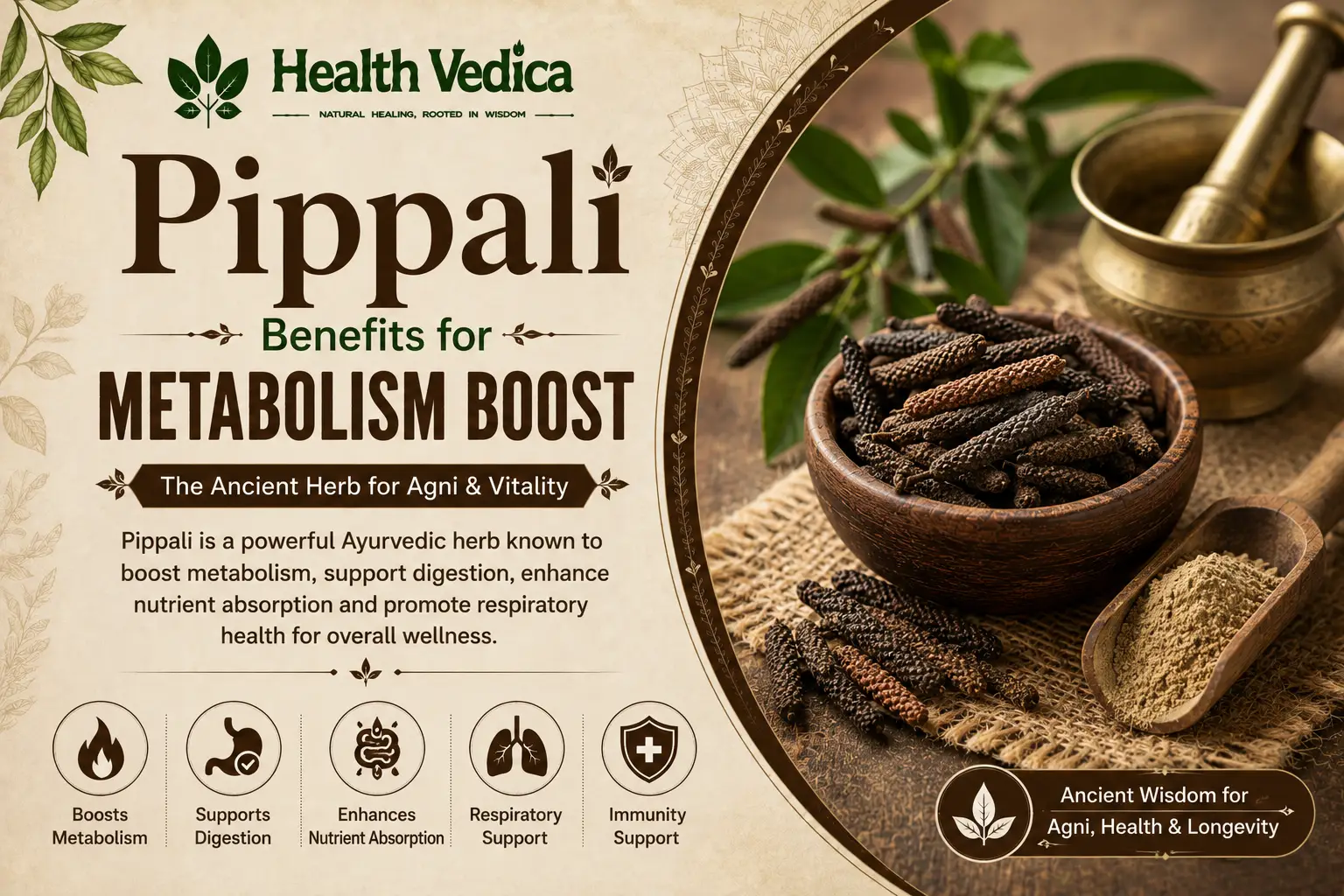
Pippali (Piper longum), the Long Pepper of Ayurveda, is one of the most powerful bioavailability-enhancing and respiratory herbs in traditional Indian medicine. It is one of the three ingredients of Trikatu (along with Black Pepper and Ginger), Ayurveda's most famous digestive and metabolic formula. While it appears mild externally, Pippali contains Piperine — a compound that increases the absorption of nearly every nutrient and herbal compound by up to 2000%, making it invaluable as both a medicine and an adjunct. Classical Ayurvedic texts recommend Pippali as a Rasayana when taken in gradually increasing and decreasing doses — a practice called Vardhamana Pippali Rasayana.
🔬 Key Active Compounds
| Compound | Primary Benefit |
|---|---|
| Piperine | Bioavailability enhancer, anti-inflammatory, thermogenic |
| Piperlongumine | Anti-cancer, anti-depressant |
| Sesamin | Liver protective, antioxidant |
| Sylvatin | Antifungal |
| Piperonal | Antimicrobial |
💊 Nutritional Profile (Per 100g Dry Fruit)
| Nutrient | Amount | DV% |
|---|---|---|
| Calories | 255 kcal | 13% |
| Protein | 3.9 g | 8% |
| Iron | 15 mg | 83% |
| Calcium | 460 mg | 46% |
| Vitamin C | 5 mg | 6% |
| Piperine | 1–2% | — |
🌡️ Ayurvedic Properties & Dosha Effect
Pippali is Katu (pungent) in taste but undergoes Madhura Vipaka (sweet post-digestive) transformation — which is why it strengthens tissues rather than depleting them despite its heat. It has Ushna Virya (hot potency) and is Laghu (light) and Snigdha (slightly unctuous). It pacifies Vata and Kapha doshas and should be used cautiously in Pitta conditions (ulcers, hyperacidity). Its unique Madhura Vipaka makes it the only pungent herb classified as a Rasayana in Ayurveda.
💪 Health & Healing Benefits
Respiratory & Lungs: Pippali is among the top Ayurvedic herbs for respiratory conditions. It dissolves excess mucus, opens bronchial airways, reduces asthma severity, and treats chronic coughs, bronchitis, and tuberculosis (used in classical Sitopaladi Churna and Chyawanprash).
Bioavailability Enhancement: Piperine inhibits drug-metabolizing enzymes and increases intestinal absorption, enhancing the bioavailability of curcumin by 2000%, selenium, beta-carotene, and multiple Ayurvedic herbs — making it essential in compound formulas.
Digestive Stimulant: Enhances Agni (digestive fire), stimulates enzyme secretion, improves gastric motility, and treats flatulence, bloating, and sluggish digestion.
Anti-cancer Research: Piperlongumine has shown remarkable anti-cancer activity, inducing apoptosis in cancer cells while sparing healthy cells — one of the most exciting natural compounds in cancer research.
Liver Protection: Sesamin in Pippali protects hepatocytes, reduces liver inflammation, and improves fatty liver markers.
Anti-depressant & Neuroprotective: Piperine and Piperlongumine modulate serotonin and dopamine systems, showing antidepressant effects comparable to standard medications in animal models.
Anemia & Iron Absorption: Its extremely high iron content (83% DV) combined with its bioavailability-enhancing piperine makes it uniquely effective for iron-deficiency anemia in Indian diets.
🍵 Traditional Preparations
Trikatu Churna: Equal parts Pippali + Black Pepper + Ginger — Ayurveda's premier digestive and metabolic stimulant. Taken before meals with honey for digestive fire enhancement.
Vardhamana Pippali Rasayana: Classical increasing-decreasing dose regimen — starting from 1 fruit and building to 10, then back to 1. Described for respiratory Rasayana and immunity building.
Sitopaladi Churna: Pippali-based formula for respiratory infections, cough, and fever.
Pippali + Honey + Ghee: Classical preparation for anemia, weakness, and Kapha-respiratory conditions.
✅ Key Advantages
Enhances absorption of all herbs and nutrients dramatically. Best Ayurvedic herb for respiratory disorders. Powerful digestive stimulant. Anti-cancer research champion. Liver protective. High iron content for anemia. Anti-depressant properties. The only pungent Rasayana in Ayurveda.
⚠️ Tips & Precautions
Avoid in gastric ulcers, hyperacidity, or Pitta disorders — can aggravate burning sensations. Not in pregnancy in high doses. May interact with certain medications by altering their metabolism. Use with ghee or honey to balance its heat in Vata or Pitta individuals. Standard dose: 250–500 mg powder twice daily; 1–3 g in formulas.