🌳 Introduction
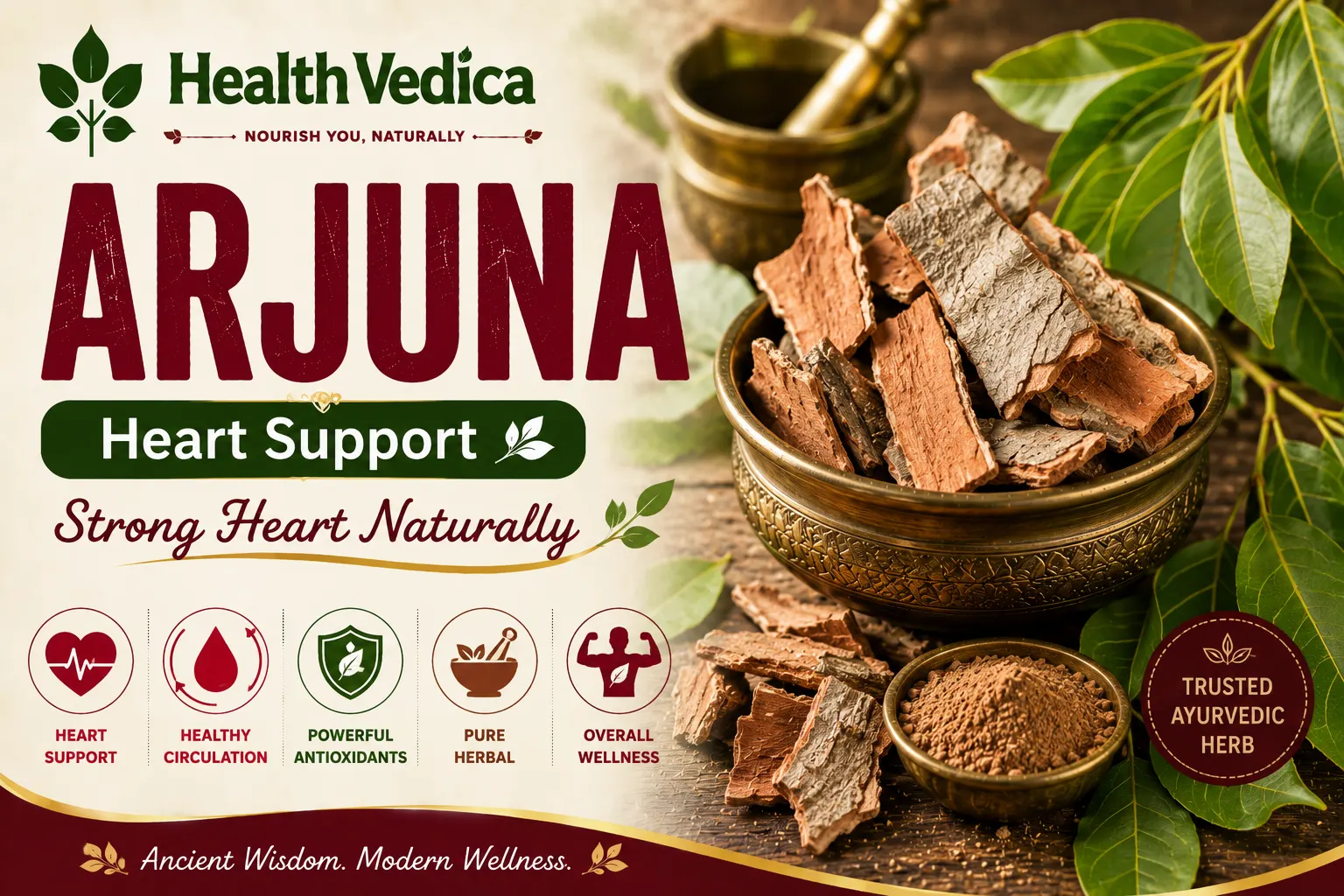
Arjuna (Terminalia arjuna) is one of Ayurveda's most respected medicinal trees and has been used for over 3,000 years to support cardiovascular health. The medicinal part is the thick bark of the tree, which is rich in natural antioxidants, flavonoids, tannins and triterpenoids. Classical Ayurvedic texts describe Arjuna as the foremost herb for strengthening the heart (Hridaya), improving circulation and supporting healthy blood pressure. Modern scientific research has investigated Arjuna for its potential role in maintaining cardiovascular function, exercise capacity, cholesterol balance and antioxidant protection. Today, Arjuna bark is commonly consumed as herbal tea, powder, capsules and decoctions.
📊 Nutritional Value Per 100g of Arjuna Bark Powder
| Nutrient | Amount | % Daily Value (DV) |
|---|---|---|
| Calories | 248 kcal | 12% |
| Protein | 5.8 g | 12% |
| Total Fat | 1.4 g | 2% |
| Carbohydrates | 64 g | 23% |
| Dietary Fiber | 28 g | 100% |
| Calcium | 310 mg | 31% |
| Magnesium | 105 mg | 25% |
| Potassium | 420 mg | 9% |
| Iron | 7 mg | 39% |
📉 Glycemic Index
Arjuna bark has a very low glycemic index because it contains minimal digestible carbohydrates and is consumed in small medicinal quantities.
🧬 Bioactive Compounds
Arjuna bark contains numerous scientifically studied phytochemicals including arjunolic acid, arjunic acid, arjungenin, arjunetin, gallic acid, ellagic acid, flavonoids, tannins, phytosterols and coenzyme Q10-like antioxidant compounds. These constituents are believed to contribute to its cardioprotective, antioxidant and anti-inflammatory properties.
💊 Vitamins & Minerals Explained
Although Arjuna contains minerals such as calcium, magnesium and iron, it is consumed in relatively small medicinal quantities. Therefore, its therapeutic effects are primarily attributed to its bioactive phytochemicals rather than its nutritional composition.
🕉️ Ayurvedic Properties & Dosha Effect
According to Ayurveda, Arjuna has a Kashaya (astringent) taste with a cooling potency (Sheeta Veerya) and helps balance Pitta and Kapha Doshas. It is classified as a Hridya Rasayana, meaning a rejuvenating herb specifically for the heart. Ayurveda traditionally recommends Arjuna for supporting healthy circulation, strengthening cardiac muscles, promoting wound healing and maintaining healthy cholesterol levels.
💚 Evidence-Based Health Benefits
Supports Heart Health: Arjuna is among the best-studied Ayurvedic herbs for cardiovascular wellness. Research suggests it may help support normal heart function, improve exercise tolerance and reduce oxidative stress in heart tissues.
May Help Maintain Healthy Blood Pressure: Preliminary studies suggest Arjuna may help support healthy blood pressure as part of an overall heart-healthy lifestyle, though it should never replace prescribed medication.
Supports Healthy Cholesterol: Some clinical studies indicate Arjuna may help maintain healthy LDL and HDL cholesterol levels when combined with a balanced diet.
Powerful Antioxidant: Polyphenols and triterpenoids help protect heart cells from oxidative stress caused by free radicals.
May Improve Exercise Capacity: Several small clinical studies have reported improved endurance and reduced fatigue in certain individuals taking Arjuna extracts.
Supports Liver Health: Laboratory studies suggest antioxidant compounds in Arjuna may help protect liver cells against oxidative damage.
May Promote Wound Healing: Traditional Ayurvedic medicine has used Arjuna bark externally and internally to support tissue repair and healing.
👨👩👧 Who Should Consider Arjuna?
Arjuna is commonly used by adults seeking to support heart health, healthy ageing, cholesterol balance and antioxidant protection. It is frequently included in Ayurvedic wellness routines under the guidance of qualified practitioners.
🚫 Who Should Avoid Arjuna?
People taking medication for heart disease, blood pressure, blood thinning or diabetes should consult their healthcare provider before using Arjuna because it may influence these conditions. Pregnant and breastfeeding women should avoid medicinal use unless advised by a qualified healthcare professional.
🌿 Ayurvedic Remedies
Arjuna Tea: Simmer one teaspoon of Arjuna bark powder in water for 10–15 minutes, strain and consume warm.
Arjuna Milk Decoction: Ayurveda traditionally recommends boiling Arjuna bark with milk and water to prepare a nourishing cardiac tonic.
Herbal Combination: Arjuna is often combined with Ashwagandha, Brahmi or Pushkarmool in traditional Ayurvedic formulations depending on individual needs.
🥗 Best Ways to Consume
Arjuna is available as bark powder, capsules, tablets, herbal tea, decoction and standardized extracts. It should be consumed according to product instructions or under professional guidance.
🍽️ Best Combinations
Arjuna pairs well with Ashwagandha, Brahmi, Tulsi, Amla and Guduchi in traditional Ayurvedic formulations aimed at supporting cardiovascular wellness and overall vitality.
🧊 Storage Tips
Store Arjuna bark powder in an airtight container in a cool, dry place away from moisture and direct sunlight to preserve its potency.
📅 Daily Recommended Intake
3–6 grams of bark powder daily or as directed by an Ayurvedic physician or healthcare professional. Standardized extracts should be taken according to manufacturer recommendations.
⚠️ Precautions & Drug Interactions
Although generally well tolerated, Arjuna may interact with medications used for blood pressure, cholesterol, heart conditions, diabetes and blood clotting. Do not discontinue prescribed medication in favour of herbal supplements without medical advice. Individuals scheduled for surgery should discuss Arjuna use with their healthcare provider.
🔬 Scientific Highlights
Arjuna is one of the most extensively researched Ayurvedic cardioprotective herbs. Experimental studies and several human clinical trials have reported beneficial effects on antioxidant status, endothelial function, exercise capacity and certain cardiovascular markers. However, more large-scale clinical trials are needed before definitive therapeutic conclusions can be drawn.
❌ Common Myths & Facts
❌ Myth: Arjuna can replace heart medicines.
✅ Fact: No. Arjuna may complement conventional treatment under medical supervision but should never replace prescribed cardiovascular medication.
❌ Myth: More Arjuna gives faster heart benefits.
✅ Fact: Higher doses do not necessarily improve results and may increase the likelihood of side effects or drug interactions.
❌ Myth: Arjuna only benefits older adults.
✅ Fact: Heart-healthy lifestyle practices, including evidence-informed herbal support where appropriate, can be relevant for adults of different ages based on individual health needs.
🌍 Fun Facts
- Arjuna was named after the legendary warrior Arjuna from the Mahabharata because of its strength and resilience.
- The tree can grow over 25 metres tall and is commonly found along riverbanks throughout India.
- Arjuna bark has been described in Ayurvedic texts for more than 3,000 years.
- It is one of the few Ayurvedic herbs with multiple published human clinical studies focused on cardiovascular health.