🌿 Introduction
Almonds, known as Badam in India, are one of the most revered nuts in Ayurveda and modern nutrition alike. Packed with healthy fats, protein, fiber, vitamins, and minerals, almonds have been a staple in Indian households for centuries — soaked overnight in water and eaten fresh each morning for maximum brain and body benefits. Whether eaten raw, soaked, roasted, or as almond milk, badam offers a powerhouse of nutrition in every bite.
📊 Nutritional Value Per 100g of Almonds
| Nutrient | Amount | % Daily Value (DV) |
|---|---|---|
| Calories | 579 kcal | 29% |
| Protein | 21.2 g | 42% |
| Total Fat | 49.9 g | 64% |
| Monounsaturated Fat | 31.6 g | — |
| Carbohydrates | 21.7 g | 8% |
| Dietary Fiber | 12.5 g | 45% |
| Vitamin E | 25.6 mg | 171% |
| Magnesium | 270 mg | 64% |
| Calcium | 264 mg | 20% |
| Iron | 3.7 mg | 21% |
| Phosphorus | 481 mg | 69% |
| Potassium | 733 mg | 16% |
| Zinc | 3.1 mg | 28% |
| Riboflavin (B2) | 1.1 mg | 85% |
📉 Glycemic Index
Almonds have a very low glycemic index of approximately 0–15, making them an excellent snack for diabetics and those managing blood sugar levels. The high fiber and fat content slows glucose absorption significantly.
🕉️ Ayurvedic Properties & Dosha Effect
In Ayurveda, almonds are considered Medhya (brain tonics) and Balya (strength promoters). They are sweet (Madhura Rasa) in taste and have a warming effect (Ushna Veerya). Almonds balance Vata dosha and, when soaked and peeled, are easier to digest for Pitta types. Excess consumption can aggravate Kapha due to their heavy and oily nature. Soaking overnight in water reduces Pitta-aggravating properties and improves bioavailability of nutrients.
💚 Health & Healing Benefits
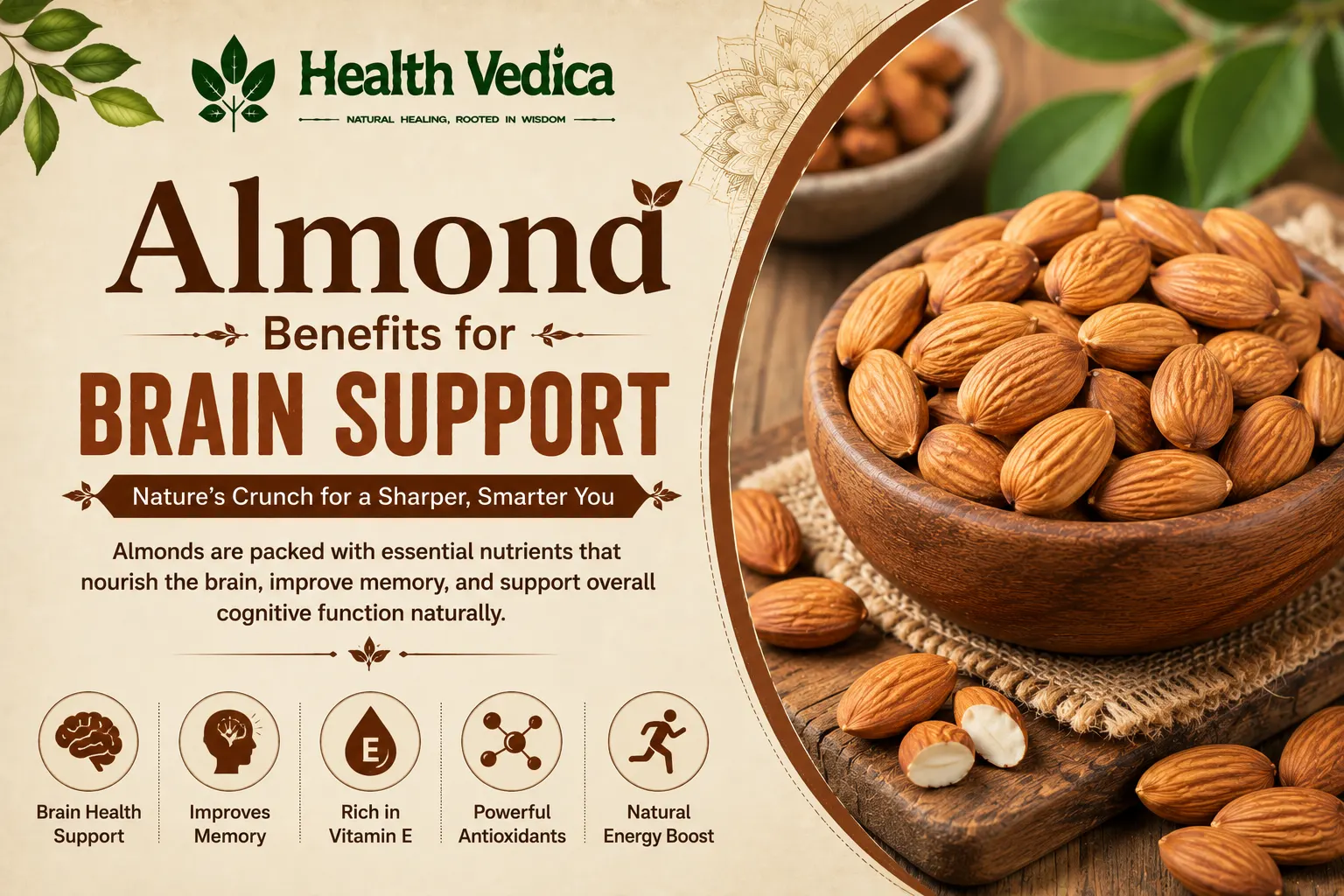
Brain & Memory Enhancement: Almonds are rich in riboflavin and L-carnitine, both of which support neurological activity and help prevent cognitive decline. Daily soaked almond consumption is a traditional practice for improving memory in children and the elderly.
Heart Health: The monounsaturated fats, fiber, and antioxidants in almonds help reduce LDL cholesterol and support healthy blood pressure, reducing cardiovascular disease risk.
Weight Management: Despite being calorie-dense, almonds promote satiety due to their fiber and protein content, making them effective for appetite control and healthy weight management.
Bone Strength: High calcium, phosphorus, and magnesium content supports strong bones and teeth, and may reduce osteoporosis risk.
Skin Glow: Vitamin E is a potent antioxidant that protects skin cells from oxidative damage, promotes skin elasticity, and imparts a natural glow — making almond oil a popular choice for skin and hair care.
Blood Sugar Control: Regular almond intake reduces post-meal blood glucose spikes and improves insulin sensitivity.
🕉️ Ayurvedic Recipes & Tonic Drinks
Badam Milk (Almond Tonic): Soak 8–10 almonds overnight, peel and blend with warm milk, a pinch of saffron , cardamom , and a teaspoon of honey. This is a classical Ayurvedic brain tonic consumed in the morning. Almond & Ashwagandha Milk : Add half a teaspoon of ashwagandha powder to badam milk for a powerful stress-relieving and stamina-boosting drink.
✅ Best Ways to Eat Almonds
The best way to consume almonds is soaked overnight and peeled in the morning — this removes enzyme inhibitors and tannins from the skin, making nutrients more bioavailable. You can also enjoy almonds as almond flour in rotis, almond butter spread, raw as a snack, or as almond milk in smoothies.
📅 Daily Recommended Intake
Adults can safely consume 20–25 almonds (approximately 28g) per day. Children aged 5–12 can have 8–10 soaked almonds daily. Avoid overconsumption as excess may cause digestive heaviness or weight gain.
⚠️ Precautions & Side Effects
People with tree nut allergies should avoid almonds. Excessive consumption may cause digestive issues. Bitter almonds contain toxic compounds and should not be eaten raw. Always prefer sweet almonds for consumption.