🌿 Introduction
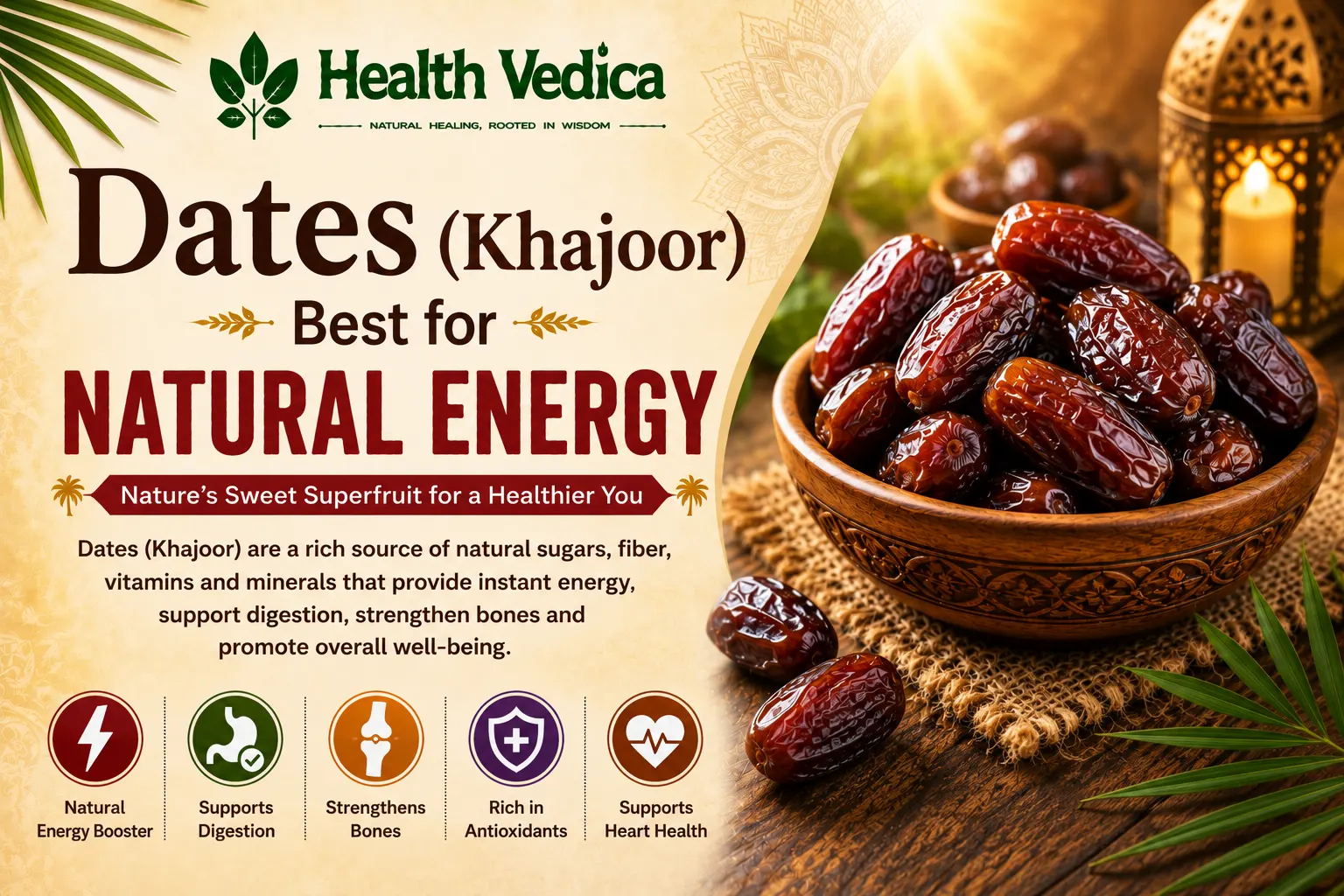
Khajoor, or dates (Phoenix dactylifera), are one of the world's oldest cultivated fruits — and in India, they are cherished both as a sacred food and a powerful natural medicine. Rich, sweet, and deeply nourishing, dates are consumed across India during fasting days (vrats), Ramadan, and as a natural energy booster. In Ayurveda, khajoor is classified as a Rasayana — a rejuvenating superfood that strengthens the entire body, enhances vitality, and supports longevity. Modern science confirms dates as exceptionally rich in natural sugars, fiber, iron, potassium, antioxidants, and unique compounds beneficial for labor facilitation and gut health.
📊 Nutritional Value Per 100g of Dates (Khajoor, Dried)
| Nutrient | Amount | % Daily Value (DV) |
|---|---|---|
| Calories | 277 kcal | 14% |
| Protein | 1.8 g | 4% |
| Total Fat | 0.15 g | 0% |
| Total Carbohydrates | 75.0 g | 27% |
| Natural Sugars (Glucose + Fructose) | 66.5 g | — |
| Dietary Fiber | 6.7 g | 24% |
| Potassium | 696 mg | 15% |
| Magnesium | 54 mg | 13% |
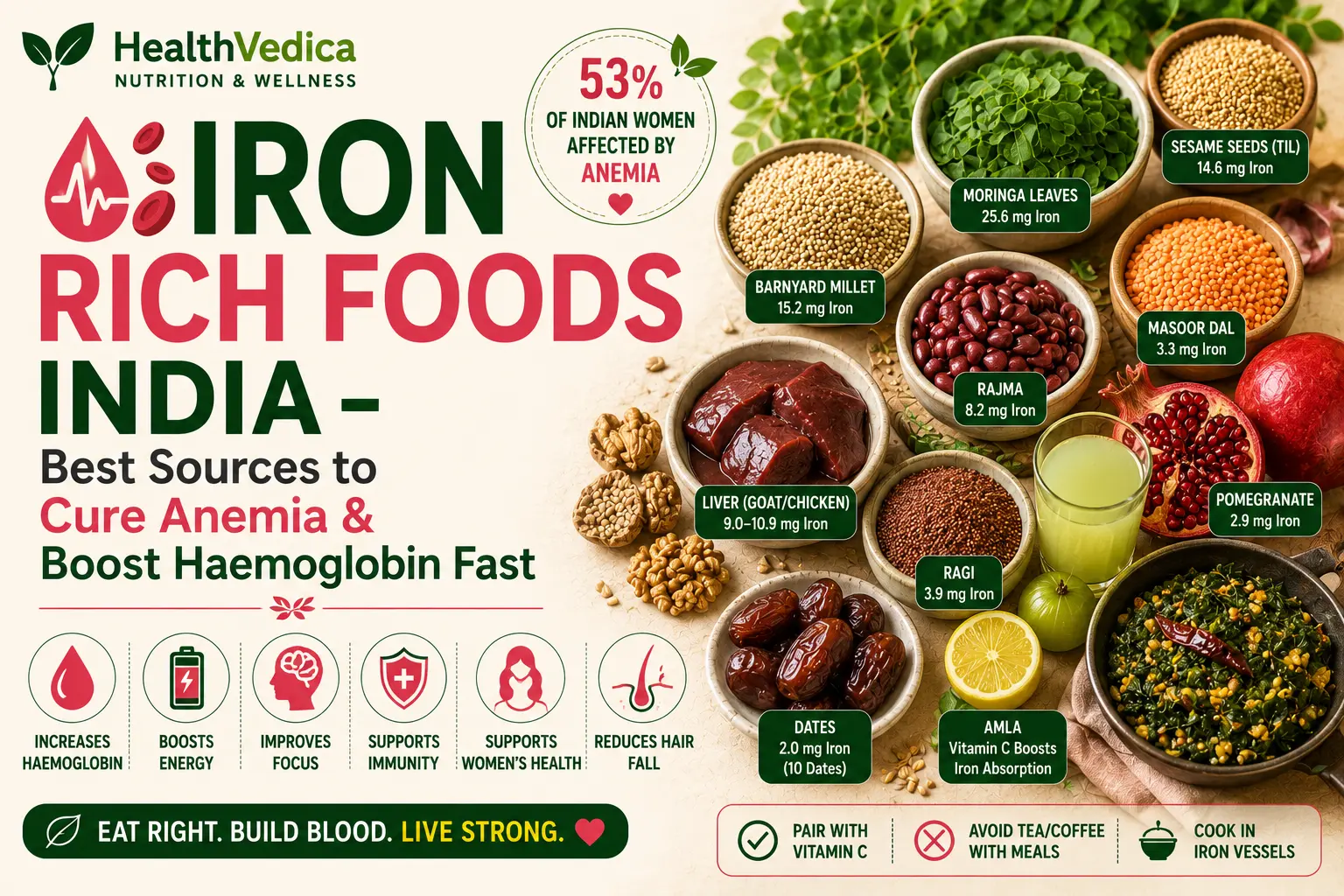
| Iron | 0.9 mg | 5% |
| Copper | 0.36 mg | 40% |
| Manganese | 0.30 mg | 13% |
| Vitamin B6 | 0.25 mg | 15% |
| Niacin (B3) | 1.61 mg | 10% |
| Pantothenic Acid (B5) | 0.81 mg | 16% |
🌟 Antioxidant Profile of Dates
| Antioxidant Compound | Key Benefit |
|---|---|
| Flavonoids (Quercetin, Luteolin) | Anti-inflammatory, anti-diabetic, anti-cancer |
| Carotenoids (Beta-carotene, Lutein) | Eye health, heart health, cancer prevention |
| Phenolic Acids (Ferulic acid, p-Coumaric acid) | Antimicrobial, anti-inflammatory, neuroprotective |
| Anthocyanins | Anti-aging, cognitive health |
📉 Glycemic Index
Dates have a moderate glycemic index of 42–65 depending on variety and ripeness. Despite their high sugar content, the fiber and polyphenols in dates slow glucose absorption significantly. Studies show that eating dates in moderation does not cause significant blood sugar spikes in healthy individuals and even in well-controlled diabetics — attributed to their low glycemic load when consumed in recommended portions (2–3 dates).
🕉️ Ayurvedic Properties & Dosha Effect
In Ayurveda, khajoor is described as Madhura (sweet), Guru (heavy), Snigdha (unctuous), and Sheeta (cooling). It is a powerful Tridosha Balancer — balancing all three doshas (Vata, Pitta, Kapha) when consumed in moderation. Khajoor is one of the prized Rasayana (rejuvenating) foods in Ayurveda, used for strengthening the body, improving fertility (Shukravardhan), building Ojas (vital essence), and as a natural remedy for weakness, anemia, and cough. Khajoor + ghee + milk is a classical Ayurvedic formulation for sexual debility, general weakness, and postpartum recovery.
💚 Health & Healing Benefits
Instant Natural Energy: Dates are composed of approximately 66.5g of natural glucose and fructose per 100g. Unlike refined sugar, this natural sugar comes with fiber, minerals, and antioxidants that moderate absorption. Athletes, students, and those with low energy benefit enormously from 2–4 dates as a pre-workout or afternoon snack.
Gut Health & Constipation Relief: Dates contain 6.7g of fiber per 100g, including insoluble fiber that adds bulk to stool and soluble fiber that feeds beneficial gut bacteria. They contain tannins that have anti-inflammatory effects on the intestinal lining. Dates are traditionally used across the Middle East and South Asia as a natural constipation remedy.
Natural Labor Facilitator: One of the most clinically studied benefits of dates is their ability to facilitate and ease natural labor. Multiple studies show that eating 6 date fruits per day from 36 weeks of pregnancy significantly reduces the need for labor induction, shortens the active labor phase, and reduces post-delivery bleeding. Dates contain compounds that mimic oxytocin and support cervical ripening.
Brain Health & Neuroprotection: Dates' antioxidants (flavonoids, phenolic acids) reduce neuroinflammation and oxidative stress in the brain. Studies suggest regular date consumption may reduce the risk of Alzheimer's disease and neurodegenerative conditions. They also contain choline — an important brain nutrient.
Bone Mineral Support: The combination of potassium, magnesium, copper, and manganese in dates supports bone density maintenance and reduces osteoporosis risk, particularly when combined with calcium-rich foods.
Natural Sweetener Alternative: Date paste (khajoor paste) and date syrup are excellent whole-food sweeteners that can replace refined sugar in Indian sweets, energy bars, smoothies, and baking — providing sweetness along with fiber and minerals rather than empty calories.
🍽️ Popular Indian Uses & Recipes
Khajoor Milk (Date Milk): Blend 3–4 soaked, pitted dates with warm milk and a pinch of cardamom — a classical Ayurvedic energy tonic especially beneficial before sleep. Khajoor Chikki: Natural sweetener-based chikki using dates instead of jaggery — extremely nutritious. Date & Nut Ladoo: Blend dates with almonds, cashews, and coconut — a natural, no-sugar energy ball excellent for children, athletes, and pregnant women. Khajoor Halwa: Slow-cooked date halwa with ghee — a warming, strength-building, Vata-pacifying dessert. Date Paste Roti: Add date paste to whole wheat dough for naturally sweetened, fiber-rich rotis for children. Ramadan Date Drink: Blend soaked dates with rose water, milk, and dry fruits — a traditional Iftar energy drink.
✅ Best Ways to Consume Dates
Soak dried dates in warm water for 30 minutes before eating to improve digestibility and nutrient absorption. Medjool dates (the large variety) are naturally moist and can be eaten directly. Remove pits and stuff with almonds or walnuts for a nutrient-dense snack. Date paste can be stored refrigerated for up to 2 weeks.
📅 Daily Recommended Intake
3–5 dates (approximately 50–75g) per day is ideal for most adults. For pregnant women in the third trimester, 6 dates per day has been clinically recommended. Diabetics should limit to 2–3 dates per day and monitor blood sugar response.
⚠️ Precautions
Diabetics should monitor blood sugar carefully and limit portions. Dates are high in fructose which, in excess, can contribute to fatty liver. Those with irritable bowel syndrome (IBS) may react to dates due to their high fructose and fiber content. Avoid commercially preserved dates with added sulfites if sulfite-sensitive.