🌿 Introduction
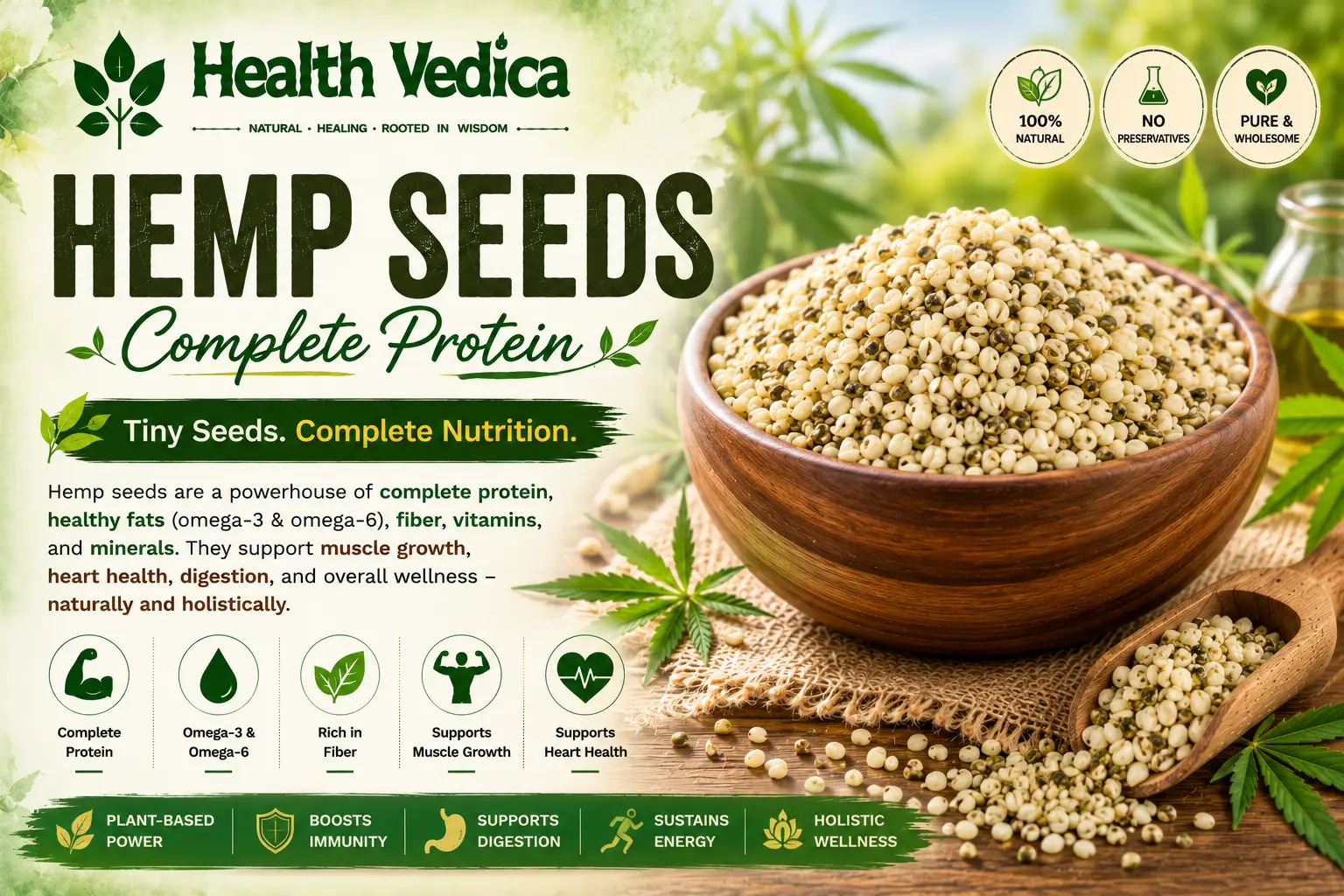
Hemp Seeds are tiny, soft, nutty-flavoured seeds obtained from the hemp plant (Cannabis sativa L.). Despite coming from the same species as cannabis, edible hemp seeds contain only trace amounts of THC and have no psychoactive effects. They are considered one of the world's most nutritious superfoods because they provide complete plant protein, heart-healthy omega-3 and omega-6 fatty acids, dietary fibre, vitamin E, magnesium, iron, zinc and numerous antioxidants. Hemp seeds are an excellent addition to vegetarian and vegan diets and are widely appreciated for supporting muscle recovery, heart health, hormonal balance, immunity and healthy skin.
📊 Nutritional Value Per 100g of Hemp Seeds
| Nutrient | Amount | % Daily Value (DV) |
|---|---|---|
| Calories | 553 kcal | 28% |
| Protein | 31.6 g | 63% |
| Total Fat | 48.8 g | 63% |
| Omega-3 (ALA) | 8.7 g | — |
| Omega-6 (Linoleic Acid) | 28.7 g | — |
| Carbohydrates | 8.7 g | 3% |
| Dietary Fiber | 4.0 g | 14% |
| Magnesium | 700 mg | 167% |
| Iron | 8 mg | 44% |
| Zinc | 9.9 mg | 90% |
| Phosphorus | 1650 mg | 236% |
| Potassium | 1200 mg | 26% |
| Vitamin E | 0.8 mg | 5% |
📉 Glycemic Index
Hemp seeds have a glycemic index close to 0 because they contain very little digestible carbohydrate. Their combination of protein, fibre and healthy fats helps slow digestion and supports healthy blood sugar control.
🧬 Amino Acid Highlights
Hemp seeds are one of the few plant foods containing all nine essential amino acids. They are particularly rich in arginine, glutamic acid and branched-chain amino acids (BCAAs), making them excellent for muscle repair, heart health and recovery after exercise.
💊 Vitamins & Minerals Explained
Hemp seeds are exceptionally rich in magnesium for muscle and nerve function, phosphorus for bone health, zinc for immunity and wound healing, and iron for healthy red blood cell production. Their naturally balanced omega-6 to omega-3 ratio (approximately 3:1) is considered ideal for supporting cardiovascular health.
🕉️ Ayurvedic Properties & Dosha Effect
While Hemp Seeds are not specifically described in classical Ayurvedic texts, Ayurvedic practitioners generally consider them Madhura (sweet), Snigdha (unctuous) and nourishing (Brimhana). They help calm Vata Dosha, nourish body tissues (Dhatus), improve strength (Bala) and support reproductive health (Shukra Dhatu). Moderate consumption is suitable for Pitta, whereas excessive intake may increase Kapha because of their oily nature.
💚 Evidence-Based Health Benefits
Complete Plant Protein: With over 31g of protein per 100g, hemp seeds are among the richest plant protein sources and contain all essential amino acids needed for muscle growth and tissue repair.
Heart Health: Hemp seeds provide omega-3 fatty acids, arginine and magnesium that help maintain healthy blood pressure, improve circulation and support normal cholesterol levels.
Muscle Recovery: Their complete protein profile makes hemp seeds ideal for athletes, gym-goers and physically active individuals recovering from exercise.
Hormonal Balance: Hemp seeds naturally contain gamma-linolenic acid (GLA), an omega-6 fatty acid associated with supporting women's hormonal health and reducing PMS symptoms.
Digestive Wellness: Whole hemp seeds contain dietary fibre that promotes bowel regularity and supports beneficial gut bacteria.
Healthy Skin: Essential fatty acids help maintain the skin barrier, improve hydration and may reduce inflammation associated with dry skin.
Brain Function: Healthy fats nourish nerve cells and contribute to normal cognitive function throughout life.
👨👩👧 Who Should Eat Hemp Seeds?
Hemp seeds are highly beneficial for vegetarians, vegans, athletes, elderly individuals, growing children, pregnant women (after medical advice), people recovering from illness and anyone looking to increase protein intake naturally.
🚫 Who Should Limit or Avoid Hemp Seeds?
People with known seed allergies should avoid hemp seeds. Individuals taking blood-thinning medications should consult their healthcare provider before consuming large amounts because omega fatty acids may mildly affect blood clotting.
🌿 Ayurvedic & Healthy Remedies
Protein Smoothie: Blend hemp seeds with banana, oats, milk and dates for a complete breakfast rich in protein and healthy fats.
Energy Ladoo: Mix hemp seeds with sesame seeds, peanuts, jaggery and ghee to prepare nutrient-dense laddoos for children and athletes.
Healthy Chutney: Roast hemp seeds lightly and grind them with garlic, coriander and lemon juice to prepare a protein-rich chutney.
🥗 Best Ways to Eat Hemp Seeds
Sprinkle shelled hemp seeds over smoothies, yogurt, salads, soups, oatmeal, cereals and fruit bowls. They can also be blended into protein shakes, baked into bread or mixed into homemade energy bars.
🍽️ Best Food Combinations
Pair hemp seeds with yogurt, berries, bananas, oats, spinach, avocado or nuts to improve the overall nutritional value of meals. Vitamin C-rich fruits also help improve iron absorption.
🔥 Raw vs Roasted vs Soaked
Raw hemp seeds retain maximum omega fatty acids and delicate nutrients. Light roasting enhances flavour but should be done at low temperatures. Unlike many nuts, soaking is generally unnecessary because shelled hemp seeds are naturally soft and easy to digest.
🧊 Storage Tips
Store hemp seeds in an airtight container inside the refrigerator after opening. Their healthy oils can become rancid if exposed to heat, sunlight or moisture for long periods.
📅 Daily Recommended Intake
2–3 tablespoons (20–30g) daily provide an excellent balance of protein, healthy fats and essential minerals for most healthy adults.
⚠️ Precautions & Drug Interactions
Consume hemp seeds in moderation as part of a balanced diet. Individuals taking anticoagulants or preparing for surgery should consult their healthcare provider before significantly increasing intake. Choose food-grade hemp seeds from reputable manufacturers to ensure quality and purity.
🔬 Scientific Highlights
Numerous nutritional studies recognise hemp seeds as one of the highest-quality plant protein sources. Research also highlights their ideal omega-6 to omega-3 ratio, arginine content for cardiovascular health and gamma-linolenic acid (GLA) for supporting inflammatory balance and women's health.
🌍 Fun Facts
- Hemp has been cultivated for more than 10,000 years.
- Hemp seeds naturally contain complete protein—rare among plant foods.
- They contain virtually no THC and cannot produce intoxication.
- Every part of the hemp plant has commercial value, including seeds, fibre and oil.