🌿 Introduction
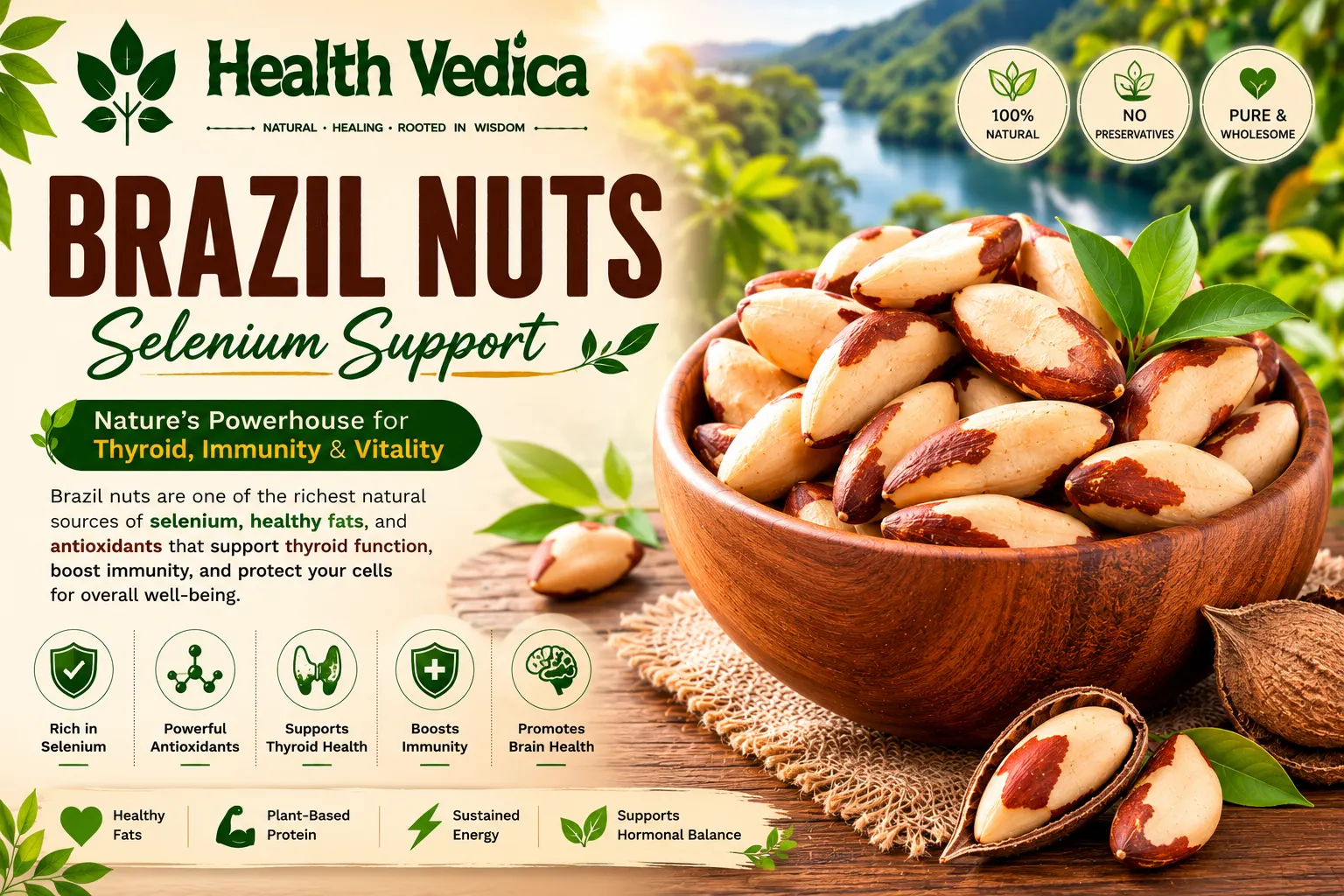
Brazil Nuts are among the world's richest natural sources of selenium, an essential trace mineral required for thyroid hormone production, immune defence, antioxidant protection and male fertility. Native to the Amazon rainforest of Brazil, Bolivia and Peru, these large buttery nuts grow inside coconut-like fruits on giant Brazil nut trees that can live for over 500 years. Just one or two Brazil nuts daily can provide the body's entire selenium requirement, making them one of nature's most nutrient-dense superfoods. Besides selenium, Brazil nuts are packed with healthy fats, plant protein, magnesium, phosphorus, zinc and vitamin E that support heart health, brain function and overall vitality.
📊 Nutritional Value Per 100g of Brazil Nuts
| Nutrient | Amount | % Daily Value (DV) |
|---|---|---|
| Calories | 659 kcal | 33% |
| Protein | 14.3 g | 29% |
| Total Fat | 67.1 g | 86% |
| Monounsaturated Fat | 24.5 g | — |
| Polyunsaturated Fat | 20.6 g | — |
| Carbohydrates | 11.7 g | 4% |
| Dietary Fiber | 7.5 g | 27% |
| Selenium | 1917 mcg | 3485% |
| Magnesium | 376 mg | 90% |
| Phosphorus | 725 mg | 104% |
| Zinc | 4.1 mg | 37% |
| Copper | 1.7 mg | 189% |
| Vitamin E | 5.7 mg | 38% |
| Potassium | 659 mg | 14% |
📉 Glycemic Index
Brazil Nuts have an extremely low glycemic index of approximately 10. Their high healthy-fat and fiber content slows digestion, helping stabilize blood sugar levels and reducing hunger between meals.
🕉️ Ayurvedic Properties & Dosha Effect
Although Brazil Nuts are not mentioned in classical Ayurvedic texts, Ayurvedic nutrition classifies them as Madhura (sweet) and slightly Guru (heavy) with nourishing (Brimhana) qualities. Their healthy oils help balance Vata Dosha, while moderate intake is generally acceptable for Pitta. Excessive consumption may increase Kapha because of their richness and heaviness. Ayurveda recommends consuming them soaked overnight for easier digestion.
💚 Health & Healing Benefits
Exceptional Thyroid Support: Brazil nuts are the richest food source of selenium, which is essential for converting inactive thyroid hormone (T4) into active thyroid hormone (T3). Adequate selenium intake supports normal thyroid function and protects thyroid cells from oxidative damage.
Powerful Antioxidant Protection: Selenium activates glutathione peroxidase, one of the body's strongest antioxidant enzymes. This helps reduce oxidative stress, slow cellular ageing and protect organs from free radical damage.
Supports Male Fertility: Selenium and zinc improve sperm quality, motility and reproductive health. Several studies associate adequate selenium intake with improved fertility in men.
Heart Health: Brazil nuts contain healthy unsaturated fats, magnesium and antioxidants that help reduce inflammation, improve blood vessel function and support healthy cholesterol levels.
Brain Function: Selenium supports cognitive performance by reducing oxidative stress in brain tissue. Regular intake may contribute to better memory and healthy ageing.
Immune Support: Selenium is vital for healthy immune cell activity and helps the body fight infections more efficiently.
Bone Health: Magnesium, phosphorus and copper work together to maintain bone density, connective tissues and healthy joints.
🌿 Traditional Home Remedies
Morning Energy Mix: Blend one soaked Brazil nut with almonds, walnuts, dates and warm milk for sustained energy throughout the day.
Brain Booster Smoothie: Blend one Brazil nut with banana, oats, yogurt and chia seeds for a selenium-rich breakfast.
Immunity Mix: Powder Brazil nuts with pumpkin seeds and flaxseeds and sprinkle over salads or smoothies for added minerals and healthy fats.
🥗 Best Ways to Eat Brazil Nuts
Eat them raw or lightly roasted without added salt. Chop them into oatmeal, yogurt, salads or homemade trail mixes. Because of their extremely high selenium content, avoid consuming large quantities daily.
📅 Daily Recommended Intake
Only 1–2 Brazil nuts per day are sufficient for most healthy adults. This amount easily meets daily selenium requirements. Regularly eating large amounts is not recommended because excessive selenium intake can become harmful over time.
⚠️ Precautions
People with tree nut allergies should avoid Brazil nuts. Excessive intake may cause selenium toxicity (selenosis), leading to brittle nails, hair loss, digestive discomfort, garlic-like breath and neurological symptoms. Individuals with kidney disease should consult their healthcare provider before increasing intake because Brazil nuts are also rich in phosphorus and potassium.
🔬 Scientific Highlights
Clinical studies show that consuming even a single Brazil nut daily significantly raises blood selenium levels within hours. Research also demonstrates improvements in antioxidant status, thyroid health markers and reductions in inflammatory biomarkers when consumed in moderation as part of a balanced diet.
🌍 Fun Facts
- Brazil nuts actually come from the Amazon rainforest, with Bolivia producing the largest share globally.
- The trees can exceed 50 metres in height and survive for centuries.
- Most Brazil nuts sold worldwide are harvested from wild forests rather than plantations, helping conserve the Amazon ecosystem.