βοΈ Why Winter Nutrition Matters More Than You Think
Winter is one of the most pleasant seasons in India, but it also places unique demands on the body. Cold weather increases energy requirements, changes appetite, affects immunity, and influences digestion. Many people experience frequent colds, joint stiffness, dry skin, low energy levels, and seasonal infections during winter.
Traditional Indian diets evolved around seasonal eating. Our ancestors naturally consumed foods like sesame seeds, jaggery, ghee, millets, nuts, dates, and warming spices during winter because these foods provide energy, support immunity, and help the body maintain warmth.
Modern nutritional science supports many of these traditional practices. Winter foods are often rich in healthy fats, complex carbohydrates, protein, antioxidants, and essential minerals that help the body adapt to colder temperatures.
Instead of fighting the season, eating according to it can improve energy levels, immunity, digestion, and overall well-being.
π¬ What Happens to the Body During Winter?
When temperatures drop, the body works harder to maintain its core temperature. This process increases energy expenditure and can influence hunger and food preferences.
Winter is also associated with:
- Higher calorie requirements
- Increased appetite
- Greater susceptibility to respiratory infections
- Dry skin and dehydration
- Reduced sunlight exposure
- Potential vitamin D deficiency
- Joint discomfort in some individuals
Choosing nutrient-dense warming foods can help address these seasonal challenges.
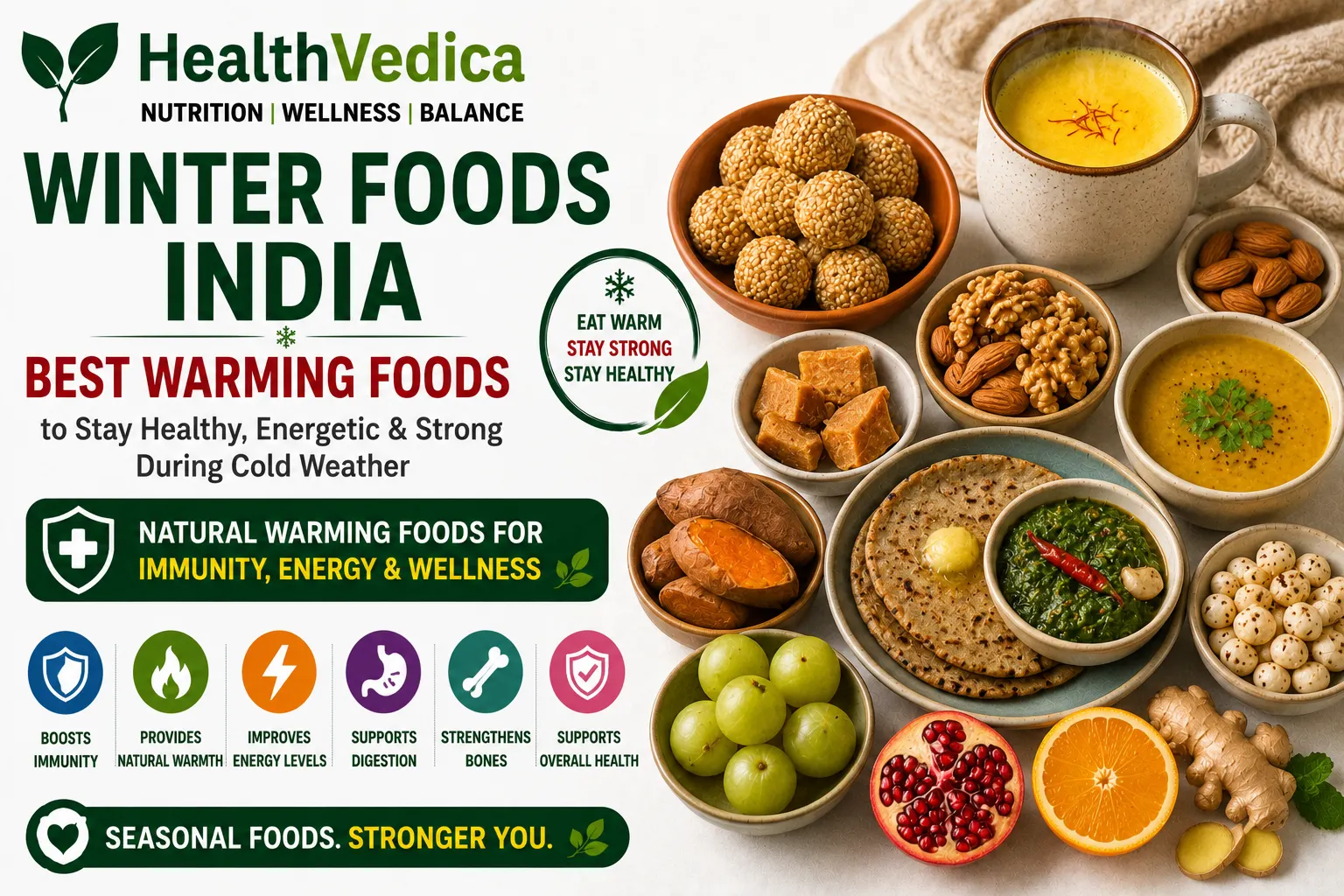
π Best Warming Foods for Indian Winter
| Food | Key Nutrient | Winter Benefit |
|---|---|---|
| Sesame Seeds (Til) | Calcium & healthy fats | Provides warmth and energy |
| Jaggery (Gur) | Iron & minerals | Natural energy source |
| Ghee | Healthy fats | Supports warmth and digestion |
| Millets | Complex carbs | Sustained energy |
| Dates | Natural sugars | Quick energy and minerals |
| Almonds | Vitamin E | Supports immunity |
| Walnuts | Omega-3 | Brain and heart support |
| Sweet Potato | Fiber & Vitamin A | Comforting winter food |
| Ginger | Gingerols | Warming effect |
| Turmeric | Curcumin | Immune support |
π₯ Sesame Seeds (Til) β The Traditional Winter Superfood
Sesame seeds have been a cornerstone of Indian winter diets for centuries. Rich in healthy fats, calcium, magnesium, zinc, and antioxidants, they provide concentrated nutrition during colder months.
The popular combination of til and jaggery consumed during festivals like Makar Sankranti is not accidental. Together, they provide energy, minerals, and warmth.
Sesame laddoos, chutneys, and roasted sesame snacks are excellent winter additions.
π₯ Jaggery (Gur)
Jaggery is traditionally consumed during winter because it provides quick energy and contains trace minerals such as iron, magnesium, and potassium.
Unlike refined sugar, jaggery undergoes less processing and retains some micronutrients.
Moderation remains important, especially for individuals managing blood sugar levels.
π₯ Ghee β The Traditional Winter Fat
For generations, Indian households increased ghee consumption during winter. Ghee provides concentrated energy and helps improve satiety.
When consumed in moderation as part of a balanced diet, ghee can contribute to energy needs during colder weather.
It also enhances the absorption of fat-soluble vitamins from vegetables and other foods.
πΎ Millets β Sustainable Winter Energy
Millets such as ragi, bajra, and jowar have traditionally been winter staples across India.
Bajra is particularly popular during winter due to its nutrient density and ability to provide long-lasting energy.
Millets supply complex carbohydrates, fiber, iron, magnesium, and plant-based protein.
Bajra rotis with ghee remain one of the most nourishing traditional winter meals.
π΄ Dates β Nature's Energy Bar
Dates provide natural sugars, potassium, iron, magnesium, and fiber.
They offer quick energy while supplying nutrients important for overall health.
Dates can be eaten as snacks or combined with nuts to create nutrient-dense winter treats.
π₯ Almonds and Walnuts
Nuts become especially valuable during winter because of their healthy fats, protein, vitamins, and minerals.
Almonds provide vitamin E and magnesium, while walnuts contribute omega-3 fatty acids that support brain and heart health.
A small daily serving can help improve overall nutrient intake.
π Sweet Potatoes
Sweet potatoes are rich in fiber, vitamin A, potassium, and antioxidants.
Their natural sweetness and comforting texture make them ideal winter foods.
Roasted sweet potatoes are widely consumed across India during colder months.
π« Ginger β Nature's Warming Spice
Ginger is often associated with warmth because it may temporarily increase circulation and produce a warming sensation.
It is commonly added to tea, soups, and traditional winter remedies.
Ginger also supports digestion and may help relieve throat discomfort.
π‘ Turmeric
Turmeric's anti-inflammatory and antioxidant properties make it particularly valuable during winter when respiratory infections become more common.
Traditional turmeric milk remains a popular bedtime drink during cold weather.
Combining turmeric with black pepper improves curcumin absorption.
π₯¬ Seasonal Winter Vegetables
Winter is one of the best seasons for fresh vegetables in India. Seasonal produce often contains peak nutrient levels.
| Vegetable | Main Benefit |
|---|---|
| Carrots | Vitamin A |
| Spinach | Iron & folate |
| Mustard Greens | Vitamin K |
| Methi Leaves | Fiber & antioxidants |
| Beetroot | Antioxidants |
| Green Peas | Protein & fiber |
π² Traditional Indian Winter Foods
Many regional Indian winter foods are nutritionally excellent:
- Bajra roti with ghee
- Sarson ka saag
- Til laddoo
- Gajak
- Gond laddoo
- Ragi porridge
- Vegetable soups
- Khichdi with ghee
These foods provide warmth, energy, and valuable nutrients.
π« Common Winter Diet Mistakes
- Overeating sweets and fried foods
- Ignoring hydration because thirst decreases
- Avoiding fruits during winter
- Reduced physical activity
- Excessive consumption of calorie-dense snacks
Winter weight gain often results from these habits rather than the season itself.
π§ Hydration Is Still Important
Many people drink less water during winter because they feel less thirsty. However, dehydration can still occur.
Include water, soups, herbal teas, and seasonal fruits to maintain hydration.
πΏ Ayurvedic Perspective on Winter Foods
According to Ayurveda, digestive fire (Agni) is strongest during winter. This allows the body to digest heavier and more nourishing foods effectively.
Ayurveda recommends foods such as ghee, sesame seeds, nuts, milk, whole grains, warming spices, soups, and seasonal vegetables during winter.
Cold, dry, and excessively processed foods are generally minimized.
π½οΈ Sample Indian Winter Meal Plan
Morning: Warm water + soaked almonds + dates
Breakfast: Ragi porridge with nuts
Mid-Morning: Seasonal fruit (orange or guava)
Lunch: Bajra roti, dal, seasonal vegetables, salad
Evening: Ginger tea + roasted chana
Dinner: Khichdi with ghee + vegetable soup
Before Bed: Turmeric milk
π‘οΈ Winter Foods for Immunity
Winter is often associated with colds, coughs, and seasonal infections. Foods that support immunity include:
- Amla
- Citrus fruits
- Ginger
- Turmeric
- Garlic
- Nuts
- Curd
- Leafy greens
Combined with adequate sleep and physical activity, these foods help maintain resilience during colder months.
π‘ Final Thoughts
Winter is the perfect season to nourish the body with wholesome, nutrient-dense foods. Traditional Indian winter foods such as sesame seeds, jaggery, ghee, millets, nuts, dates, seasonal vegetables, ginger, and turmeric provide warmth, energy, and immunity support.
Rather than relying on processed comfort foods, embracing seasonal eating allows you to enjoy better health, stronger immunity, improved digestion, and sustained energy throughout the winter months.