🍉 Introduction
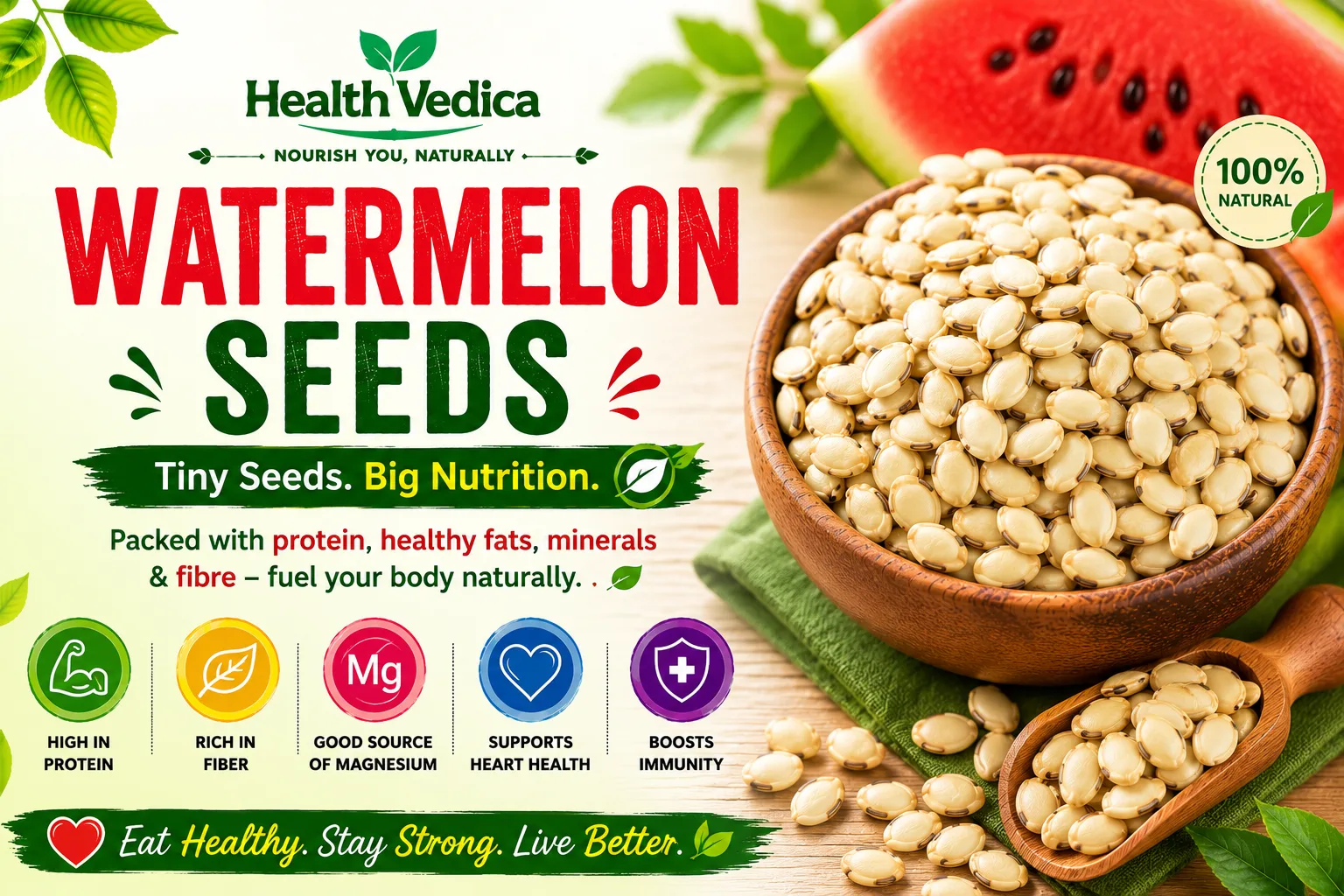
Watermelon Seeds are the edible seeds found inside watermelons (Citrullus lanatus). While many people discard them, these tiny seeds are actually packed with nutrition. Once dried or roasted, they become a rich source of plant protein, healthy fats, magnesium, iron, zinc, phosphorus and B vitamins. Watermelon seeds have been consumed for centuries across Africa, Asia and the Middle East as a nourishing snack. They support muscle growth, heart health, immunity, healthy bones and sustained energy. Thanks to their impressive nutrient profile, watermelon seeds are increasingly recognised as a nutritious superfood suitable for vegetarians, athletes and health-conscious individuals.
📊 Nutritional Value Per 100g of Watermelon Seeds
| Nutrient | Amount | % Daily Value (DV) |
|---|---|---|
| Calories | 557 kcal | 28% |
| Protein | 28.3 g | 57% |
| Total Fat | 47.4 g | 61% |
| Monounsaturated Fat | 9.5 g | — |
| Polyunsaturated Fat | 28.1 g | — |
| Carbohydrates | 15.3 g | 6% |
| Dietary Fiber | 4.0 g | 14% |
| Magnesium | 515 mg | 123% |
| Phosphorus | 755 mg | 108% |
| Iron | 7.3 mg | 41% |
| Zinc | 10.2 mg | 93% |
| Potassium | 648 mg | 14% |
| Folate | 58 mcg | 15% |
| Niacin (Vitamin B3) | 3.6 mg | 23% |
📉 Glycemic Index
Watermelon seeds have a glycemic index close to 0 because they contain very little digestible carbohydrate. Their high protein and healthy fat content slow digestion and help maintain stable blood sugar levels.
🧬 Amino Acid Highlights
Watermelon seeds provide an excellent amount of plant protein and are particularly rich in arginine, glutamic acid and branched-chain amino acids (BCAAs). Arginine supports nitric oxide production, healthy blood circulation and cardiovascular function, while BCAAs contribute to muscle repair and recovery.
💊 Vitamins & Minerals Explained
Watermelon seeds are exceptionally rich in magnesium, phosphorus, zinc and iron. Magnesium supports muscle contraction, nerve function and blood pressure regulation. Zinc strengthens immunity, promotes wound healing and supports male reproductive health. Iron helps prevent anaemia by supporting healthy red blood cell production, while phosphorus contributes to strong bones and efficient energy metabolism.
🕉️ Ayurvedic Properties & Dosha Effect
Although Watermelon Seeds are not individually described in classical Ayurvedic texts, they are generally considered Madhura (sweet), Snigdha (unctuous) and nourishing. They help pacify Vata Dosha by providing strength and lubrication to body tissues. Moderate consumption is suitable for Pitta, while excessive intake may aggravate Kapha due to their calorie density. Ayurveda recommends consuming roasted or lightly soaked seeds in moderation to support digestion and tissue nourishment.
💚 Evidence-Based Health Benefits
High-Quality Plant Protein: Watermelon seeds provide over 28g of protein per 100g, making them an excellent choice for vegetarians, vegans and athletes seeking natural protein sources.
Heart Health: Healthy unsaturated fats, magnesium and arginine help maintain healthy blood vessels, support normal blood pressure and promote cardiovascular wellness.
Muscle & Nerve Function: Their high magnesium content supports proper muscle contraction, nerve signalling and exercise recovery.
Supports Male Fertility: Zinc plays a key role in testosterone production, sperm quality and reproductive health. Regular intake of zinc-rich foods supports overall male fertility.
Bone Strength: Magnesium and phosphorus work together to maintain bone density and healthy teeth.
Immune Support: Zinc, iron and antioxidants contribute to a strong immune system and healthy cell function.
Energy Production: B vitamins, iron and phosphorus help convert food into usable energy, reducing fatigue and supporting active lifestyles.
👨👩👧 Who Should Eat Watermelon Seeds?
Watermelon seeds are especially beneficial for athletes, gym enthusiasts, vegetarians, growing children, elderly individuals, pregnant women (after medical advice), people with iron deficiency and anyone seeking natural plant-based protein and mineral-rich foods.
🚫 Who Should Limit or Avoid Them?
People with seed allergies should avoid watermelon seeds. Individuals with severe kidney disease should consult their healthcare provider because these seeds contain significant amounts of phosphorus and potassium. Due to their high calorie content, portion control is important for individuals trying to lose weight.
🌿 Healthy Recipes & Traditional Remedies
Protein Trail Mix: Combine roasted watermelon seeds with almonds, pumpkin seeds, raisins and walnuts for a balanced snack.
Seed Powder: Grind roasted watermelon seeds into a fine powder and add to smoothies, chapati dough or porridge to boost protein intake.
Energy Ladoo: Mix watermelon seed powder with sesame seeds, dates, jaggery and ghee to prepare nutrient-rich laddoos for children and athletes.
🥗 Best Ways to Eat Watermelon Seeds
Roast watermelon seeds lightly and enjoy them as a snack or sprinkle them over salads, soups, yogurt, smoothies, breakfast cereals or oatmeal. They can also be blended into homemade protein bars and seed mixes.
🍽️ Best Food Combinations
Pair watermelon seeds with yogurt, fruits, oats, leafy greens, nuts and legumes to create balanced meals rich in protein, fibre, healthy fats and essential minerals.
🔥 Raw vs Roasted vs Sprouted
Roasting improves flavour and texture while retaining most nutrients. Sprouting may improve mineral bioavailability and digestibility. Avoid excessive roasting at high temperatures to preserve healthy fats.
🧊 Storage Tips
Store roasted or raw watermelon seeds in an airtight container in a cool, dry place. Refrigeration extends freshness and prevents the healthy oils from becoming rancid.
📅 Daily Recommended Intake
20–30 grams (approximately 2 tablespoons) per day provides an excellent source of protein, healthy fats and minerals while keeping calorie intake balanced.
⚠️ Precautions & Drug Interactions
Consume watermelon seeds in moderation as part of a varied diet. Individuals taking potassium-restricted diets or certain kidney medications should seek medical advice before consuming large quantities. Always choose clean, food-grade seeds free from mould and contaminants.
🔬 Scientific Highlights
Research shows that watermelon seeds are naturally rich in plant protein, arginine, magnesium and zinc. These nutrients support cardiovascular function, muscle health, reproductive wellness, immunity and overall metabolic health. Regular inclusion of seeds in the diet has also been associated with improved nutrient intake and reduced risk of chronic diseases.
🌍 Fun Facts
- Watermelon seeds have been consumed as a traditional snack in Africa for thousands of years.
- Nearly half of their weight comes from heart-healthy unsaturated fats.
- Roasted watermelon seeds contain more protein than many popular snack foods.
- Instead of throwing them away, drying and roasting the seeds helps reduce food waste while adding valuable nutrition to your diet.