Quick answer
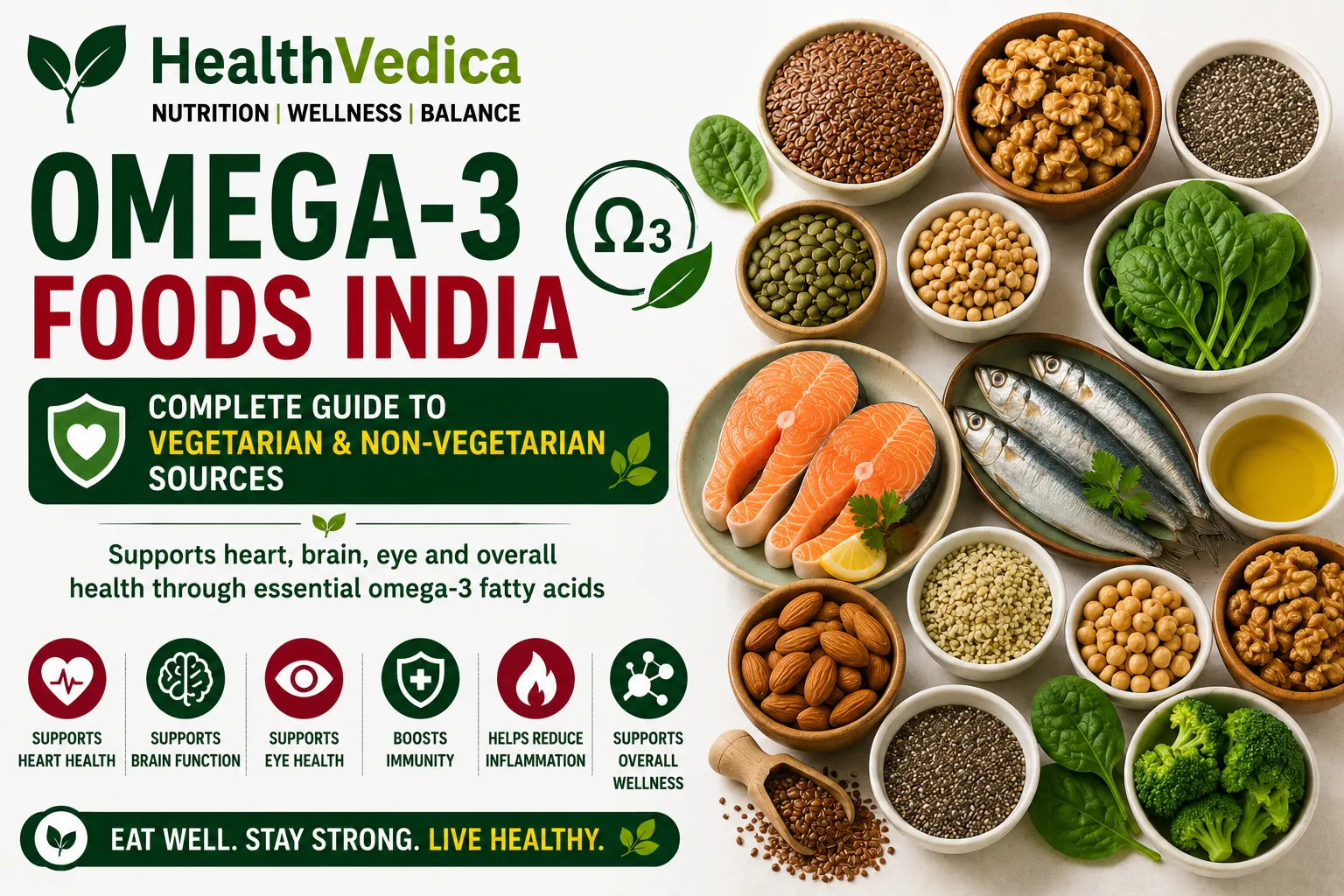
Omega-3 fats is an essential nutrient or food-based topic that matters because it include ALA from plants and EPA/DHA from fish and seafood. The most useful approach is not a “miracle food”, but a varied Indian diet that regularly includes reliable sources and fits your age, health status and dietary pattern.
Why this nutrient matters
Your body needs Omega-3 fats in appropriate amounts. Requirements and useful food choices vary by age, sex, pregnancy or lactation, activity level and medical conditions. ICMR-NIN’s Dietary Guidelines for Indians 2024 emphasise variety across food groups, adequate nutrition across life stages and practical food choices rather than chasing a single nutrient or “superfood”.
Best Indian food sources
- flaxseed and chia
- walnuts
- soy foods
- fatty fish such as sardines and mackerel
- omega-3-fortified foods where available
Choose several sources across the week instead of relying on one food. Nutrient content can vary with variety, soil, fortification, cooking method and whether the food is measured raw or cooked, so online tables should be treated as estimates rather than exact values for every serving.
How to build it into everyday meals
| Meal | Simple Indian idea |
|---|---|
| Breakfast | Choose a whole-grain or millet base with fruit, nuts/seeds, dairy or another suitable protein. |
| Lunch | Dal/beans + vegetables + rice/roti/millet + curd or another protein-rich side. |
| Snack | Fruit with nuts/seeds, roasted legumes or unsweetened dairy/soy foods. |
| Dinner | Vegetables + a pulse/egg/fish/meat/soy protein + a whole-grain staple. |
Food-pairing and absorption tips
ALA is converted to EPA and DHA only in limited amounts. People who do not eat fish can discuss algae-derived DHA/EPA with a clinician if supplementation is appropriate.
What to avoid or limit
Be cautious with “detoxes”, extreme diets, megadose supplements and products that promise to cure deficiency without testing. More of a nutrient is not necessarily better; fat-soluble vitamins and several minerals can accumulate or cause harm at excessive intakes.
🌿 Ayurveda and traditional Indian food context
Ayurveda has its own concepts of food quality, digestion and individual suitability. That traditional framework can add cultural context to an Indian nutrition article, but it should not be presented as proof that a food or herb treats a deficiency or disease. Use culinary quantities of foods as part of a balanced diet, and discuss concentrated herbal products or therapeutic preparations with a qualified clinician.
⚠️ When food is not enough
Nutrition can support health, but a diagnosed nutrient deficiency may need testing, a therapeutic diet or supplementation. Persistent fatigue, weakness, numbness, unexplained weight change, severe dehydration, recurrent symptoms or abnormal blood tests deserve medical evaluation rather than a food-only plan.
Evidence and source note
This guide is aligned primarily with ICMR-NIN Dietary Guidelines for Indians 2024 and the broader Indian nutrient-requirement framework. Ministry of AYUSH and Ayurveda are used only for clearly labelled traditional context; traditional use is not presented as clinical proof. Food-safety considerations should follow FSSAI requirements and guidance.