π©Ί India's Silent Epidemic: Why Vitamin B12 Deficiency Is So Common Here
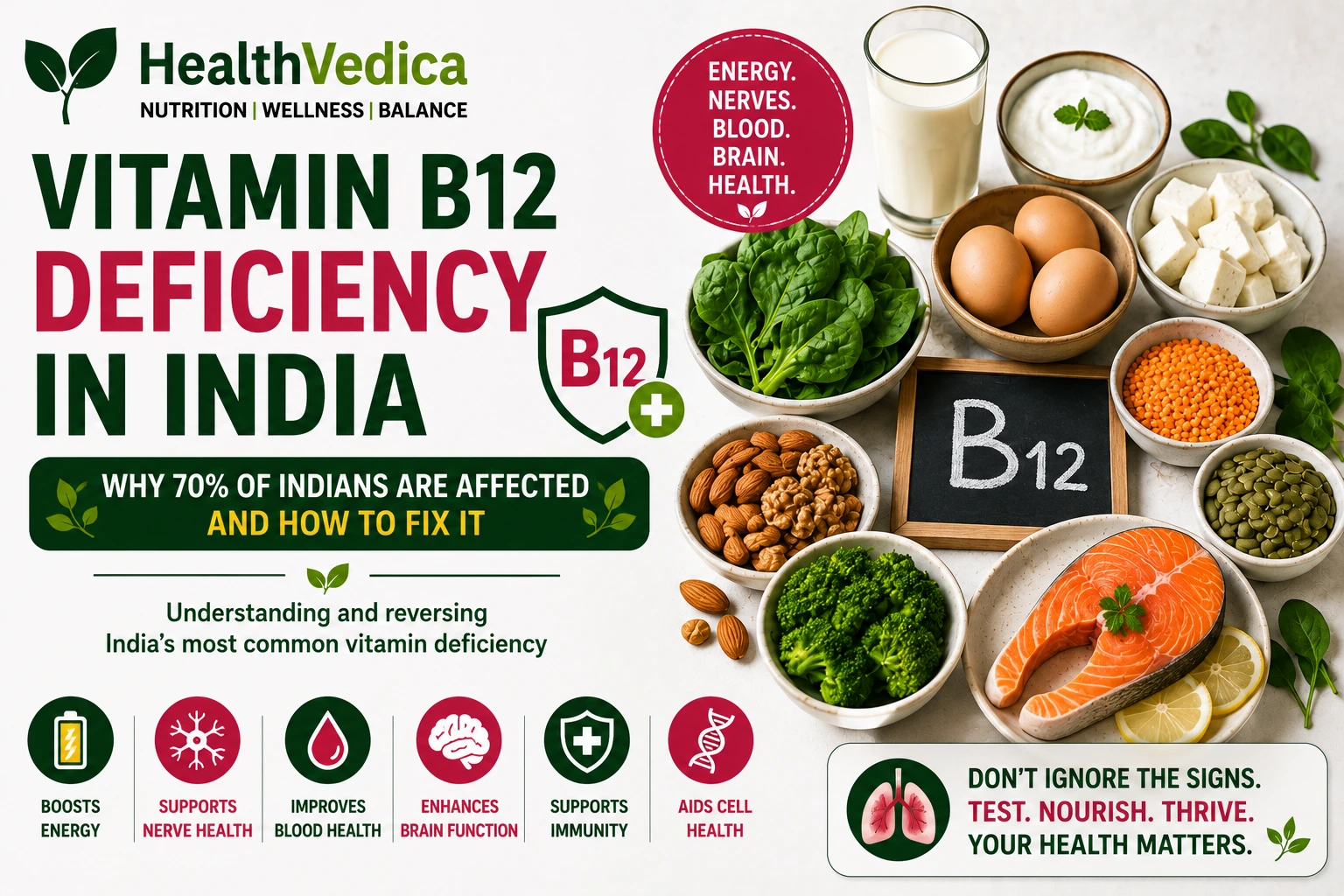
Vitamin B12 (cobalamin) deficiency affects an estimated 47β70% of the Indian population, according to multiple national nutrition surveys β making it one of the most widespread yet under-diagnosed nutritional problems in the country. Unlike iron deficiency anaemia, which receives significant public health attention, B12 deficiency is rarely screened for, frequently misdiagnosed as fatigue or stress, and poorly understood by both patients and many general physicians.
The reason for India's exceptionally high B12 deficiency rate is structural: vitamin B12 is found almost exclusively in animal-derived foods β meat, fish, eggs, and dairy. India has the world's largest vegetarian population (an estimated 30β40% of Indians are lacto-vegetarian, with a further significant portion eating animal protein only occasionally). Unlike Western countries where B12-fortified foods (cereals, plant milks, nutritional yeast) are common on supermarket shelves, India has minimal mandatory fortification, leaving vegetarians with very few reliable dietary B12 sources beyond dairy.
Even non-vegetarian Indians are frequently B12 deficient β gut conditions common in India (H. pylori infection, intestinal parasites, tropical sprue), widespread proton-pump inhibitor (acid reducer) use, and inconsistent meat/fish consumption all reduce absorption or intake. B12 deficiency in India is therefore not purely a 'vegetarian problem' β it is a population-wide nutritional vulnerability requiring deliberate dietary attention.
π¬ What B12 Actually Does β and Why Deficiency Is Dangerous
Nerve myelin formation: B12 is essential for synthesising myelin, the protective sheath around nerve fibres. Deficiency causes progressive, and if untreated, irreversible nerve damage β presenting as numbness, tingling, and eventually difficulty walking.
Red blood cell production: B12 works with folate to produce healthy, normally-sized red blood cells. Deficiency causes megaloblastic anaemia β abnormally large, dysfunctional red blood cells that carry oxygen poorly, causing fatigue and breathlessness even when haemoglobin appears only mildly low.
DNA synthesis: Every dividing cell in the body needs B12 for DNA synthesis, making deficiency particularly damaging during pregnancy (foetal neural development), childhood growth, and any period of high cell turnover.
Homocysteine clearance: B12 (with folate and B6) converts homocysteine, a toxic amino acid by-product, into harmless compounds. Deficiency raises homocysteine levels β independently linked to increased cardiovascular disease and stroke risk, a finding particularly relevant given Indians' already elevated cardiovascular risk profile.
Cognitive and mood function: B12 deficiency is associated with depression, irritability, memory impairment, and in severe or prolonged cases, can mimic or accelerate dementia in older adults β frequently misattributed to ageing rather than identified as a reversible nutritional cause.
β οΈ Recognising the Symptoms β Often Mistaken for Other Conditions
| Symptom Category | Specific Signs | Commonly Mistaken For |
|---|---|---|
| Fatigue & energy | Persistent tiredness, breathlessness on exertion, low stamina | Iron deficiency, thyroid issues, 'just being tired' |
| Neurological | Tingling/numbness in hands and feet, balance problems, muscle weakness | Diabetic neuropathy, vitamin D deficiency, ageing |
| Cognitive & mood | Brain fog, poor concentration, memory lapses, irritability, low mood | Stress, depression, early dementia |
| Oral & digestive | Glossitis (smooth, sore red tongue), mouth ulcers, loss of appetite, mild nausea | Vitamin C deficiency, general digestive upset |
| Skin & appearance | Pale or mild yellowish skin tone, premature greying of hair | Anaemia (iron), normal ageing |
| Heart & circulation | Palpitations, rapid heartbeat on minor exertion | Anxiety, caffeine sensitivity |
Because these symptoms overlap heavily with iron deficiency, hypothyroidism, and general stress β all also extremely common in India β B12 deficiency is frequently missed unless specifically tested for with a serum B12 blood test (and ideally methylmalonic acid or homocysteine testing for borderline cases, as serum B12 alone can under-detect functional deficiency).
π¨ Who Is Most at Risk in India
Vegetarians and vegans: The largest at-risk group. Strict lacto-vegetarians can get some B12 from dairy, but vegans have essentially no reliable dietary source without fortified foods or supplements.
Elderly adults (60+): Stomach acid production declines with age, and B12 absorption requires adequate stomach acid to release it from food protein. An estimated 10β30% of older adults have reduced absorption regardless of intake.
Pregnant and breastfeeding women: Foetal and infant neurological development depends on maternal B12 status. Deficiency during pregnancy is linked to neural tube defects and developmental delays in infants β making this a critical screening priority that is frequently overlooked in routine Indian antenatal care, which typically tests iron and folate but not always B12.
People on long-term antacid or metformin therapy: Proton-pump inhibitors (PPIs, commonly prescribed for acidity β extremely widespread in India) reduce stomach acid needed for B12 absorption. Metformin, the first-line diabetes medication used by tens of millions of Indians, is independently associated with reduced B12 absorption with long-term use.
People with gut conditions: H. pylori infection (very common in India), intestinal parasites, tropical sprue, and inflammatory bowel conditions all impair B12 absorption regardless of dietary intake.
π₯ Indian Vegetarian-Friendly B12 Food Sources
| Food | B12 per Serving | Notes |
|---|---|---|
| Milk (1 cup, 250ml) | ~1.2 mcg | Most reliable vegetarian source; daily consumption recommended |
| Paneer (100g) | ~0.5β1 mcg | Moderate source; pairs well with daily dal-roti meals |
| Curd/Dahi (1 cup) | ~0.5β1 mcg | Fermentation does not significantly add B12 but retains dairy content |
| Eggs (1 large, for ovo-vegetarians) | ~0.6 mcg | Yolk contains nearly all the B12; excellent source for egg-eating vegetarians |
| Fortified breakfast cereals | Varies (check label) | Increasingly available in urban India; check for added B12 on packaging |
| Nutritional yeast (fortified) | ~2β8 mcg per tbsp | Not traditional but increasingly available online; reliable for vegans |
| B12-fortified plant milk | Varies (check label) | Soy/almond milk brands sold in India increasingly fortify with B12 |
For non-vegetarians, fish (especially surmai, sardines, and mackerel), chicken liver, and red meat in moderation provide substantially higher and more bioavailable B12 than any vegetarian source β egg and dairy intake alone often falls short of optimal levels even with daily consumption, which is why vegetarians require closer monitoring.
π When Diet Isn't Enough β Supplementation Reality
Unlike many nutrients where 'food first' is the ideal approach, B12 is the exception where supplementation is frequently necessary and medically appropriate β even for people eating a reasonably good diet. This is because vegetarian dietary sources (milk, paneer, curd) typically provide only 1β2 mcg of B12 per day through realistic portion sizes, while absorption efficiency further reduces what the body actually uses, especially in anyone with even mild gut or stomach acid issues.
Strict vegetarians, vegans, anyone over 50, and anyone with confirmed low B12 on a blood test should discuss supplementation with a doctor β typically oral B12 tablets (cyanocobalamin or methylcobalamin) for mild-to-moderate deficiency, or B12 injections for severe deficiency, malabsorption conditions, or neurological symptoms requiring faster correction. Self-treating significant deficiency with diet changes alone, without medical guidance and follow-up testing, risks allowing neurological damage to progress β B12-related nerve damage can become irreversible if left untreated for too long.
π½οΈ Building a Higher-B12 Indian Vegetarian Day
Core daily principles: Include dairy at every meal | Add eggs if not strictly vegetarian | Consider a B12-fortified plant milk or cereal | Get an annual B12 blood test if vegetarian, over 50, or on metformin/antacids | Don't rely on diet alone if levels are already low β supplement under medical guidance
Breakfast: Milk-based chai or a glass of milk + paneer paratha or vegetable omelette (if eggs are eaten)
Mid-morning: A cup of curd or buttermilk (chaach)
Lunch: Dal + roti + sabzi + a side of curd/raita
Evening: Paneer-based snack or a glass of B12-fortified plant milk if dairy intake is limited
Dinner: Khichdi with ghee + curd, or a paneer-based curry with roti
This pattern realistically provides only partial daily B12 needs for most adults from food alone β reinforcing why periodic blood testing, rather than diet alone, is the only reliable way to confirm adequate B12 status, particularly for vegetarians and those over 50.