🌾 Introduction
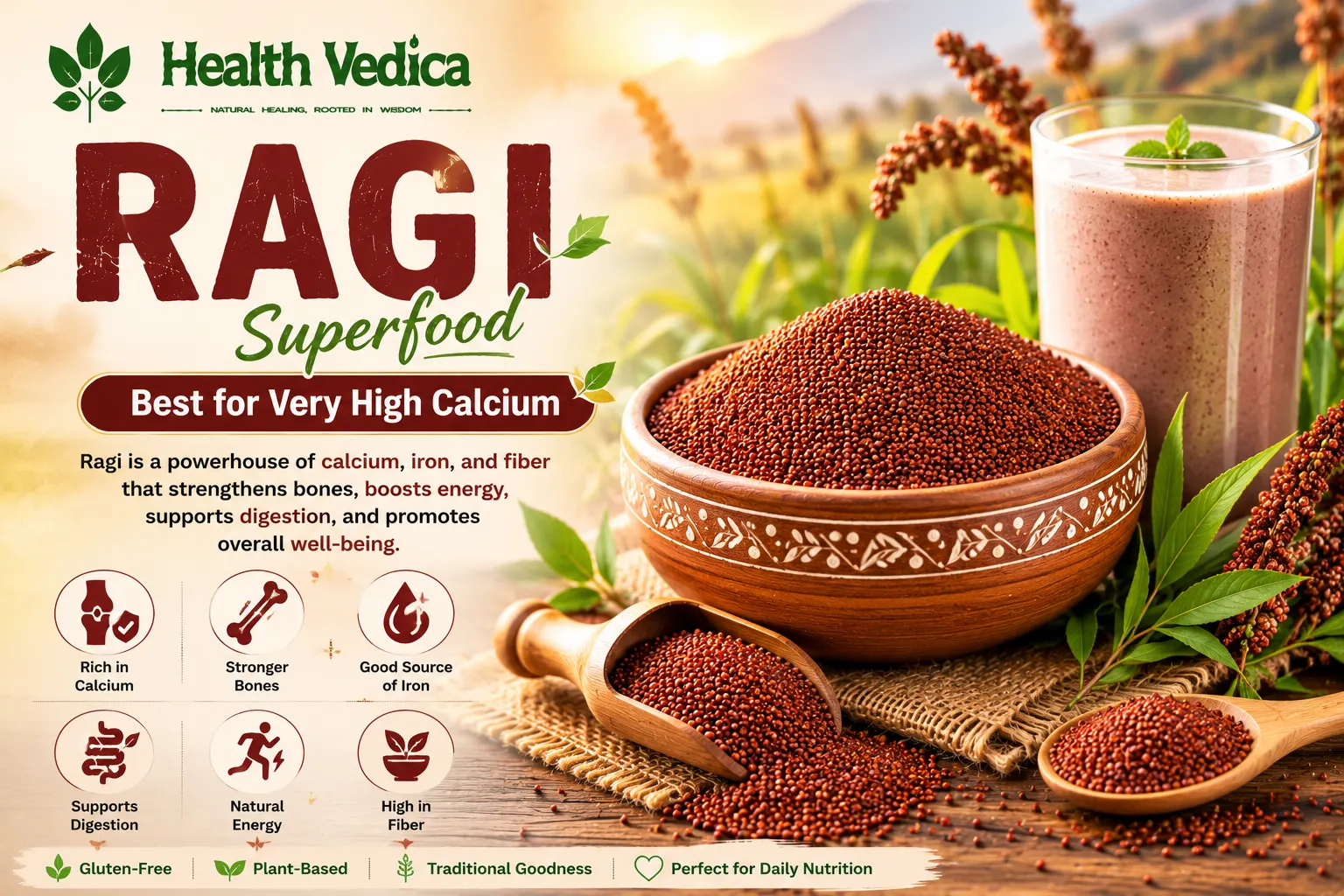
Ragi, also known as Finger Millet or Mandua in Hindi, is one of India's oldest and most nutritious ancient grains. Cultivated extensively across Karnataka, Tamil Nadu, Andhra Pradesh, and the Himalayan foothills, Ragi has been a dietary staple for centuries. It stands out as the richest plant-based source of calcium among all cereals — making it invaluable for bone health, especially for children, pregnant women, and the elderly. Ragi is 100% gluten-free, highly digestible, and has a low glycemic index, making it an excellent superfood for diabetics and weight-watchers alike.
🔬 Nutritional Value of Ragi Per 100g
| Nutrient | Amount | Daily Value % |
|---|---|---|
| Calories | 328 kcal | 16% |
| Carbohydrates | 72 g | 24% |
| Protein | 7.3 g | 15% |
| Dietary Fiber | 3.6 g | 14% |
| Calcium | 344 mg | 34% |
| Iron | 3.9 mg | 22% |
| Phosphorus | 283 mg | 28% |
| Magnesium | 137 mg | 34% |
| Potassium | 408 mg | 12% |
| Vitamin B1 (Thiamine) | 0.42 mg | 35% |
| Vitamin B2 (Riboflavin) | 0.19 mg | 15% |
| Zinc | 2.3 mg | 21% |
| Fat | 1.9 g | 3% |
📊 Glycemic Index & Glycemic Load
Ragi has a Glycemic Index (GI) of 54–68 depending on preparation. When sprouted or fermented, the GI drops significantly to around 45–50, making it an ideal grain for people managing Type 2 Diabetes. Its high fiber content slows glucose absorption, preventing blood sugar spikes. The Glycemic Load (GL) per serving is approximately 13, classified as moderate — safe for regular consumption by diabetics under medical guidance.
🌿 Ayurvedic Properties & Dosha Effect
In Ayurveda, Ragi is classified as having Sheeta Virya (cooling potency) and Madhura Rasa (sweet taste). It primarily balances Vata and Pitta doshas. Consumed in moderation, it is nourishing and grounding. Excessive consumption may slightly increase Kapha due to its heavy nature. Ayurvedic practitioners recommend Ragi malt with warm water and cardamom for digestive strength and to enhance Ojas (vital energy).
💪 Health & Healing Benefits of Ragi
🦴 Bone & Teeth Strength: Ragi contains more calcium than milk per gram, making it extraordinarily beneficial for growing children, post-menopausal women prone to osteoporosis, and elderly individuals. Regular intake supports bone mineralization and prevents fractures.
🩺 Diabetes Management: The polyphenols and dietary fiber in Ragi slow carbohydrate digestion and glucose absorption. Studies show that regular Ragi consumption improves insulin sensitivity and reduces fasting blood glucose levels.
⚖️ Weight Loss & Satiety: Ragi's high fiber keeps you fuller for longer, reducing total calorie intake. It is rich in the amino acid tryptophan, which curbs appetite naturally — making Ragi porridge an ideal breakfast for those on a weight-loss journey.
🧠 Mental Health & Sleep: Tryptophan in Ragi converts to serotonin and melatonin in the body, supporting mood stability, reducing anxiety, and improving sleep quality.
🩸 Anemia Prevention: Ragi's good iron content along with Vitamin C (from pairing with lemon or tamarind) enhances non-heme iron absorption — helping prevent iron-deficiency anemia, especially in children and women.
🍼 Infant Nutrition: Sprouted Ragi flour (Sathumavu/Sattu) is traditionally used as a weaning food for babies. It is easy to digest, rich in nutrients, and promotes healthy weight gain in infants.
❤️ Heart Health: Ragi's fiber, magnesium, and potassium content support healthy blood pressure and reduce LDL cholesterol levels, lowering cardiovascular disease risk.
🌟 Skin & Anti-Aging: Amino acids like methionine and lysine in Ragi support collagen production, reduce skin sagging, and protect against premature aging.
🥤 Ayurvedic Ragi Juices & Drinks
| Drink | Ingredients | Benefits |
|---|---|---|
| Ragi Malt (Kanji) | Ragi flour, water, jaggery, cardamom | Cooling, energy-boosting, digestive |
| Ragi Ambali | Fermented Ragi, buttermilk, salt | Probiotic, gut health, summer cooler |
| Sprouted Ragi Sattu Drink | Sprouted Ragi powder, lemon, black salt, water | Weight loss, iron absorption, detox |
| Ragi Porridge with Banana | Ragi flour, milk/water, banana, honey | Infant nutrition, bone strength |
🍽️ Indian Dietary Uses of Ragi
Ragi is incredibly versatile in Indian cuisine. In Karnataka and Tamil Nadu, Ragi Mudde (balls) is served with sambar and is a traditional staple. Ragi Dosa, Ragi Idli, Ragi Roti (Bhakri), and Ragi Ladoo are popular across South India. In the hills of Uttarakhand and Himachal Pradesh, Ragi flour is used in flatbreads. Ragi noodles and pasta are now also popular as health foods in urban markets.
💡 Tips for Best Use of Ragi
• Sprout before use: Sprouting Ragi increases its bioavailability of nutrients by up to 40% and reduces phytic acid, which otherwise blocks mineral absorption.
• Ferment for digestion: Fermented Ragi (as in Ambali) is probiotic-rich and easier on the gut.
• Pair with Vitamin C: Combine with lemon, tomato, or tamarind to improve iron absorption.
• Store properly: Ragi flour goes rancid faster than refined flour. Store in an airtight container in the refrigerator and use within 3 months.
• Best time to eat: Morning (as malt or porridge) for sustained energy, or evening as a light dinner.
⚠️ Precautions & Side Effects
Ragi is generally very safe. However, individuals with kidney stones (oxalate type) should moderate intake as Ragi contains oxalic acid. Those with hypothyroidism should not consume raw Ragi regularly as it has mild goitrogenic properties when uncooked. Always cook or ferment Ragi before consumption for best digestibility.