🌾 Introduction
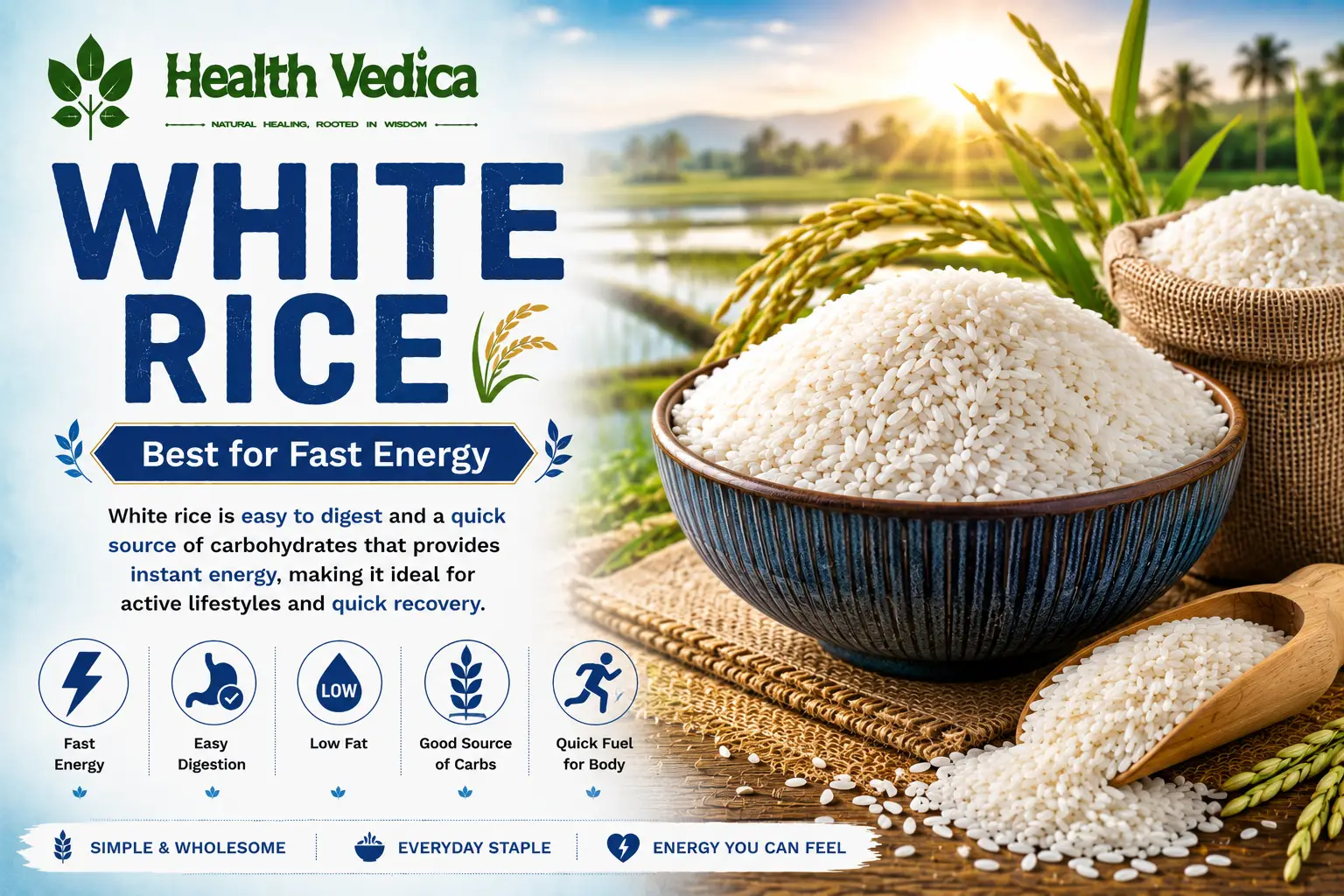
White rice is one of the most widely consumed staple grains in the world, especially across South Asia, East Asia, and Southeast Asia. In India, it forms the backbone of daily meals from steamed rice in the south to khichdi in the north. White rice is polished, meaning the outer bran and germ layers are removed, leaving a soft, easily digestible grain rich in carbohydrates and energy.
🔬 Nutritional Value Per 100g (Cooked)
| Nutrient | Amount | % Daily Value |
|---|---|---|
| Calories | 130 kcal | 6% |
| Carbohydrates | 28.2 g | 10% |
| Protein | 2.7 g | 5% |
| Fat | 0.3 g | 0% |
| Fiber | 0.4 g | 1% |
| Iron | 0.2 mg | 1% |
| Magnesium | 12 mg | 3% |
| Phosphorus | 68 mg | 7% |
| Thiamine (B1) | 0.02 mg | 2% |
| Niacin (B3) | 0.4 mg | 2% |
📊 Glycemic Index
White rice has a high glycemic index (GI) of approximately 64–72, meaning it causes a faster rise in blood sugar levels. It is best consumed in moderate portions, combined with vegetables, lentils, and healthy fats to balance the GI response.
🌿 Ayurvedic Properties & Dosha Effect
In Ayurveda, white rice is considered Sattvic in nature — light, easy to digest, and calming to the mind. It primarily pacifies Vata and Pitta doshas. It is the grain of choice during illness, detox, and recovery as it is gentle on the digestive system. Excess consumption may increase Kapha due to its heavy and moist nature.
✅ Health & Healing Benefits
White rice is an excellent source of instant energy, making it ideal for athletes, growing children, and individuals recovering from illness. It is naturally gluten-free, making it a safe grain for those with celiac disease or gluten sensitivity. Its soft texture and easy digestibility support gut healing, especially post-diarrhea or gastritis. When consumed as congee or kanji (rice gruel), it soothes the gastrointestinal lining.
🍛 Indian Dietary Uses
White rice is used in hundreds of Indian recipes including steamed rice, biryani, khichdi, idli, dosa, pongal, rice kheer, curd rice, and pulao. It is the main staple in states like Andhra Pradesh, Tamil Nadu, Kerala, Odisha, West Bengal, and Assam.
💡 Smart Consumption Tips
Pair white rice with dal, sambar, vegetables, or curries to increase the overall nutritional value of the meal. Opt for parboiled or semi-polished rice where possible to retain more nutrients. Cooling cooked white rice before eating increases its resistant starch content, which acts as a prebiotic and slightly lowers the glycemic impact.
⚠️ Who Should Limit White Rice?
People with diabetes, insulin resistance, obesity, or metabolic syndrome should consume white rice in controlled portions. Replacing some white rice with millets, brown rice, or legumes can significantly improve blood sugar control and satiety.