🌽 Introduction
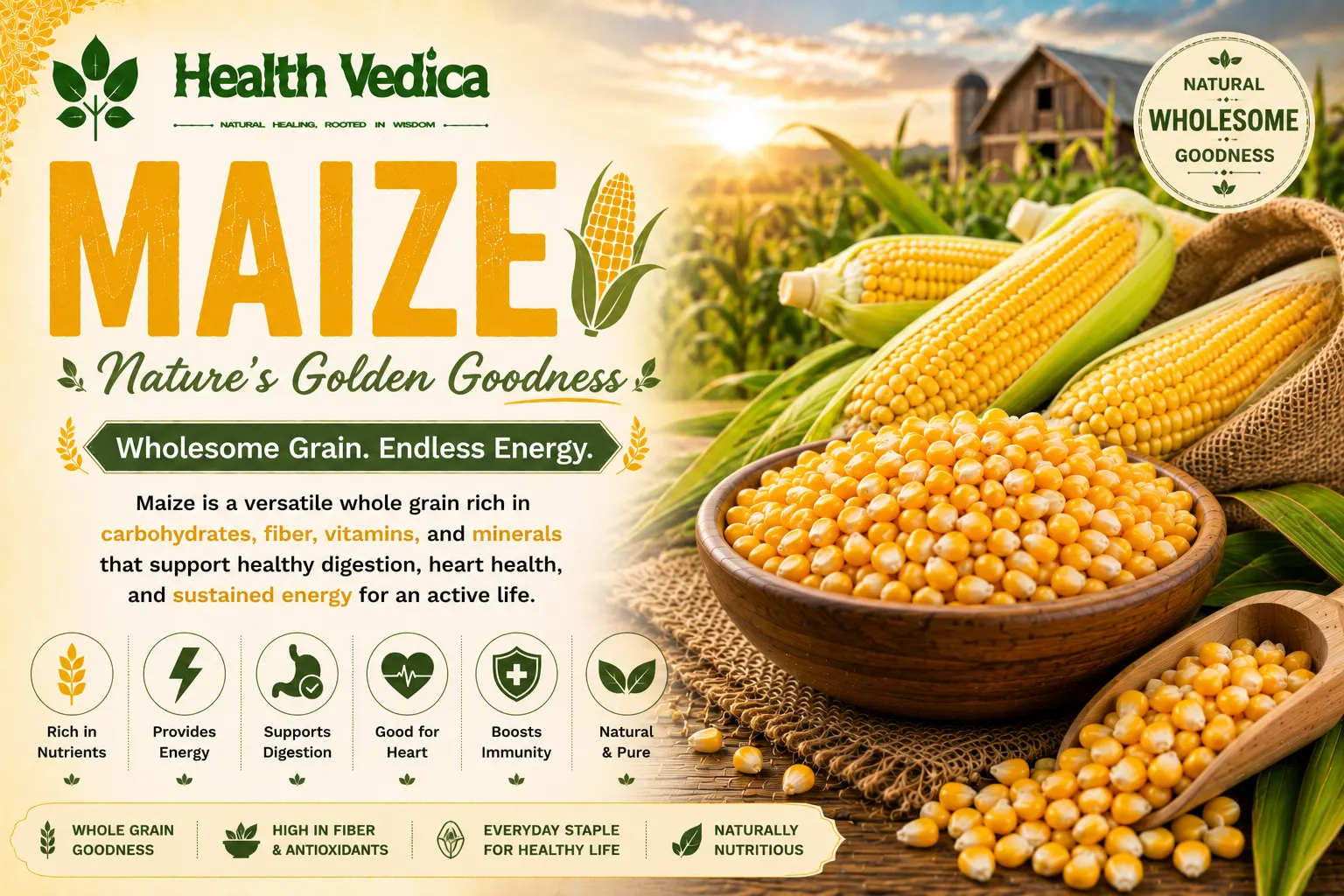
Maize, commonly known as corn, is one of the most versatile and widely grown cereal grains in India and worldwide. In India, it is known as Makka or Bhutta and is a major crop in states like Karnataka, Andhra Pradesh, Maharashtra, Rajasthan, Bihar, and Himachal Pradesh. From the beloved street food of bhutta (roasted corn) to Punjabi makki di roti, maize holds deep cultural and nutritional significance. It is the staple crop for many tribal communities across India.
🔬 Nutritional Value Per 100g (Raw Corn Kernels)
| Nutrient | Amount | % Daily Value |
|---|---|---|
| Calories | 86 kcal | 4% |
| Carbohydrates | 19 g | 7% |
| Protein | 3.2 g | 6% |
| Fat | 1.2 g | 2% |
| Fiber | 2.7 g | 10% |
| Vitamin C | 6.8 mg | 8% |
| Lutein + Zeaxanthin | 644 mcg | — |
| Folate | 42 mcg | 10% |
| Magnesium | 37 mg | 9% |
| Potassium | 270 mg | 8% |
📊 Glycemic Index
Fresh corn has a moderate glycemic index of approximately 52–55. Corn flour (maize flour) and processed corn products like cornflakes have a higher GI. Sweet corn eaten on the cob is much better than processed corn products.
🌿 Ayurvedic Properties & Dosha Effect
In Ayurveda, maize is considered light, dry, and slightly rough. It is best for Kapha types and can help reduce excess mucus and heaviness. Roasted corn with lime and black salt (the classic bhutta preparation) enhances digestibility and adds beneficial spices. Those with high Vata should consume maize with ghee or oil to balance its drying nature.
✅ Health & Healing Benefits
Maize is exceptionally rich in lutein and zeaxanthin — carotenoid antioxidants that are concentrated in the retina and directly protect against age-related macular degeneration and cataracts. The fiber in maize feeds beneficial gut bacteria and supports digestive health. Whole grain maize is a natural source of energy for active individuals and children. Its folate content supports fetal neural development, making it valuable during pregnancy.
🌽 Indian Dietary Uses
Maize is used to make makki di roti (Punjabi corn flatbread), bhutta (roasted corn cob), corn upma, corn soup, popcorn, cornflakes, makkai ka atta, tortillas, corn flour curries, and baby corn stir-fries. In Gujarat, it is used in dhoklas and steamed preparations.
💡 Bhutta Enhancement Tip
Traditional Indian bhutta — roasted corn on the cob rubbed with lemon, salt, and red chilli — is not just delicious but nutritionally smart. The vitamin C from lemon enhances iron absorption, while the heat from roasting increases the bioavailability of certain antioxidants.
💡 Smart Tips
Fresh or frozen corn is far more nutritious than canned corn (which often contains added salt and sugar). Avoid overprocessed corn products like commercial cornflakes, corn syrup, or packaged corn snacks. Whole grain corn tortillas and homemade makki roti are the best ways to consume maize.