🌾 Introduction
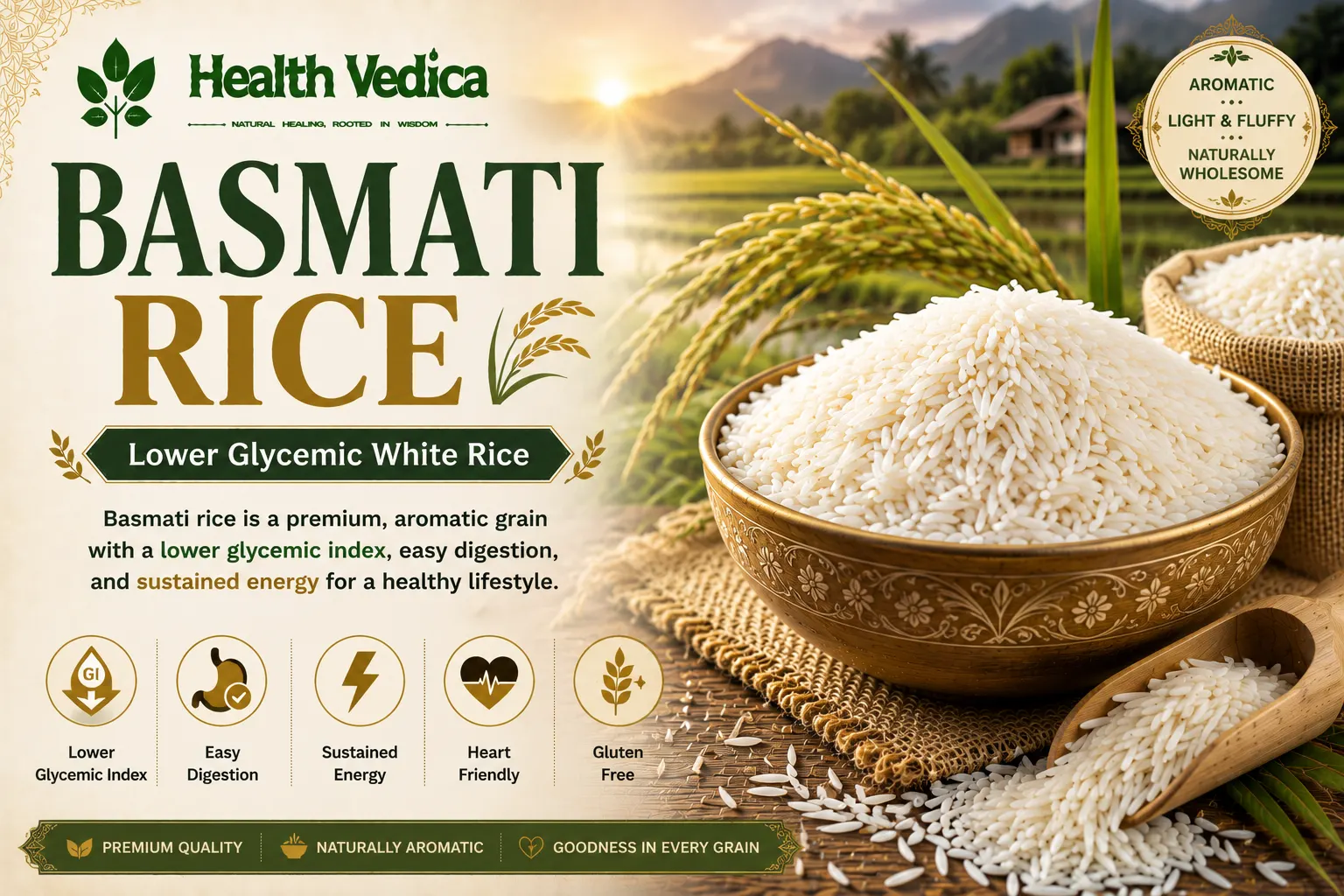
Basmati rice is a premium long-grain aromatic rice variety native to the Indian subcontinent, particularly grown in the foothills of the Himalayas in states like Uttarakhand, Punjab, Haryana, and Uttar Pradesh. The word Basmati means 'fragrant' in Sanskrit. Known for its distinctive nutty aroma, fluffy texture, and slender elongated grains, Basmati rice is a staple of Indian biryanis, pulao, and celebratory meals. India holds a GI (Geographical Indication) tag for Basmati rice.
🔬 Nutritional Value Per 100g (Cooked)
| Nutrient | Amount | % Daily Value |
|---|---|---|
| Calories | 121 kcal | 6% |
| Carbohydrates | 25.2 g | 9% |
| Protein | 3.5 g | 7% |
| Fat | 0.4 g | 1% |
| Fiber | 0.6 g | 2% |
| Iron | 0.4 mg | 2% |
| Folate | 8 mcg | 2% |
| Niacin (B3) | 1.9 mg | 12% |
| Thiamine (B1) | 0.2 mg | 17% |
| Selenium | 7.5 mcg | 14% |
📊 Glycemic Index
Basmati rice has a lower glycemic index (GI 50–58) compared to regular white rice, making it a relatively better option for blood sugar management. Its unique starch composition (higher amylose content) results in slower digestion and a gentler rise in blood glucose.
🌿 Ayurvedic Properties & Dosha Effect
Basmati rice is highly regarded in Ayurveda as the most Sattvic of all rice varieties. It is light, easy to digest, cooling, and balancing for all three doshas — Vata, Pitta, and Kapha. It is often recommended in Ayurvedic kitchari (rice and lentil preparation) used for cleansing and detox programs (Panchakarma diet).
✅ Health & Healing Benefits
Basmati rice's higher amylose content means it digests more slowly, providing sustained energy rather than a quick spike. It is naturally lower in arsenic compared to other rice varieties, an important consideration for daily consumption. The selenium content supports thyroid function and immune health. Basmati rice is gluten-free and well-tolerated by most digestive systems. When used in kitchari, it provides a complete amino acid profile when combined with moong dal.
🍛 Indian Dietary Uses
Basmati is the preferred rice for biryanis (Hyderabadi, Lucknowi, Kolkata-style), pulao, jeera rice, khichdi, and festive meals. It is also used in Indian sweets like rice kheer. Aged Basmati (1–2 years old) is considered superior in aroma and texture.
💡 Ayurvedic Kitchari Recipe Tip
Combine equal parts Basmati rice and split moong dal, cook with ghee, cumin, turmeric, and ginger for a traditional Ayurvedic detox meal that balances all doshas and supports digestive fire (Agni).
💡 Smart Consumption Tips
Rinse Basmati rice 2–3 times and soak for 20–30 minutes before cooking for the best texture and reduced arsenic. Use a 1:1.5 ratio (rice:water) for separate, fluffy grains. Choosing brown Basmati retains bran and offers even higher nutritional value.