🌾 Introduction
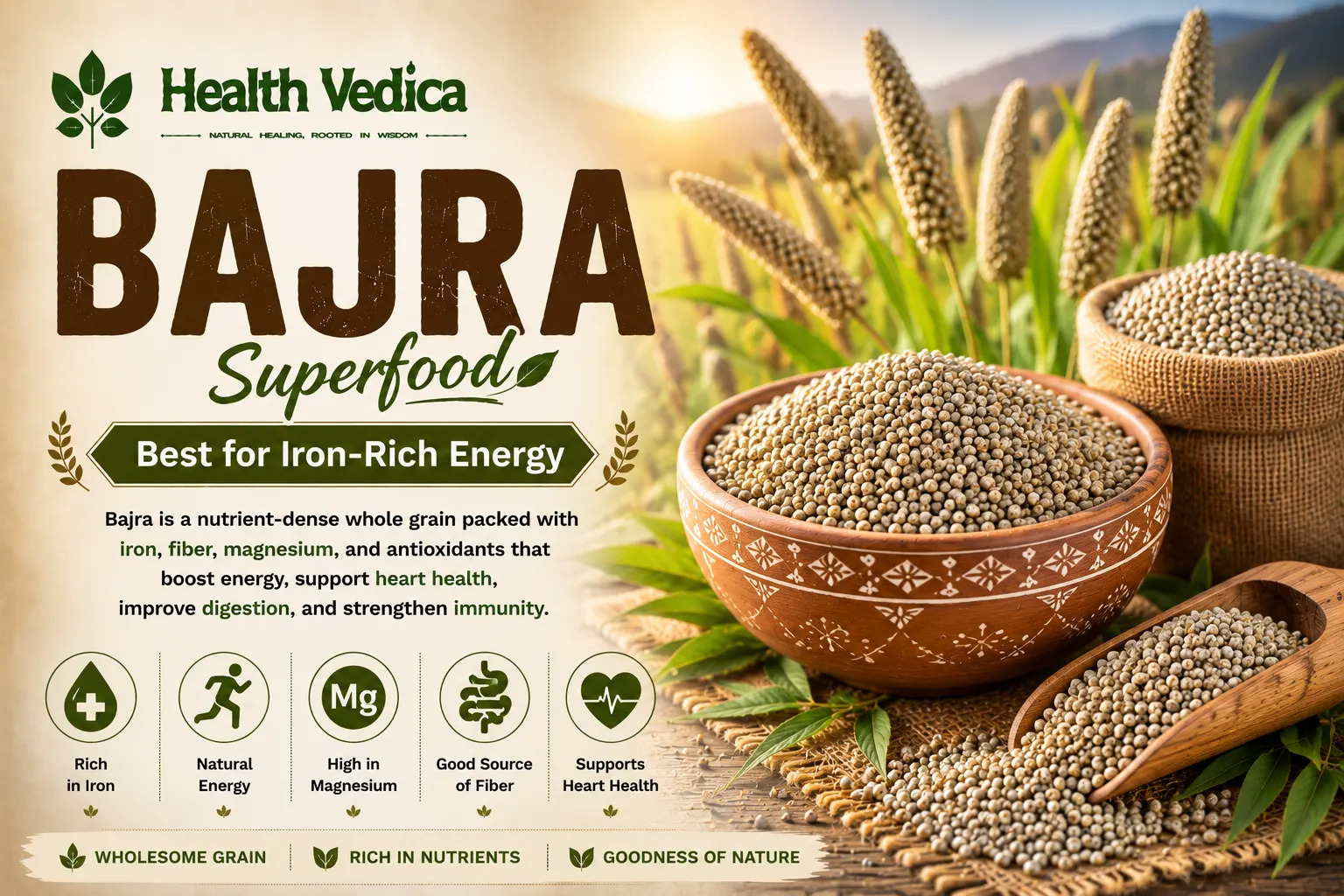
Bajra, known as Pearl Millet internationally and as Sajje in Kannada or Kambu in Tamil, is one of India's most ancient and resilient grains. Grown predominantly in Rajasthan, Gujarat, Haryana, and Maharashtra, Bajra thrives even in arid, drought-prone conditions. As a powerhouse of iron, magnesium, zinc, and B vitamins, Bajra is nature's answer to energy, anemia prevention, and hormonal health. It is the most energy-dense among common Indian millets and has been consumed for over 4,000 years across South Asia and Africa. Completely gluten-free and loaded with complex carbohydrates, Bajra provides long-lasting energy and exceptional nutritional value for all age groups.
🔬 Nutritional Value of Bajra Per 100g
| Nutrient | Amount | Daily Value % |
|---|---|---|
| Calories | 361 kcal | 18% |
| Carbohydrates | 67.5 g | 23% |
| Protein | 11.6 g | 23% |
| Dietary Fiber | 1.2 g | 4% |
| Iron | 8 mg | 44% |
| Calcium | 42 mg | 4% |
| Phosphorus | 296 mg | 30% |
| Magnesium | 114 mg | 29% |
| Potassium | 307 mg | 9% |
| Zinc | 3.1 mg | 28% |
| Niacin (B3) | 2.3 mg | 14% |
| Thiamine (B1) | 0.33 mg | 28% |
| Fat | 5 g | 8% |
| Folate (B9) | 85 mcg | 21% |
📊 Glycemic Index & Glycemic Load
Bajra has a moderate Glycemic Index of 54–68, depending on the form of consumption. Whole cooked Bajra has a lower GI than Bajra flour products. When fermented or cooked as a porridge, the GI drops further due to organic acids formed during fermentation. Despite being higher in calories, Bajra's complex carbohydrates digest slowly, providing sustained energy without sharp blood sugar spikes — making it suitable for active individuals, athletes, and those with moderate diabetes.
🌿 Ayurvedic Properties & Dosha Effect
In Ayurveda, Bajra is classified as Ushna Virya (hot potency), making it particularly suitable for winter months. It pacifies Vata and Kapha doshas while mildly aggravating Pitta in excess. Its warming quality makes it excellent for people living in cold climates or those with poor circulation and digestive weakness. Ayurvedic physicians historically recommended Bajra with ghee, sesame, and jaggery in winter for strength and warmth. It supports Bala (physical strength) and Shukra Dhatu (reproductive tissue).
💪 Health & Healing Benefits of Bajra
🩸 Iron & Anemia Prevention: Bajra is one of the highest plant-based sources of iron, providing 44% of the daily requirement per 100g. Regular consumption significantly helps prevent iron-deficiency anemia — one of the most prevalent nutritional deficiencies in India, especially among women and children.
⚡ Energy & Stamina: With the highest caloric density among common millets and abundant B vitamins, Bajra is the ideal energy grain for manual laborers, athletes, growing children, and highly active individuals. It provides sustained energy without the crash associated with refined grains.
🤰 Pregnancy & Hormonal Health: Bajra is rich in folate, iron, and zinc — three nutrients critical for fetal development and maternal health during pregnancy. Zinc supports healthy hormone production, particularly thyroid and reproductive hormones.
🫀 Blood Pressure & Cardiovascular Health: The high magnesium and potassium content in Bajra helps relax blood vessel walls, lower blood pressure, and reduce the risk of heart attacks and strokes. Niacin in Bajra also helps raise HDL (good) cholesterol levels.
🦷 Bone & Dental Health: Bajra's combination of phosphorus, magnesium, and calcium supports bone matrix development and dental enamel strength. These minerals work together to prevent osteoporosis and dental decay.
🧬 Thyroid Health: Bajra contains compounds that support healthy thyroid function. However, like other millets, it should be consumed in balanced amounts by individuals with hypothyroidism and always in its cooked form.
🌡️ Winter Superfood: Bajra's hot potency makes it exceptionally warming, ideal for consumption during winters. Bajra rotis with mustard oil or ghee are a traditional Rajasthani winter staple that protects from cold and boosts immunity.
🛡️ Immune System Support: The zinc content in Bajra is among the highest in any grain, supporting immune cell production, wound healing, and protection against infections.
🥤 Traditional Bajra Drinks & Preparations
| Preparation | Ingredients | Key Benefits |
|---|---|---|
| Bajra Khichdi | Bajra, moong dal, ghee, turmeric, cumin | Complete protein, warming, easy digestion |
| Bajra Raab | Bajra flour, water, ghee, ajwain, jaggery | Traditional Rajasthani winter drink, warms body, aids digestion |
| Bajra Porridge | Bajra flour, milk, dates, cardamom | Iron + calcium, perfect breakfast |
| Fermented Bajra Kanji | Bajra grains, water, salt, fermented overnight | Probiotic, lowers GI, gut health |
🍽️ Indian Dietary Uses of Bajra
Bajra is most beloved in the form of Bajra Roti (Bajre ki Roti) — a thick, hearty flatbread eaten across Rajasthan, Gujarat, Haryana, and Uttar Pradesh. It is classically paired with Sarson ka Saag (mustard greens) in Punjab during winters. Bajra Khichdi, Bajra Ladoo, Bajra Upma, and Bajra Muthia are other popular preparations. In Gujarat, Bajra is used to make Bhakri and Bajra ni Rotli. In recent years, Bajra flour has been adopted in health-food products like multigrain bread, cookies, and baby foods.
💡 Practical Tips for Bajra Consumption
• Best in winter: Due to its heating nature, Bajra is best consumed from October to February. Reduce intake in summer months or balance with cooling accompaniments like curd.
• Pair with ghee or oil: Bajra roti can be dry and coarse; always eat with ghee, butter, or oil to improve palatability and aid fat-soluble vitamin absorption.
• Soak before grinding: If making Bajra flour at home, soak grains for 4–6 hours before grinding to reduce antinutrients and improve texture.
• Combine with legumes: Bajra is low in lysine; always combine with dal, beans, or curd to complete the amino acid profile for a full-protein meal.
• Use within 2–3 months: Bajra flour has a shorter shelf life due to its fat content. Store in a cool, dry place or refrigerate.
⚠️ Precautions & Side Effects
Bajra is generally safe for most people. Those with hypothyroidism should consume Bajra in moderation (200–300g/day max) as it contains goitrogenic compounds that may interfere with thyroid hormone synthesis — always cook or ferment Bajra to reduce these compounds. Individuals with kidney disease should consult a doctor regarding phosphorus intake. Pregnant women should consume under dietary guidance due to its high folate and iron interaction with supplements.