🍚 Introduction
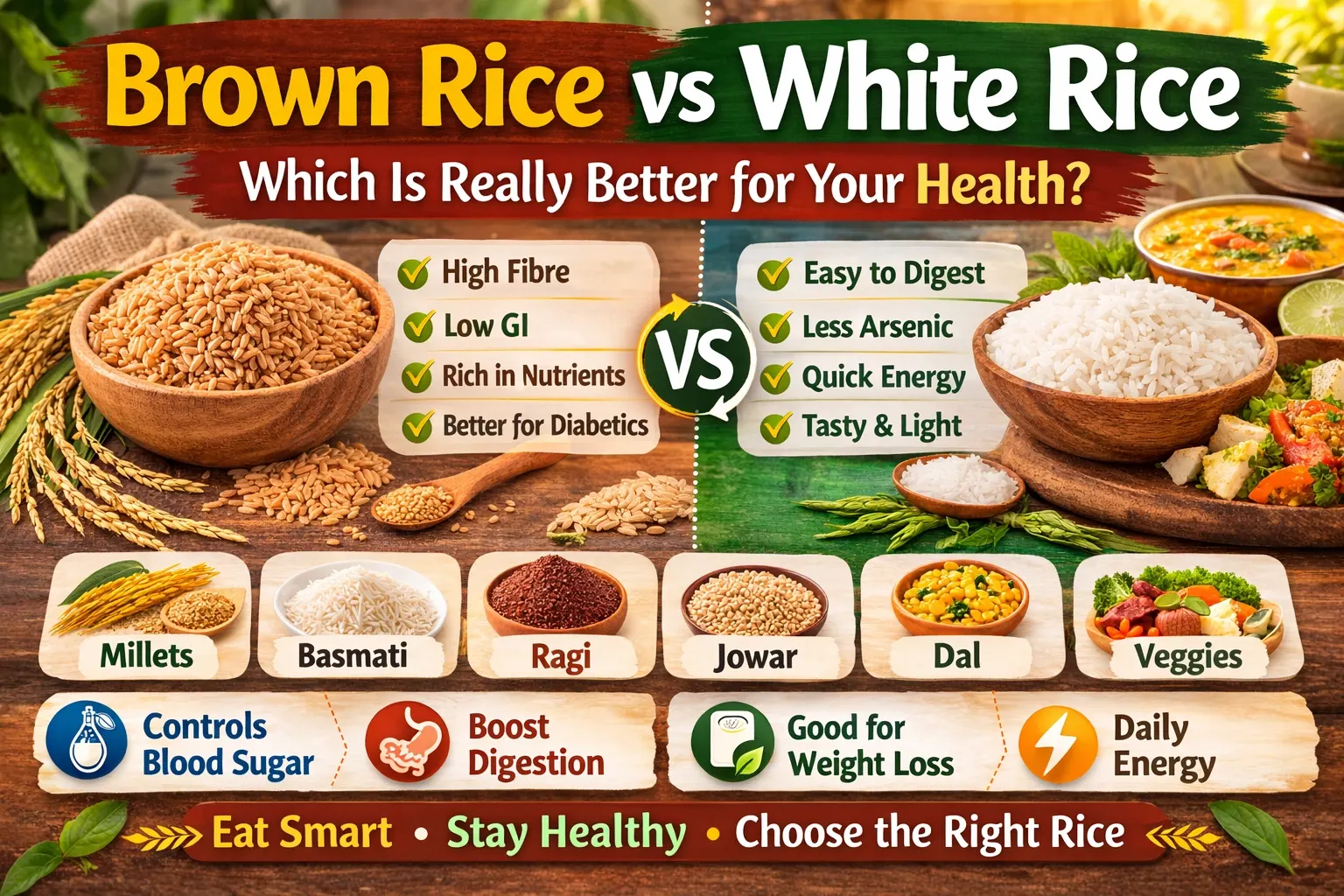
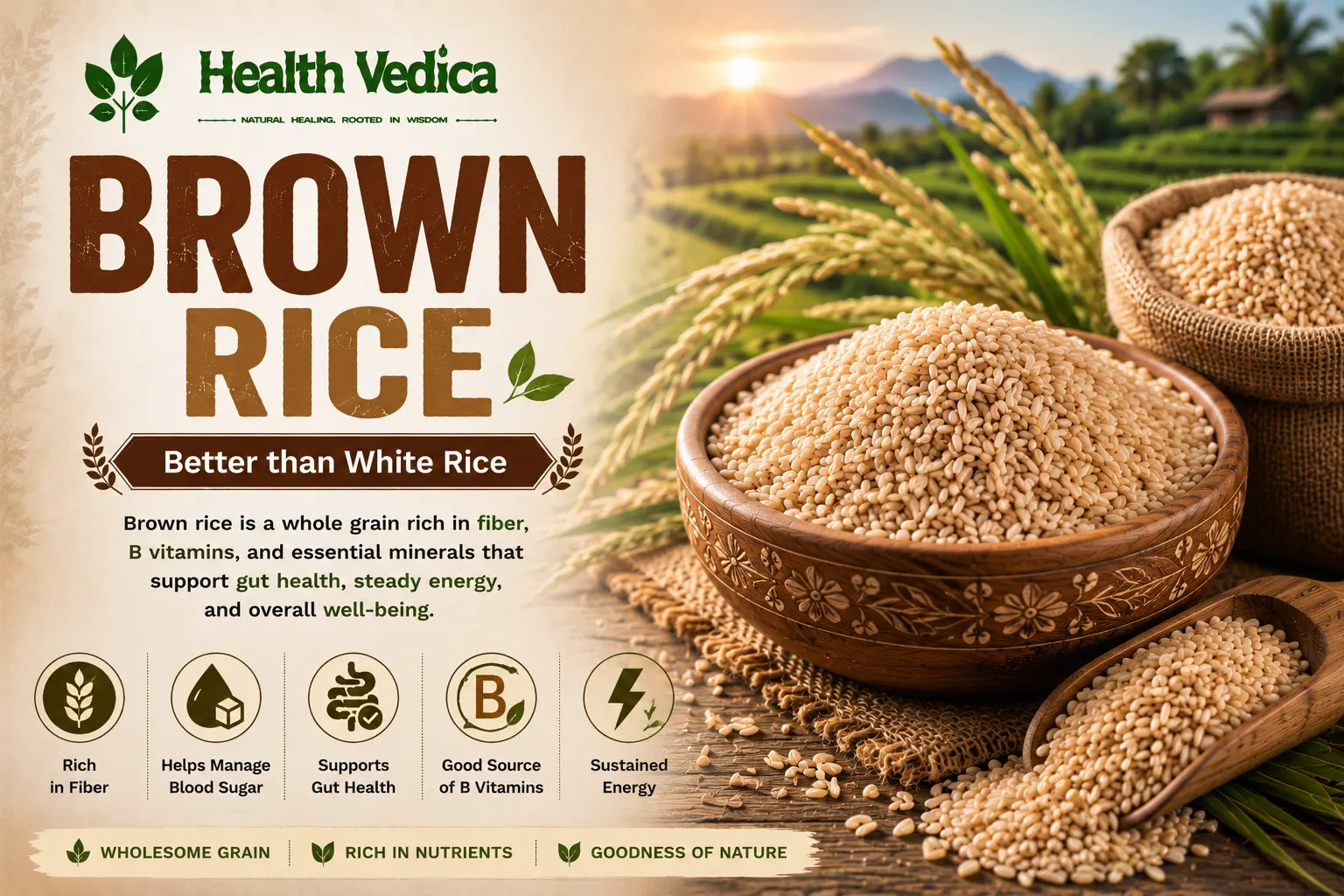
Brown Rice is the whole grain version of white rice — with only the outer husk removed, retaining its bran layer and germ intact. This simple difference makes Brown Rice nutritionally superior in almost every dimension: higher in fiber, vitamins, minerals, and antioxidants compared to polished white rice. As the staple grain of over 3.5 billion people globally — and increasingly preferred by health-conscious Indians — Brown Rice is a complete nutritional package. It is rich in B vitamins, magnesium, manganese, selenium, and dietary fiber. It offers superior blood sugar control, supports heart health, aids digestion, and provides sustained energy — making it one of the most important whole grains you can incorporate into your daily diet.
🔬 Nutritional Value of Brown Rice Per 100g (Cooked)
| Nutrient | Amount (Cooked) | Daily Value % |
|---|---|---|
| Calories | 111 kcal | 6% |
| Carbohydrates | 23 g | 8% |
| Protein | 2.6 g | 5% |
| Dietary Fiber | 1.8 g | 7% |
| Fat | 0.9 g | 1% |
| Manganese | 1.8 mg | 78% |
| Magnesium | 43 mg | 10% |
| Phosphorus | 150 mg | 15% |
| Selenium | 9.8 mcg | 18% |
| Thiamine (B1) | 0.1 mg | 9% |
| Niacin (B3) | 1.5 mg | 9% |
| Vitamin B6 | 0.15 mg | 9% |
| Iron | 0.5 mg | 3% |
| Zinc | 0.6 mg | 6% |
🆚 Brown Rice vs White Rice — Key Differences
| Property | Brown Rice | White Rice |
|---|---|---|
| Fiber | 1.8 g / 100g | 0.4 g / 100g |
| Glycemic Index | 50–55 | 64–72 |
| Magnesium | 43 mg | 12 mg |
| Manganese | 1.8 mg (78% DV) | 0.5 mg |
| Vitamins | B1, B3, B6, E retained | Most removed in milling |
| Antioxidants | High (from bran) | Very low |
| Cooking Time | 35–45 minutes | 15–20 minutes |
| Shelf Life | 6 months | 1–2 years |
📊 Glycemic Index & Glycemic Load
Brown Rice has a Glycemic Index of 50–55, significantly lower than white rice (GI 64–72). This is primarily due to its intact bran layer, which contains fiber that slows starch digestion and glucose absorption. The Glycemic Load per 150g serving is approximately 18 — moderate. When cooked and cooled, Brown Rice develops resistant starch — a prebiotic fiber — that further lowers its GI and feeds beneficial gut bacteria. This makes Brown Rice a significantly better choice for diabetics, PCOD patients, and metabolic syndrome management compared to white rice.
🌿 Ayurvedic Properties & Dosha Effect
In Ayurveda, Brown Rice is classified as Guru (heavy) compared to white rice and possesses Madhura Rasa (sweet taste) and Sheeta Virya (cooling potency). Brown Rice is considered nourishing and building (Brumhana) in nature. It primarily supports Vata balance and provides Ojas (vital essence). It is slightly heavier to digest than white rice and is thus best consumed at lunch rather than dinner for those with sluggish digestion. Ayurvedic texts recommend Brown Rice with ghee, cumin, and a pinch of rock salt for optimal digestion and nutrient absorption.
💪 Health & Healing Benefits of Brown Rice
🩺 Blood Sugar & Diabetes Management: Studies published in medical journals consistently show that replacing white rice with Brown Rice reduces fasting blood glucose and improves insulin sensitivity. Its lower GI and fiber content make it one of the best whole grain staples for Type 2 Diabetics in Asian populations where rice is the dietary staple.
❤️ Cardiovascular Health: Brown Rice is rich in plant lignans, magnesium, and gamma-oryzanol — compounds found in its bran that reduce LDL cholesterol, lower blood pressure, and decrease arterial inflammation. Regular consumption is associated with a 20% lower risk of cardiovascular disease compared to refined grain diets.
⚖️ Weight Management: Brown Rice's higher fiber content creates greater satiety than white rice, helping regulate portion size and reduce overall caloric intake. Its resistant starch also stimulates the release of gut hormones that suppress appetite.
🧠 Brain & Nervous System Health: Brown Rice is a rich source of GABA (gamma-aminobutyric acid) — a neurotransmitter that has calming, anxiety-reducing effects. Germinated Brown Rice (GBR) is particularly rich in GABA and is studied for its potential in managing depression, anxiety, and neurodegenerative diseases.
🦠 Gut Health & Prebiotics: The bran in Brown Rice contains insoluble fiber and resistant starch that act as prebiotics — feeding beneficial bacteria like Bifidobacterium and Lactobacillus. This supports a healthy microbiome, reduces inflammatory bowel conditions, and improves digestion.
🛡️ Antioxidant & Anti-Inflammatory Protection: Brown Rice bran contains powerful antioxidants including gamma-oryzanol, tocotrienols (a form of Vitamin E), and ferulic acid — all of which combat oxidative stress, reduce systemic inflammation, and may protect against certain cancers.
🦴 Bone Health: The magnesium and manganese in Brown Rice are critical for bone matrix formation and calcium metabolism. Manganese activates enzymes needed for bone development — making Brown Rice a valuable addition to osteoporosis prevention diets.
🧬 Hormonal & PCOD Support: By stabilizing blood sugar and insulin levels, Brown Rice helps manage hormonal imbalances associated with PCOD/PCOS, a condition closely linked to insulin resistance in Indian women.
🥘 Special Feature: Germinated Brown Rice (GBR)
Germinated Brown Rice (also called GABA rice) is made by soaking Brown Rice in warm water for 24–48 hours until tiny sprouts appear. This sprouting process dramatically increases GABA content by up to 10 times, enhances B vitamins, reduces phytic acid (improving mineral absorption), and makes the rice softer and easier to cook. GBR has been studied in Japan and Korea for its benefits in managing stress, blood pressure, and blood sugar.
🍽️ Indian Dietary Uses of Brown Rice
Brown Rice can substitute white rice in virtually all Indian preparations: Brown Rice Biryani, Brown Rice Khichdi, Brown Rice Pulao, Curd Rice with Brown Rice, and Brown Rice Idli/Dosa batter. It can be used in Lemon Rice, Tamarind Rice, and other South Indian rice preparations. Brown Rice flour is used to make gluten-free rotis, pancakes, and baby food. Health-conscious Indians increasingly use Brown Rice as the base for grain bowls topped with vegetables, dal, and yogurt.
💡 Practical Tips for Cooking Brown Rice
• Soak before cooking: Soak Brown Rice for 30–60 minutes (or overnight) before cooking to reduce cooking time by 15 minutes and improve texture and digestibility.
• Cook-and-cool trick: Cooking Brown Rice and refrigerating overnight increases resistant starch by up to 40%, lowering its effective glycemic index further. Reheat gently before eating.
• Water ratio: Use a 1:2.5 ratio (1 cup Brown Rice to 2.5 cups water) for fluffy, well-cooked grains.
• Pressure cooker friendly: Brown Rice cooks perfectly in 2–3 whistles in a pressure cooker, saving time and energy.
• Store properly: Brown Rice has oils in its bran that can become rancid. Store in an airtight container in a cool place or the refrigerator for up to 6 months.
⚠️ Precautions & Considerations
Brown Rice contains phytic acid in its bran, which can bind to minerals like iron and zinc, reducing their absorption. Soaking and rinsing before cooking reduces phytic acid significantly. Brown Rice also contains trace amounts of inorganic arsenic (particularly in grain crops). Rinsing Brown Rice thoroughly and cooking in excess water (drained afterward) reduces arsenic content by up to 40–60%. People with digestive issues or slow digestion should start with smaller portions and gradually increase intake.