🌾 Introduction
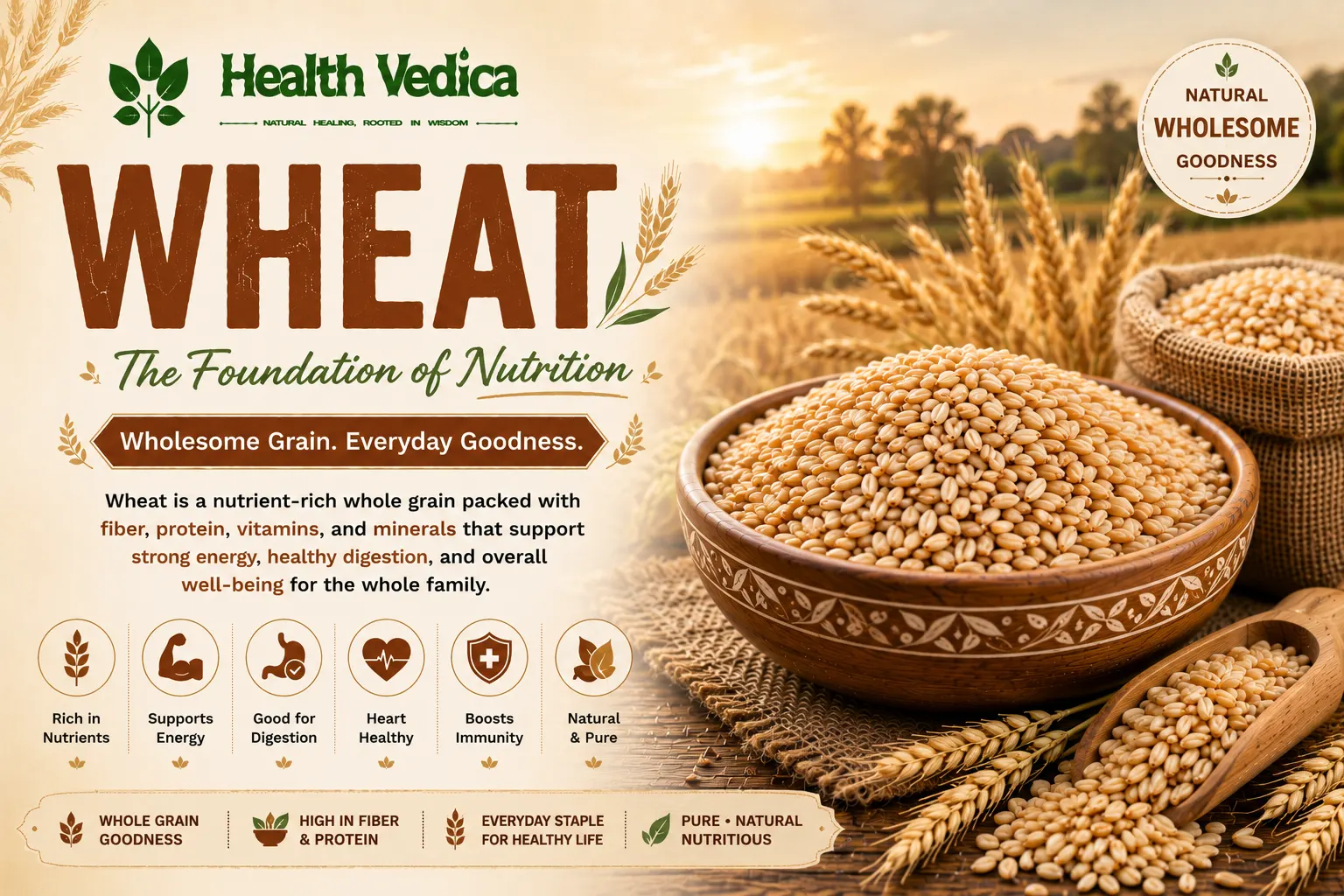
Wheat is the most widely cultivated cereal grain in the world and the cornerstone of Indian diets in the north, west, and central regions. From chapati and roti to paratha, puri, and bread, wheat forms the foundation of millions of daily meals. India is the second largest producer of wheat globally, primarily grown in Punjab, Haryana, Uttar Pradesh, and Madhya Pradesh. Whole wheat is a nutritional powerhouse offering complex carbohydrates, dietary fiber, B vitamins, and essential minerals.
🔬 Nutritional Value Per 100g (Whole Wheat Flour)
| Nutrient | Amount | % Daily Value |
|---|---|---|
| Calories | 340 kcal | 17% |
| Carbohydrates | 71.2 g | 26% |
| Protein | 13.2 g | 26% |
| Fat | 2.5 g | 3% |
| Fiber | 10.7 g | 38% |
| Iron | 3.9 mg | 22% |
| Magnesium | 138 mg | 33% |
| Zinc | 2.6 mg | 24% |
| Folate | 44 mcg | 11% |
| Phosphorus | 357 mg | 36% |
📊 Glycemic Index
Whole wheat has a moderate glycemic index of approximately 49–69 depending on processing. Whole wheat chapati has a lower GI than white bread. The more refined the wheat (maida), the higher the GI and the lower the nutritional value.
🌿 Ayurvedic Properties & Dosha Effect
In Ayurveda, wheat is considered heavy, sweet, and cooling. It nourishes all tissues (dhatus) and is particularly beneficial for Vata types. It provides strength, vitality, and promotes Ojas. Wheat is considered one of the most nourishing grains in Ayurveda when consumed as whole wheat. Excess consumption can aggravate Kapha in those with slow metabolism.
✅ Health & Healing Benefits
Whole wheat is rich in dietary fiber that supports digestive health, prevents constipation, and feeds healthy gut bacteria. The B vitamins (B1, B3, B6, folate) support energy metabolism and neurological function. High iron and magnesium content supports red blood cell production and bone health. Regular consumption of whole grains like wheat is associated with reduced risk of cardiovascular disease, type 2 diabetes, and colorectal cancer.
🍞 Indian Dietary Uses
Wheat is used to make chapati, roti, paratha, puri, naan, bhatura, bread, biscuits, upma (semolina), suji halwa, and dalia (broken wheat). Whole wheat atta is preferred over maida for better nutrition.
💡 Whole Wheat vs Maida (Refined Flour)
Whole wheat flour retains the bran and germ, providing 3x more fiber, 2x more vitamins and minerals compared to refined maida. Maida has a high GI and lacks fiber, contributing to blood sugar spikes and poor gut health. Always choose whole wheat atta for daily rotis.
💡 Smart Tips
Store whole wheat flour in an airtight container in a cool place to prevent rancidity of the germ oils. For people with gluten sensitivity or celiac disease, wheat must be completely avoided and replaced with gluten-free alternatives like millets and rice.
⚠️ Who Should Avoid Wheat?
People with celiac disease, non-celiac gluten sensitivity, or wheat allergy must completely avoid wheat and all wheat products. Millets, rice, and certified gluten-free grains are excellent alternatives.