🌿 Introduction
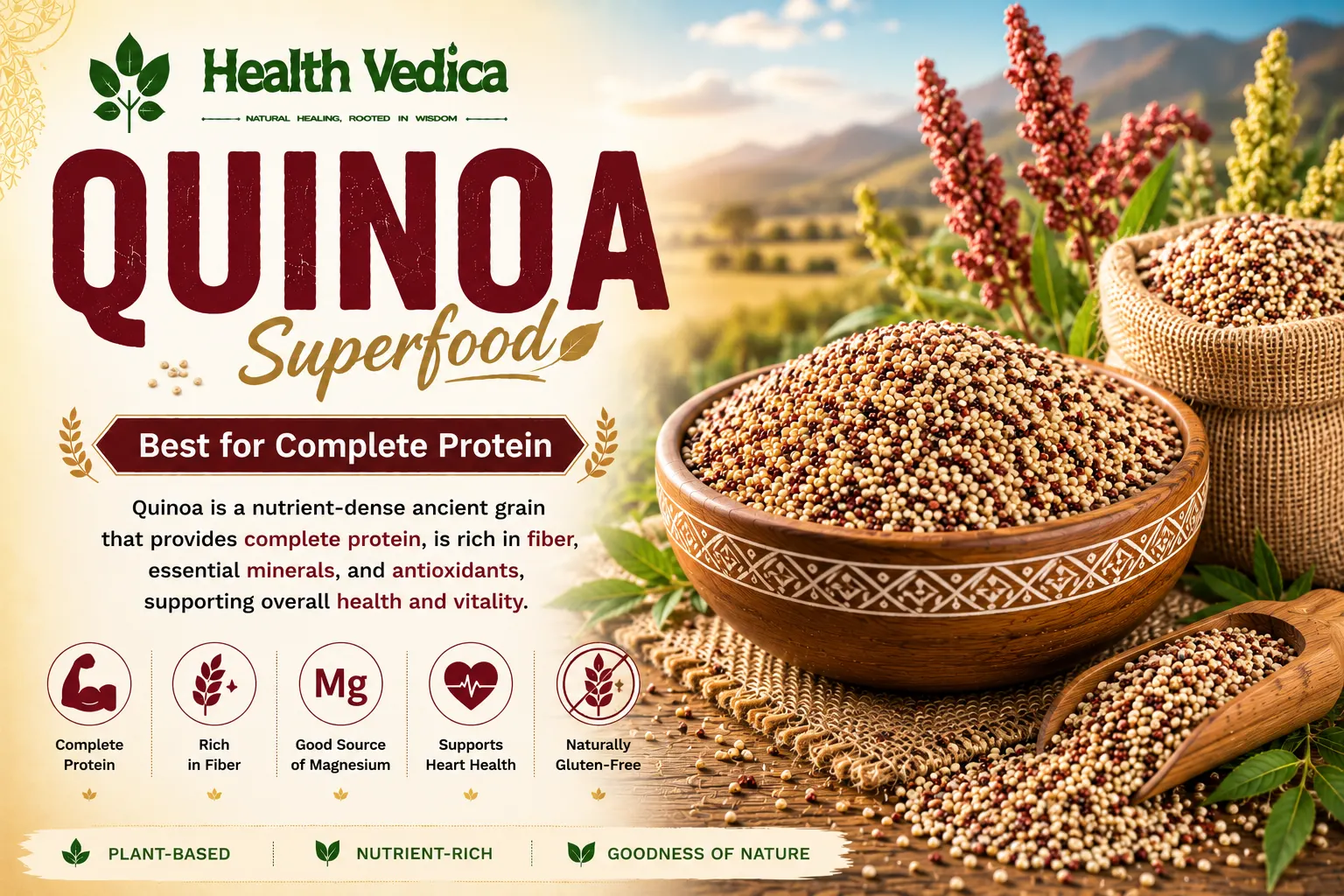
Quinoa (pronounced KEEN-wah) is one of the world's most nutrient-dense superfoods — a seed from the Andes mountains of South America that has taken the global health food world by storm. While it is often called a grain or millet in the Indian market, Quinoa is technically a pseudo-cereal (a seed eaten like a grain). What makes Quinoa extraordinary is that it is one of the very few plant foods that is a complete protein — containing all 9 essential amino acids, including lysine, which most grains lack. Quinoa is naturally gluten-free, rich in fiber, iron, magnesium, manganese, antioxidants, and anti-inflammatory compounds. Its rising popularity in India reflects a growing awareness of plant-based complete protein sources and functional superfoods for chronic disease management.
🔬 Nutritional Value of Quinoa Per 100g (Cooked)
| Nutrient | Amount (Cooked) | Daily Value % |
|---|---|---|
| Calories | 120 kcal | 6% |
| Carbohydrates | 21.3 g | 7% |
| Protein | 4.4 g | 9% |
| Dietary Fiber | 2.8 g | 11% |
| Fat | 1.9 g | 3% |
| Manganese | 0.63 mg | 27% |
| Magnesium | 64 mg | 15% |
| Phosphorus | 152 mg | 15% |
| Folate (B9) | 42 mcg | 11% |
| Iron | 1.49 mg | 8% |
| Zinc | 1.09 mg | 10% |
| Copper | 0.19 mg | 21% |
| Thiamine (B1) | 0.1 mg | 8% |
| Riboflavin (B2) | 0.11 mg | 8% |
| Vitamin E | 0.63 mg | 4% |
🏆 Quinoa's Complete Amino Acid Profile
| Essential Amino Acid | Amount per 100g | Why It Matters |
|---|---|---|
| Lysine | 239 mg | Rare in plant foods; essential for muscle repair and calcium absorption |
| Isoleucine | 193 mg | Muscle metabolism, immunity, energy regulation |
| Leucine | 311 mg | Muscle protein synthesis, blood sugar regulation |
| Valine | 211 mg | Muscle growth, energy, nervous system function |
| Threonine | 147 mg | Immune system and connective tissue support |
| Methionine | 117 mg | Liver detoxification, antioxidant synthesis |
| Phenylalanine | 228 mg | Brain neurotransmitter production |
| Tryptophan | 52 mg | Serotonin and melatonin precursor — mood and sleep |
| Histidine | 147 mg | Immune function, nerve signal transmission |
📊 Glycemic Index & Glycemic Load
Quinoa has a Glycemic Index of 53 — firmly in the low GI category. Despite being a carbohydrate-rich food, its combination of complete protein, fiber, and healthy fats dramatically slows digestion and glucose release. The Glycemic Load per typical 185g serving is approximately 13 — also low. This makes Quinoa one of the most diabetes-friendly carbohydrate sources available, suitable for daily consumption by diabetics, PCOD patients, and individuals managing insulin resistance. Research has also shown Quinoa may reduce post-meal insulin response compared to white rice and bread.
🌿 Ayurvedic Perspective on Quinoa
While Quinoa is not part of ancient Ayurvedic texts (as it is a New World crop), contemporary Ayurvedic practitioners classify it based on its properties. Quinoa is Madhura (sweet), Laghu (light to digest), and Sheeta (slightly cooling). It is considered tridosha-balancing — gentle on Vata, Pitta, and Kapha doshas when consumed in moderate amounts. Ayurvedic nutritionists often recommend Quinoa as a superior substitute to rice for Pitta-dominant individuals who need a light, cooling, high-protein grain alternative. Combining Quinoa with warming spices like cumin, ginger, and turmeric makes it more suitable for Vata types.
💪 Health & Healing Benefits of Quinoa
🏋️ Complete Plant Protein for Vegetarians & Vegans: Quinoa is the ultimate protein source for plant-based diets. As the only grain with a complete amino acid profile, it fills the gap that most Indian vegetarian diets face — particularly lysine deficiency — making it invaluable for muscle building, recovery, and overall protein adequacy.
🩺 Diabetes & Blood Sugar Management: Quinoa's low GI, high fiber, and protein content work together to prevent blood sugar spikes. Research shows that Quinoa consumption reduces post-meal glucose and insulin levels — particularly beneficial when substituted for white rice in Indian meals.
❤️ Heart Health & Cholesterol: Quinoa is rich in heart-protective compounds including quercetin and kaempferol — two flavonoid antioxidants with strong anti-inflammatory and cardioprotective effects. Studies show Quinoa reduces total cholesterol, LDL, and triglycerides while raising HDL levels.
⚖️ Weight Loss & Metabolism: Quinoa's unique combination of complete protein, fiber, and healthy fats creates exceptional satiety and reduces appetite hormones like ghrelin. Studies confirm that high-protein breakfasts (like Quinoa porridge) reduce total daily caloric intake significantly.
🦠 Gut Health: Quinoa is an excellent prebiotic, feeding beneficial gut bacteria. Its fiber composition includes both soluble and insoluble types, supporting regular bowel movements, reducing constipation, and lowering colon cancer risk.
🧬 Anti-Inflammatory & Antioxidant Power: Quinoa's bran layer contains quercetin and kaempferol in amounts higher than many commonly praised antioxidant-rich foods like berries. These powerful flavonoids reduce systemic inflammation — linked to virtually every chronic disease including cancer, diabetes, and heart disease.
🤰 Pregnancy Superfood: Quinoa's folate content supports neural tube development in the fetus. Its complete protein provides all amino acids needed for fetal growth, while its iron, zinc, and magnesium support maternal health. Quinoa is one of the most recommended foods for plant-based pregnant women.
🌾 Celiac Disease & Gluten Sensitivity: Quinoa is naturally and completely gluten-free, making it an ideal staple grain for individuals with celiac disease or gluten sensitivity. Unlike some processed gluten-free products, Quinoa provides robust nutritional density without compromise.
🧠 Brain & Mental Health: Tryptophan in Quinoa serves as a precursor to serotonin and melatonin, supporting mood regulation, reducing anxiety and depression symptoms, and improving sleep quality. Quinoa's iron and B vitamins also support cognitive function and neurological health.
🥗 Quinoa in the Indian Kitchen
Quinoa adapts beautifully to Indian cooking. Quinoa Khichdi (with moong dal, turmeric, and ghee) is a nutritious one-pot meal. Quinoa Upma and Quinoa Poha are healthy, high-protein breakfast alternatives. Quinoa Biryani substitutes basmati rice for a protein-rich, low-GI meal. Quinoa Salad with roasted vegetables, lemon, and coriander makes an excellent lunch. Quinoa Idli batter (mixed with urad dal) creates softer, protein-rich idlis. Quinoa flour can be used in parathas, pancakes, and even ladoos.
🥤 Health Drinks & Preparations with Quinoa
| Preparation | Ingredients | Benefits |
|---|---|---|
| Quinoa Breakfast Bowl | Cooked quinoa, banana, berries, chia seeds, honey | Complete protein breakfast, antioxidant-rich, sustained energy |
| Quinoa Khichdi | Quinoa, moong dal, ghee, turmeric, cumin, ginger | Complete protein, gut-healing, diabetic-friendly |
| Quinoa Milk Porridge | Cooked quinoa, warm milk, dates, cardamom, saffron | Bedtime protein, sleep-enhancing, bone health |
| Quinoa Sattu Drink | Roasted quinoa flour, water, lemon, black salt | High protein cooling drink, energy booster |
💡 Practical Tips for Cooking Quinoa
• Always rinse before cooking: Quinoa has a natural bitter coating called saponin on its surface. Rinsing thoroughly under cold running water for 1–2 minutes removes saponin and prevents bitterness.
• Toast for nuttiness: Toast dry rinsed Quinoa in a pan for 2–3 minutes before adding water to develop a nutty, richer flavor.
• Water ratio: Use a 1:2 ratio (1 cup Quinoa to 2 cups water). Bring to boil, then simmer on low for 15 minutes, covered.
• Rest after cooking: After cooking, turn off heat and let Quinoa rest covered for 5 minutes. Fluff with a fork to separate grains.
• Use in place of rice: Quinoa can substitute rice cup-for-cup in any Indian recipe for a protein and fiber upgrade.
• Store cooked Quinoa: Cooked Quinoa stores in the refrigerator for up to 5 days — ideal for meal prep.
⚠️ Precautions & Side Effects
Quinoa is safe for most people. Saponins (if not rinsed off) can cause digestive discomfort in sensitive individuals. People with oxalate kidney stones should moderate intake as Quinoa contains oxalates. Some individuals with irritable bowel syndrome (IBS) report sensitivity to Quinoa — introduce gradually and monitor your response. Quinoa is calorie-dense compared to vegetables; monitor portion sizes if on a calorie-restricted diet. Always purchase certified food-grade Quinoa from reliable brands for safety and quality assurance.