🌿 Introduction
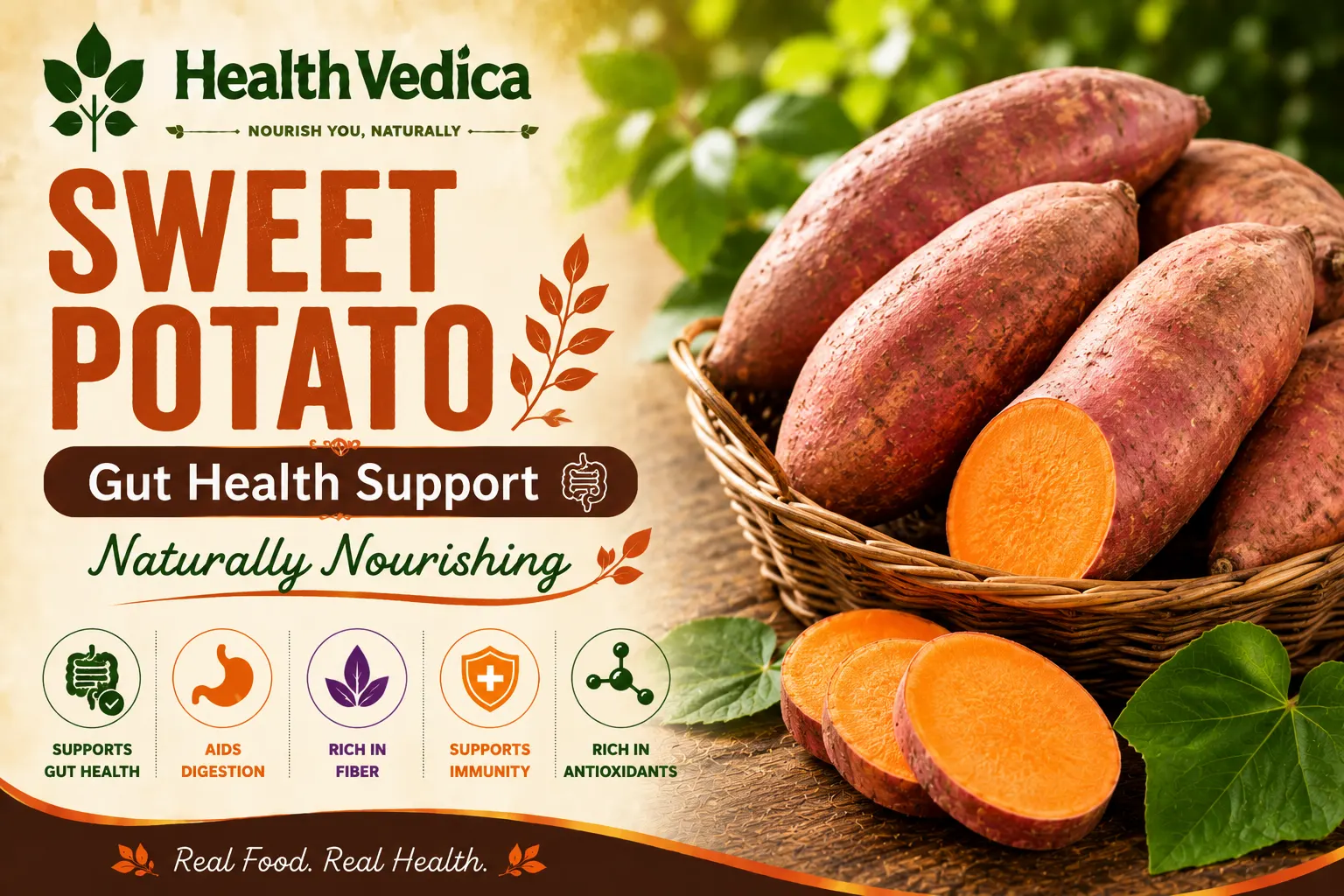
Sweet Potato (Ipomoea batatas), popularly known as Shakarkandi in India, is a naturally sweet, nutrient-rich root vegetable enjoyed roasted, boiled, baked or steamed. Unlike regular potatoes, sweet potatoes are packed with beta-carotene, dietary fiber, vitamin C, potassium and numerous antioxidants. They provide slow-releasing carbohydrates that supply sustained energy, making them popular among athletes, children and health-conscious individuals. In Ayurveda, Shakarkandi is valued for nourishing body tissues, improving strength and supporting digestive health. Modern nutritional research highlights its benefits for gut health, immunity, eye health, blood sugar management and heart health.
📊 Nutritional Value Per 100g of Sweet Potato
| Nutrient | Amount | % Daily Value (DV) |
|---|---|---|
| Calories | 86 kcal | 4% |
| Protein | 1.6 g | 3% |
| Total Fat | 0.1 g | <1% |
| Carbohydrates | 20.1 g | 7% |
| Dietary Fiber | 3.0 g | 11% |
| Natural Sugars | 4.2 g | — |
| Vitamin A | 709 mcg RAE | 79% |
| Beta-Carotene | 8509 mcg | — |
| Vitamin C | 2.4 mg | 3% |
| Vitamin B6 | 0.21 mg | 12% |
| Potassium | 337 mg | 7% |
| Manganese | 0.26 mg | 11% |
| Magnesium | 25 mg | 6% |
| Water | 77.3 g | — |
📉 Glycemic Index
Sweet potatoes have a moderate glycemic index (44–63 when boiled). Boiling preserves resistant starch and lowers the glycemic response compared to baking or roasting. Pairing sweet potatoes with protein, healthy fats or legumes further slows glucose absorption.
🧬 Powerful Plant Compounds
Orange-fleshed sweet potatoes are exceptionally rich in beta-carotene, while purple varieties contain abundant anthocyanins. They also provide chlorogenic acid, quercetin and various polyphenols that help combat oxidative stress.
💊 Vitamins & Minerals Explained
Vitamin A supports healthy vision and immunity. Potassium contributes to healthy blood pressure and muscle function. Vitamin B6 supports brain health and energy metabolism, while dietary fiber nourishes beneficial gut bacteria.
🕉️ Ayurvedic Properties & Dosha Effect
According to Ayurveda, Shakarkandi has a Madhura (sweet) taste and cooling potency (Sheeta Veerya). It nourishes body tissues (Brimhana), promotes strength and supports healthy digestion. It helps balance Vata and Pitta Doshas. Excessive intake may increase Kapha Dosha because of its sweet nature.
💚 Evidence-Based Health Benefits
Excellent for Gut Health: Sweet potatoes contain dietary fiber and resistant starch that act as prebiotics, feeding beneficial gut bacteria and improving digestive health.
Supports Eye Health: Beta-carotene converts into vitamin A, helping maintain healthy vision and reducing the risk of vitamin A deficiency.
Strengthens Immunity: Vitamin A, vitamin C and antioxidants support immune cell function and healthy skin barriers.
Heart Health: Potassium helps regulate blood pressure while fiber supports healthy cholesterol levels.
Steady Energy: Complex carbohydrates provide sustained energy, making sweet potatoes ideal before exercise or during physically demanding days.
Supports Healthy Blood Sugar: Boiled sweet potatoes have a moderate glycemic response and can fit into balanced diabetic meal plans when portion sizes are controlled.
Healthy Skin: Antioxidants and vitamin A support skin renewal and collagen health.
👨👩👧 Who Should Eat Sweet Potatoes?
Sweet potatoes are excellent for children, pregnant women, athletes, older adults, individuals recovering from illness, fitness enthusiasts and anyone seeking healthy complex carbohydrates.
🚫 Who Should Limit Sweet Potatoes?
Individuals with advanced kidney disease may need to monitor potassium intake. People with diabetes should consume moderate portions and preferably choose boiled rather than fried preparations.
🌿 Healthy Recipes & Home Remedies
Roasted Shakarkandi: Roast whole sweet potatoes and season with lemon juice, black pepper and chaat masala.
Sweet Potato Chaat: Combine boiled cubes with onions, coriander, pomegranate and mint chutney.
Sweet Potato Mash: Mash boiled sweet potatoes with cinnamon and a teaspoon of ghee for children.
Sweet Potato Soup: Blend cooked sweet potatoes with carrots, ginger and turmeric.
Sweet Potato Tikki: Prepare healthy patties using oats and vegetables instead of deep frying.
🥗 Best Ways to Eat Sweet Potatoes
Boiling or steaming preserves nutrients and produces a lower glycemic response than baking or frying. Pairing with healthy fats like nuts, seeds or olive oil improves absorption of beta-carotene.
🍽️ Best Food Combinations
Sweet potatoes pair well with yogurt, chickpeas, spinach, cinnamon, turmeric, ginger, pumpkin seeds, peanuts, eggs and grilled paneer.
🧊 Storage Tips
Store sweet potatoes in a cool, dry and well-ventilated place away from direct sunlight. Do not refrigerate raw sweet potatoes, as cold temperatures can negatively affect their texture and flavor.
📅 Daily Recommended Intake
100–150 grams of cooked sweet potato daily is suitable for most healthy adults.
⚠️ Precautions
Sweet potatoes are naturally rich in oxalates. Individuals with recurrent calcium oxalate kidney stones should consume them in moderation after consulting their healthcare provider. Avoid deep-fried preparations to maximize health benefits.
🔬 Scientific Highlights
Numerous studies have shown that beta-carotene-rich sweet potatoes improve vitamin A status, while resistant starch supports gut microbiome diversity. Purple sweet potatoes have demonstrated particularly strong antioxidant activity because of their anthocyanin content.
❌ Common Myths & Facts
❌ Myth: Sweet potatoes are the same as regular potatoes.
✅ Fact: Sweet potatoes belong to a different botanical family and contain significantly more beta-carotene and dietary fiber.
❌ Myth: People with diabetes should completely avoid sweet potatoes.
✅ Fact: Moderate portions of boiled sweet potatoes can be included in many diabetic meal plans when balanced with protein and fiber.
❌ Myth: Sweet potatoes cause weight gain.
✅ Fact: When eaten in appropriate portions, they are filling, nutrient-dense and support healthy weight management.
🌍 Fun Facts
- Sweet potatoes are not botanically related to regular potatoes.
- Purple sweet potatoes contain some of the highest anthocyanin levels among vegetables.
- Orange sweet potatoes are among the richest natural sources of beta-carotene.
- China is the world's largest producer of sweet potatoes.
- Sweet potato leaves are edible and rich in vitamins A, C and iron.
🥬 Edible Parts & Their Benefits
| Edible Part | Health Benefits |
|---|---|
| Tuber (Root) | Rich in complex carbohydrates, beta-carotene, fiber and potassium. |
| Leaves | Excellent source of vitamin A, vitamin C, iron, calcium and antioxidants. |
| Young Shoots | Consumed as leafy vegetables in many countries and provide fiber and phytonutrients. |
⏰ Best Time to Eat
Sweet potatoes are ideal as a breakfast, mid-morning snack or pre-workout meal because they provide steady energy. They can also be enjoyed at lunch. For individuals monitoring blood sugar, pairing them with protein-rich foods helps reduce glucose spikes.