🌿 Introduction
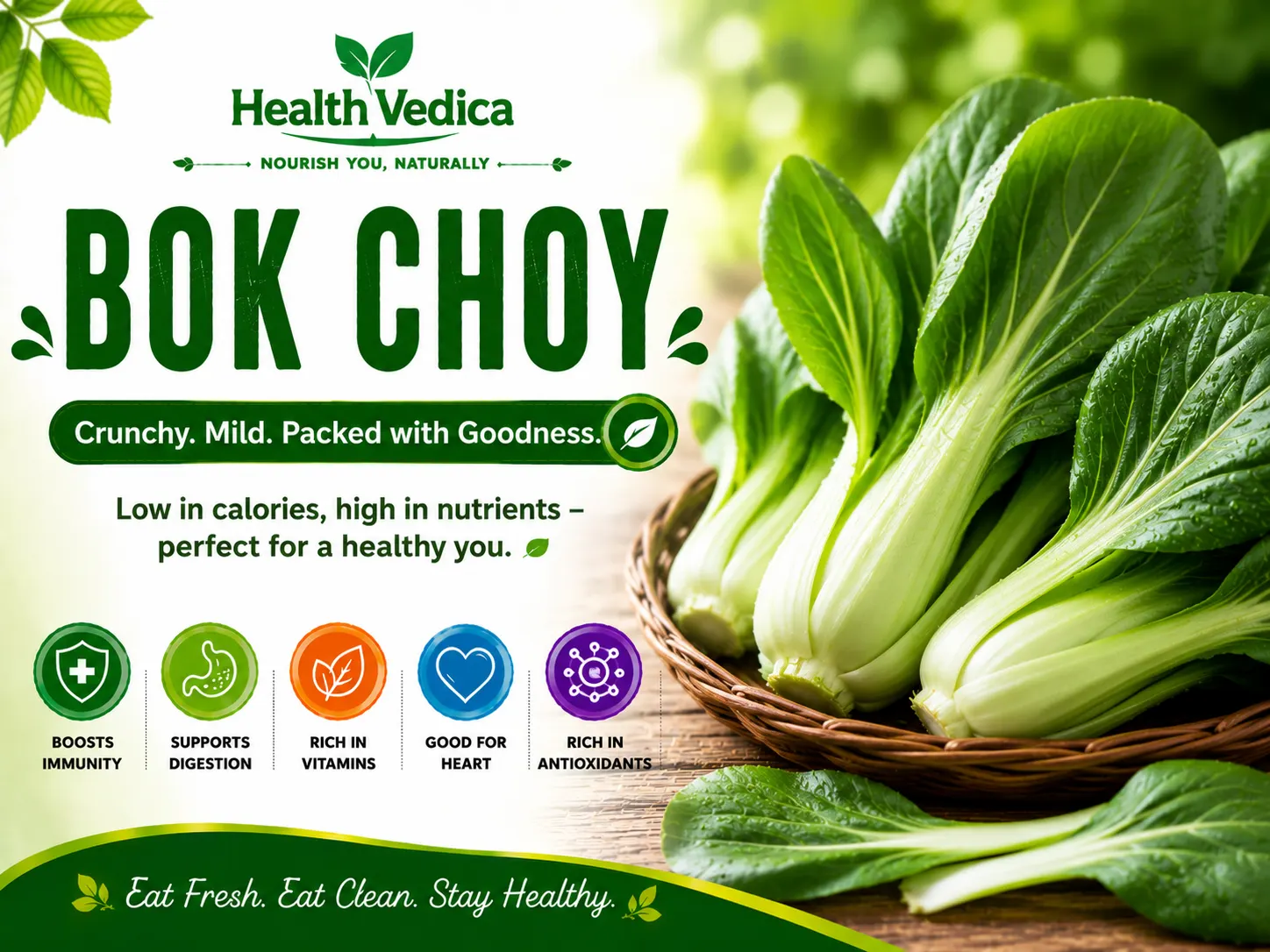
Bok Choy (Brassica rapa subsp. chinensis), also called Pak Choi, is a nutrient-rich leafy green vegetable belonging to the cruciferous vegetable family along with cabbage, broccoli, kale and cauliflower.
Popular in Chinese, Korean and Southeast Asian cuisines, Bok Choy is known for its crisp white stems, tender green leaves and mild flavour. It is increasingly becoming popular worldwide because it provides a high amount of vitamins, minerals and antioxidants with very few calories.
Bok Choy is especially rich in vitamin K, vitamin C, calcium, potassium, folate and glucosinolates. These nutrients support bone strength, immunity, digestion and overall wellness.
Although not a traditional Indian vegetable, Bok Choy can be easily adapted into Indian-style stir-fries, soups, sabzis and fusion recipes.
📊 Nutritional Value Per 100g of Raw Bok Choy
| Nutrient | Amount | % Daily Value (DV) |
|---|---|---|
| Calories | 13 kcal | 1% |
| Protein | 1.5 g | 3% |
| Total Fat | 0.2 g | <1% |
| Carbohydrates | 2.2 g | 1% |
| Dietary Fiber | 1 g | 4% |
| Water Content | 95 g | — |
| Vitamin C | 45 mg | 50% |
| Vitamin K | 46.4 mcg | 39% |
| Vitamin A | 223 mcg | 25% |
| Folate | 66 mcg | 17% |
| Calcium | 105 mg | 8% |
| Potassium | 252 mg | 5% |
| Magnesium | 19 mg | 5% |
| Manganese | 0.16 mg | 7% |
📉 Glycemic Index
Bok Choy has a very low glycemic impact because it contains minimal carbohydrates and high water content. It is considered suitable for blood sugar-conscious diets.
🧬 Powerful Plant Compounds
Bok Choy contains glucosinolates, isothiocyanates, flavonoids, carotenoids and phenolic compounds. These bioactive compounds contribute antioxidant protection and support healthy cellular function.
💊 Vitamins & Minerals Explained
Vitamin C: Supports immune function, collagen production and antioxidant defence.
Vitamin K: Helps maintain bone strength and supports normal blood clotting.
Calcium: Contributes to healthy bones and teeth.
Folate: Supports cell growth and tissue repair.
Potassium: Helps maintain healthy fluid balance and blood pressure.
🕉️ Ayurvedic Perspective & Dosha Effect
Bok Choy is not traditionally mentioned in classical Ayurveda because it originated outside the Indian subcontinent. However, based on its qualities, it can be considered a light, cooling and hydrating leafy vegetable.
Its cooling and cleansing nature may support Pitta balance. Because it is light and fibrous, excessive raw consumption may increase Vata in some individuals. Cooking Bok Choy with warming spices like ginger, cumin, turmeric and black pepper can improve digestion.
💚 Evidence-Based Health Benefits
Strengthens Bones: Bok Choy provides vitamin K and calcium, nutrients essential for maintaining bone structure and mineral balance.
Supports Immunity: High vitamin C content helps support immune defence and collagen production.
Heart Health Support: Potassium, fiber and antioxidants contribute to cardiovascular wellness.
Digestive Health: Fiber supports healthy bowel movements and beneficial gut bacteria.
Weight Management: Very low calories with high volume makes Bok Choy useful for calorie-controlled diets.
Eye Health: Beta-carotene and vitamin A compounds support healthy vision.
Antioxidant Protection: Plant compounds help protect cells from oxidative stress.
🦴 Bok Choy & Bone Health
Bok Choy is one of the better plant sources of calcium among vegetables. Combined with vitamin K and magnesium, it contributes to maintaining strong bones when included as part of a balanced diet.
🛡️ Bok Choy & Cancer Protective Compounds
Cruciferous vegetables like Bok Choy contain glucosinolates that produce compounds such as isothiocyanates. Research suggests these compounds may support the body's natural protective mechanisms.
👨👩👧 Who Should Eat Bok Choy?
Bok Choy is suitable for adults, children, elderly people and individuals looking for nutrient-rich, low-calorie vegetables.
🚫 Who Should Limit Bok Choy?
People with thyroid concerns should avoid excessive consumption of large amounts of raw cruciferous vegetables. Individuals taking blood-thinning medications should maintain consistent vitamin K intake.
🌿 Healthy Recipes & Preparations
Bok Choy Stir Fry: Cooked with garlic, ginger and sesame oil.
Bok Choy Soup: A light and nutritious vegetable soup.
Bok Choy Curry: Indian-style preparation with spices and coconut.
Bok Choy Salad: Combined with carrots, cucumber and healthy dressings.
Steamed Bok Choy: Simple preparation preserving nutrients.
🥗 Best Ways to Eat Bok Choy
Light steaming, sautéing or stir-frying preserves nutrients while improving digestibility. Both leaves and stems are edible.
🍽️ Best Food Combinations
Bok Choy pairs well with ginger, garlic, turmeric, mushrooms, tofu, lentils, sesame seeds, lemon and nuts.
🧊 Storage Tips
Store Bok Choy in the refrigerator wrapped in a damp cloth or paper towel. Keep stems dry to maintain freshness.
📅 Daily Recommended Intake
100–200 grams of Bok Choy can be consumed regularly as part of a balanced diet.
⚠️ Precautions
Wash Bok Choy thoroughly before cooking. Avoid excessive raw consumption if you have thyroid concerns. People with specific medical conditions should follow personalized dietary guidance.
🔬 Scientific Highlights
Bok Choy is studied for its vitamin K, vitamin C, calcium, antioxidant compounds and glucosinolate content. Regular consumption of cruciferous vegetables is associated with improved nutrient intake and protective health benefits.
❌ Common Myths & Facts
❌ Myth: Bok Choy is only useful in Asian cooking.
✅ Fact: Bok Choy can be used in soups, curries, stir-fries and Indian-style dishes.
❌ Myth: White stem part has no nutrition.
✅ Fact: Both stems and leaves provide valuable nutrients.
❌ Myth: All cruciferous vegetables damage thyroid function.
✅ Fact: Normal cooked portions are generally safe for most people.
🌍 Fun Facts
- Bok Choy means "white vegetable" in Cantonese.
- It has been cultivated in China for more than 1,500 years.
- Bok Choy is technically a type of Chinese cabbage.
- Both baby Bok Choy and mature Bok Choy are eaten worldwide.
- It is one of the fastest-growing leafy vegetables.
🥬 Edible Parts & Their Benefits
| Edible Part | Health Benefits |
|---|---|
| Leaves | Rich in vitamin C, vitamin A and antioxidants. |
| Stems | Provide hydration, fiber and minerals. |
| Baby Bok Choy | Tender texture with concentrated nutrients. |
🌱 Seasonality in India
| Season | Availability |
|---|---|
| Peak Season | November – February |
| Best Climate | Cool temperatures |
| Buying Tip | Select firm white stems and fresh green leaves. |
⏰ Best Time to Eat
Bok Choy can be consumed during lunch or dinner. Light cooking with digestive spices makes it easier to include regularly.