🌿 Introduction
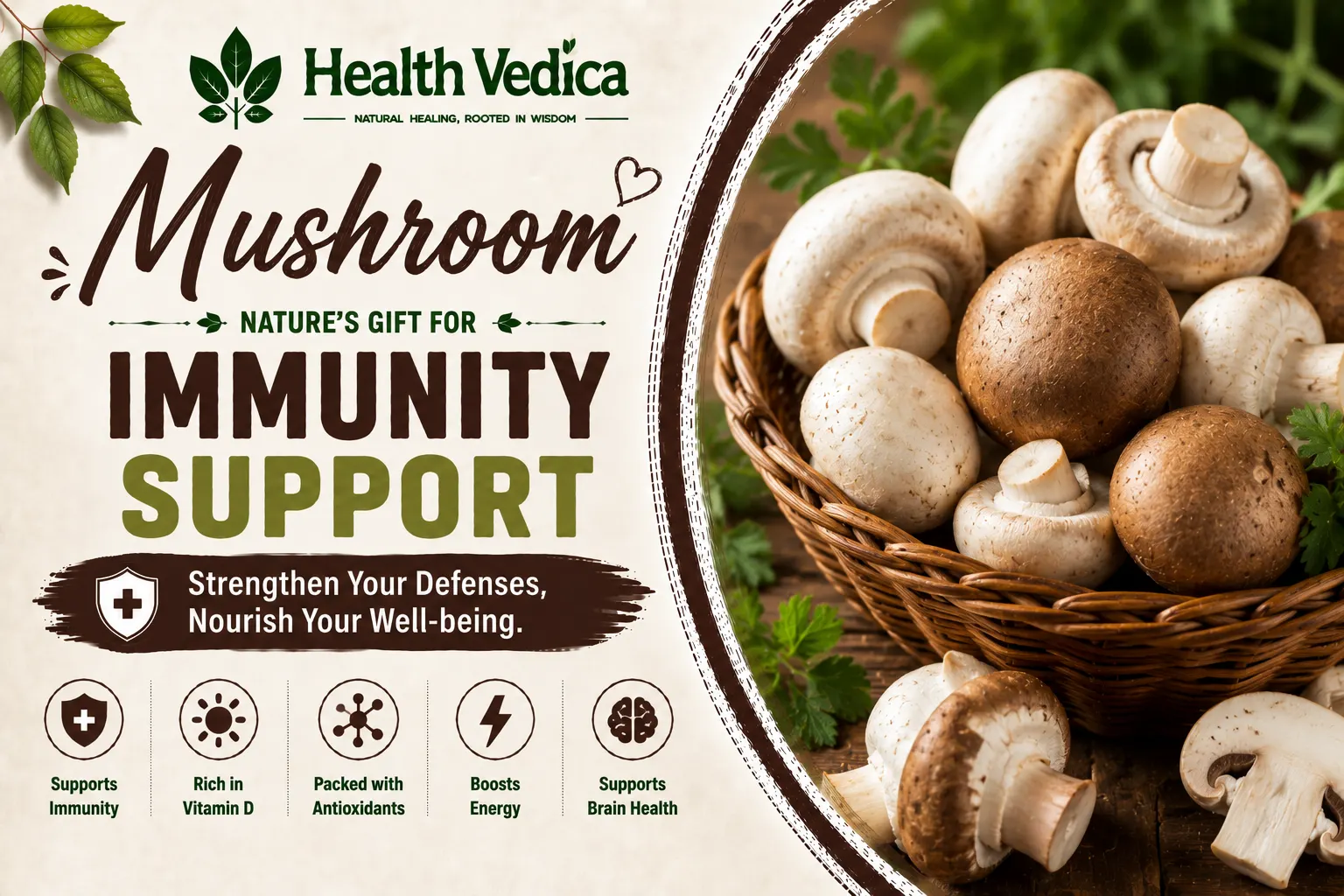
Mushrooms are a unique food that bridges the gap between vegetables and superfoods. They are neither plants nor animals — they belong to the fungi kingdom — yet they offer extraordinary nutritional and medicinal benefits. Mushrooms are the only non-animal food that naturally produces Vitamin D when exposed to sunlight. They are rich in B vitamins, selenium, and beta-glucans — immune-modulating compounds that have been extensively studied for their ability to fight infections and cancer. Button, Oyster, and Shiitake mushrooms are widely consumed in India.
📊 Nutritional Value Per 100g (Button Mushroom)
| Nutrient | Amount | % Daily Value |
|---|---|---|
| Calories | 22 kcal | 1% |
| Carbohydrates | 3.3 g | 1% |
| Protein | 3.1 g | 6% |
| Fat | 0.3 g | 0% |
| Fiber | 1 g | 4% |
| Vitamin D | 7 IU (sun-exposed: 400+ IU) | Up to 50% |
| Vitamin B2 (Riboflavin) | 0.4 mg | 31% |
| Vitamin B3 (Niacin) | 3.6 mg | 22% |
| Vitamin B5 | 1.5 mg | 30% |
| Selenium | 9.3 mcg | 17% |
| Potassium | 318 mg | 9% |
| Copper | 0.3 mg | 33% |
| Beta-Glucans | Significant | — |
📉 Glycemic Index
Mushrooms have a very low glycemic index (GI around 10–15) and are very low in carbohydrates. They are an excellent choice for diabetics and those on low-carb or keto diets. They are also a great low-calorie, high-protein option for vegetarians and vegans.
🕉️ Ayurvedic Properties & Dosha Effect
In classical Ayurveda, mushrooms (known as Chhatrak) are considered Guru (heavy to digest) and are consumed in moderation. They are nutritive and cooling in nature. Sun-dried or cooked mushrooms are preferred for better digestibility. Ayurveda particularly values their Rasayana (rejuvenating) properties and their ability to build Ojas and enhance immunity when consumed in appropriate quantities.
💚 Health & Healing Benefits
Beta-glucans in mushrooms are among the most studied immune-modulating compounds in nutrition science. They activate natural killer cells and macrophages, enhancing the body's ability to fight infections, viruses, and cancer. Mushrooms exposed to UV light or sunlight produce significant Vitamin D — a nutrient critically deficient in most Indians — and placing mushrooms gills-up in sunlight for 30–60 minutes can generate 400+ IU of Vitamin D per 100g. Selenium in mushrooms functions as a powerful antioxidant and is essential for thyroid function. Mushrooms' high potassium and low sodium content supports heart health and blood pressure regulation. Some mushroom varieties (Reishi, Cordyceps, Lion's Mane) have powerful adaptogenic and neuroprotective properties, though these are more medicinal and less commonly used in cooking.
🍛 Indian Dietary Uses
Mushrooms are used in Mushroom Masala, Kadai Mushroom, Mushroom Biryani, Mushroom Soup, and sautéed preparations. Oyster and Shiitake mushrooms are increasingly grown and available in Indian markets. Placing mushrooms in morning sunlight before cooking is a simple way to boost their Vitamin D content dramatically.