🌿 Introduction
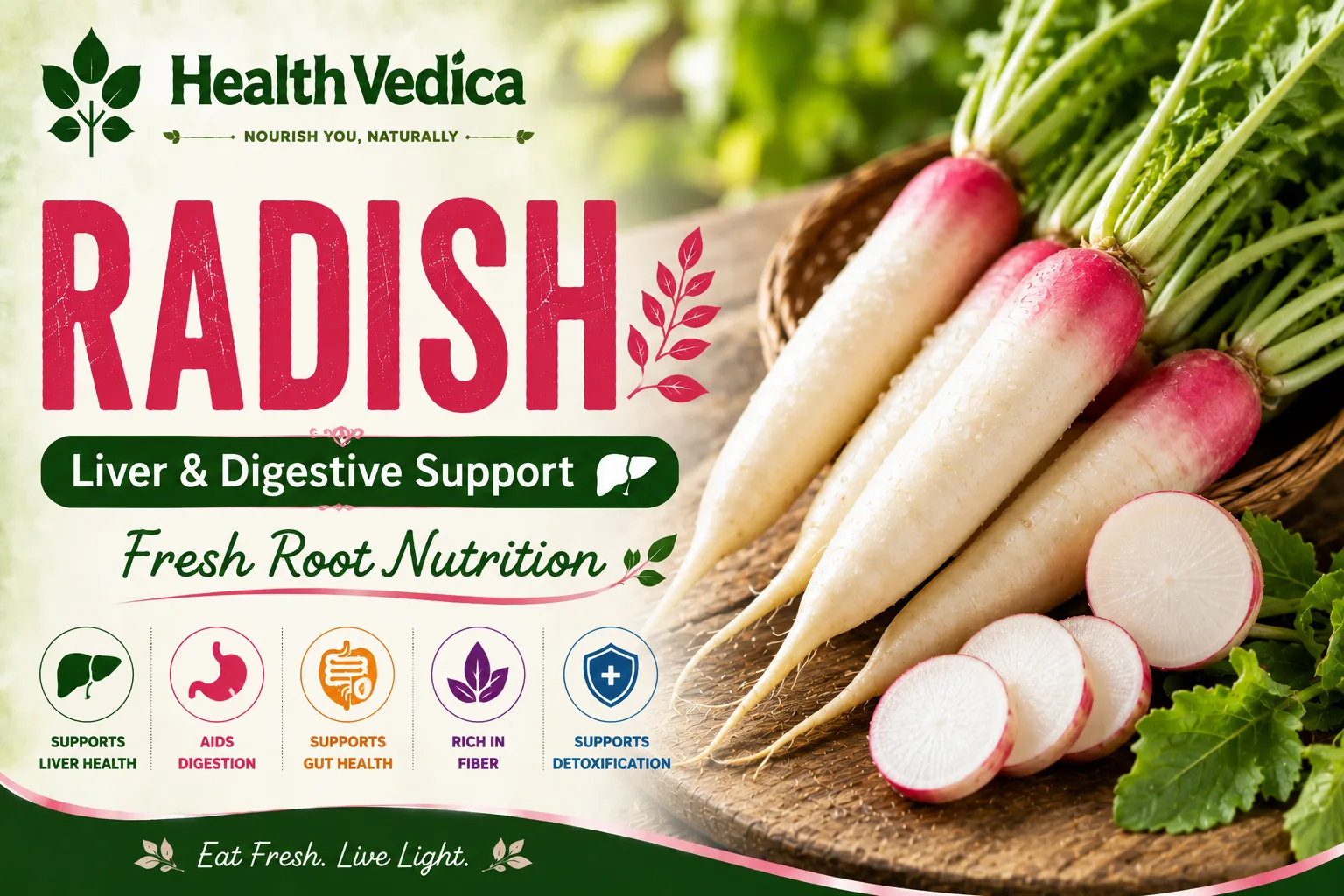
Radish (Raphanus sativus), popularly known as Mooli in India, is a crunchy root vegetable widely consumed in salads, parathas, sambhar, curries and pickles. A member of the Brassicaceae (cruciferous) family, radish is naturally low in calories yet exceptionally rich in vitamin C, potassium, dietary fiber and sulfur-containing compounds called glucosinolates. Ayurveda values Mooli for improving digestion, stimulating appetite, supporting liver function and helping remove excess Kapha. Modern nutrition research highlights its antioxidant, liver-protective, heart-friendly and digestive benefits.
📊 Nutritional Value Per 100g of Radish
| Nutrient | Amount | % Daily Value (DV) |
|---|---|---|
| Calories | 16 kcal | 1% |
| Protein | 0.7 g | 1% |
| Total Fat | 0.1 g | <1% |
| Carbohydrates | 3.4 g | 1% |
| Dietary Fiber | 1.6 g | 6% |
| Natural Sugars | 1.9 g | — |
| Vitamin C | 14.8 mg | 16% |
| Potassium | 233 mg | 5% |
| Folate | 25 mcg | 6% |
| Calcium | 25 mg | 2% |
| Magnesium | 10 mg | 2% |
| Water | 95.3 g | — |
📉 Glycemic Index
Radish has an extremely low glycemic index of approximately 15. Its low carbohydrate content and dietary fiber make it suitable for people aiming to maintain healthy blood sugar levels.
🧬 Powerful Plant Compounds
Radish is rich in glucosinolates, sulforaphane precursors, anthocyanins (especially red and purple varieties), isothiocyanates, catechins, quercetin and vitamin C. These compounds exhibit antioxidant, anti-inflammatory and detoxification-supporting properties.
💊 Vitamins & Minerals Explained
Vitamin C strengthens immunity and collagen production. Potassium supports healthy blood pressure and muscle function. Folate contributes to DNA synthesis, while fiber promotes digestive health and gut microbiome balance.
🕉️ Ayurvedic Properties & Dosha Effect
According to Ayurveda, fresh radish possesses Katu (pungent) and Kashaya (astringent) tastes with a heating potency (Ushna Veerya). It stimulates digestion (Deepana), improves metabolism, reduces excess Kapha and helps clear respiratory congestion. Moderate consumption supports Vata, while excessive intake of raw radish may aggravate Pitta in sensitive individuals.
💚 Evidence-Based Health Benefits
Supports Liver Health: Sulfur-containing glucosinolates help activate natural detoxification enzymes in the liver and support healthy bile production.
Improves Digestion: Radish stimulates digestive enzymes, promotes appetite and helps reduce bloating and indigestion.
Supports Heart Health: Potassium and antioxidants contribute to healthy blood pressure and vascular function.
Blood Sugar Support: Its very low glycemic index and fiber help maintain stable post-meal blood glucose levels.
Boosts Immunity: Vitamin C and antioxidants help strengthen immune defenses and reduce oxidative stress.
Supports Kidney Function: The high water content and mild diuretic properties may support normal urinary health in healthy individuals.
Weight Management: Extremely low in calories while rich in water and fiber, radish promotes fullness without adding significant calories.
👨👩👧 Who Should Eat Radish?
Radish is suitable for children, adults, older adults, athletes, individuals aiming for weight management, people seeking digestive support and those looking to include more cruciferous vegetables in their diet.
🚫 Who Should Limit Radish?
Individuals with uncontrolled hypothyroidism should avoid consuming excessive quantities of raw cruciferous vegetables regularly because they contain natural goitrogenic compounds. Cooking significantly reduces this effect. People with active stomach ulcers or severe acid reflux may also need to limit raw radish if it worsens symptoms.
🌿 Healthy Recipes & Home Remedies
Mooli Salad: Toss grated radish with carrot, cucumber, lemon juice and coriander for a refreshing salad.
Mooli Paratha: Whole wheat flatbread stuffed with grated radish provides a fiber-rich traditional Indian breakfast.
Radish Sambar: South Indian radish sambar combines lentils with spices for a nutritious meal.
Radish Juice: Fresh radish juice mixed with carrot and ginger is traditionally consumed in moderation to support digestion.
Radish Leaves Stir-Fry: Don't discard the leaves—they are rich in calcium, vitamin C and antioxidants.
🥗 Best Ways to Eat Radish
Enjoy radish raw in salads, lightly steamed, stir-fried, fermented as pickles or cooked in curries and soups. Consuming both the root and leaves maximizes nutritional benefits.
🍽️ Best Food Combinations
Radish pairs well with carrots, cucumber, lemon, coriander, mint, curd, sesame seeds, mustard seeds, moong dal and whole grains.
🧊 Storage Tips
Remove the leafy tops before refrigeration to extend freshness. Store unwashed radishes in the vegetable drawer for up to one week. Wash thoroughly before consumption.
📅 Daily Recommended Intake
75–150 grams of fresh radish daily is suitable for most healthy adults as part of a balanced diet.
⚠️ Precautions
Excessive raw radish may cause gas or bloating in some individuals. People with thyroid disorders can still enjoy radish in normal culinary amounts, especially when cooked. Wash thoroughly to remove soil and pesticide residues before eating.
🔬 Scientific Highlights
Scientific studies indicate that glucosinolates and isothiocyanates found in radish may support liver detoxification pathways, antioxidant defense and healthy inflammatory responses. Research also suggests that cruciferous vegetables contribute to long-term cardiovascular and metabolic health.
📚 Traditional Ayurvedic References
- Charaka Samhita
- Bhavaprakasha Nighantu
- USDA FoodData Central
- Modern Nutrition Research on Cruciferous Vegetables
❌ Common Myths & Facts
❌ Myth: Radish should only be eaten in winter.
✅ Fact: While especially popular during winter, radish can be enjoyed throughout the year when fresh and properly stored.
❌ Myth: Radish leaves are useless.
✅ Fact: Radish greens are highly nutritious and often contain even more vitamin C, calcium and antioxidants than the root.
❌ Myth: Radish damages the thyroid.
✅ Fact: Moderate consumption is safe for healthy individuals. Cooking reduces naturally occurring goitrogenic compounds.
🌍 Fun Facts
- Radish is one of the fastest-growing vegetables and can be harvested in as little as 25–30 days.
- Japan grows giant Daikon radishes weighing several kilograms.
- There are more than 100 cultivated varieties of radish worldwide.
- Both the root and leaves are edible and nutritious.
- Ancient Egyptians cultivated radishes over 4,000 years ago.