🌿 Introduction
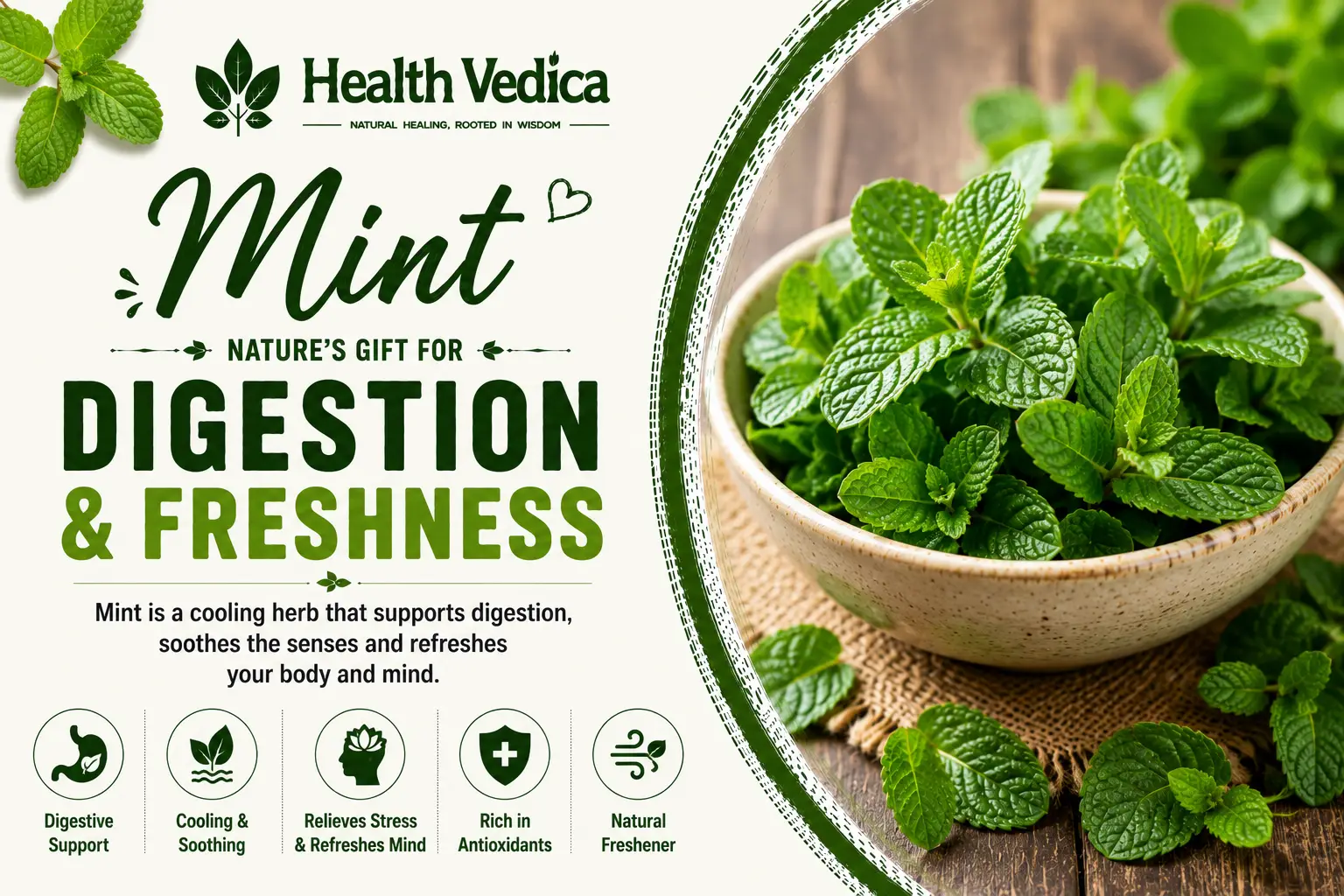
Mint, known as Pudina in Hindi and widely used across all Indian regional cuisines and Ayurvedic medicine, is a fragrant herb with exceptional medicinal properties. The distinctive cooling sensation of mint comes from its menthol content, which has proven benefits for digestion, IBS (irritable bowel syndrome), nausea, headaches, and respiratory conditions. Mint is one of the most commonly used herbs in Indian cooking — in chutneys, raitas, biryanis, teas, and refreshing drinks like Jal Jeera and Nimbu Pudina.
📊 Nutritional Value Per 100g
| Nutrient | Amount | % Daily Value |
|---|---|---|
| Calories | 70 kcal | 4% |
| Protein | 3.8 g | 8% |
| Carbohydrates | 14.9 g | 5% |
| Fat | 0.9 g | 1% |
| Fiber | 8 g | 29% |
| Vitamin A | 4248 IU | 85% |
| Vitamin C | 31.8 mg | 35% |
| Folate | 114 mcg | 29% |
| Iron | 5.1 mg | 28% |
| Manganese | 1.18 mg | 51% |
| Calcium | 243 mg | 24% |
| Potassium | 569 mg | 16% |
| Menthol | Significant | — |
| Rosmarinic Acid | High | — |
📉 Glycemic Index
Mint is used in such small quantities per serving that glycemic index is not practically relevant. Per 100g, mint is low in carbohydrates relative to its fiber content. It is safe for diabetics and is actually used in Ayurveda and traditional medicine to help regulate blood sugar.
🕉️ Ayurvedic Properties & Dosha Effect
In Ayurveda, Pudina is considered Ushna (heating in long-term effect) but Sheeta (cooling through menthol) on surface contact. It is Katu (pungent) and Tikta (bitter). It stimulates Agni (digestive fire), pacifies Vata and Kapha, and in excess may aggravate Pitta. It is one of Ayurveda's most important herbs (Aushadhi) for digestive complaints, respiratory ailments, and mental clarity.
💚 Health & Healing Benefits
Menthol in mint is clinically proven to relax the muscles of the gastrointestinal tract, reducing spasms, bloating, gas, and discomfort. Multiple clinical trials have confirmed that peppermint oil capsules effectively reduce the frequency and severity of IBS symptoms. Mint tea is one of the most effective natural remedies for nausea, morning sickness, and motion sickness. Inhaling mint's aroma has demonstrated cognitive benefits — improving alertness, memory, and concentration. Mint's rosmarinic acid is a potent anti-inflammatory that helps with seasonal allergies by blocking the release of inflammatory compounds. The menthol in mint acts as a natural decongestant, helping clear nasal passages and soothe sore throats. Mint is a natural antimicrobial and antifungal agent, making it beneficial for oral health and breath freshening. Per 100g, mint is an extraordinary source of iron, calcium, folate, and Vitamin A — though typical serving sizes are small.
🍛 Indian Dietary Uses
Mint is used extensively in Pudina Chutney (green chutney), Raita, Mint Rice, Biryani, Jal Jeera, Nimbu Pudina (lemonade with mint), Mint Tea, and as a garnish. Fresh mint leaves added to buttermilk (Chaas) make a classic Indian digestive drink.