🌿 Introduction
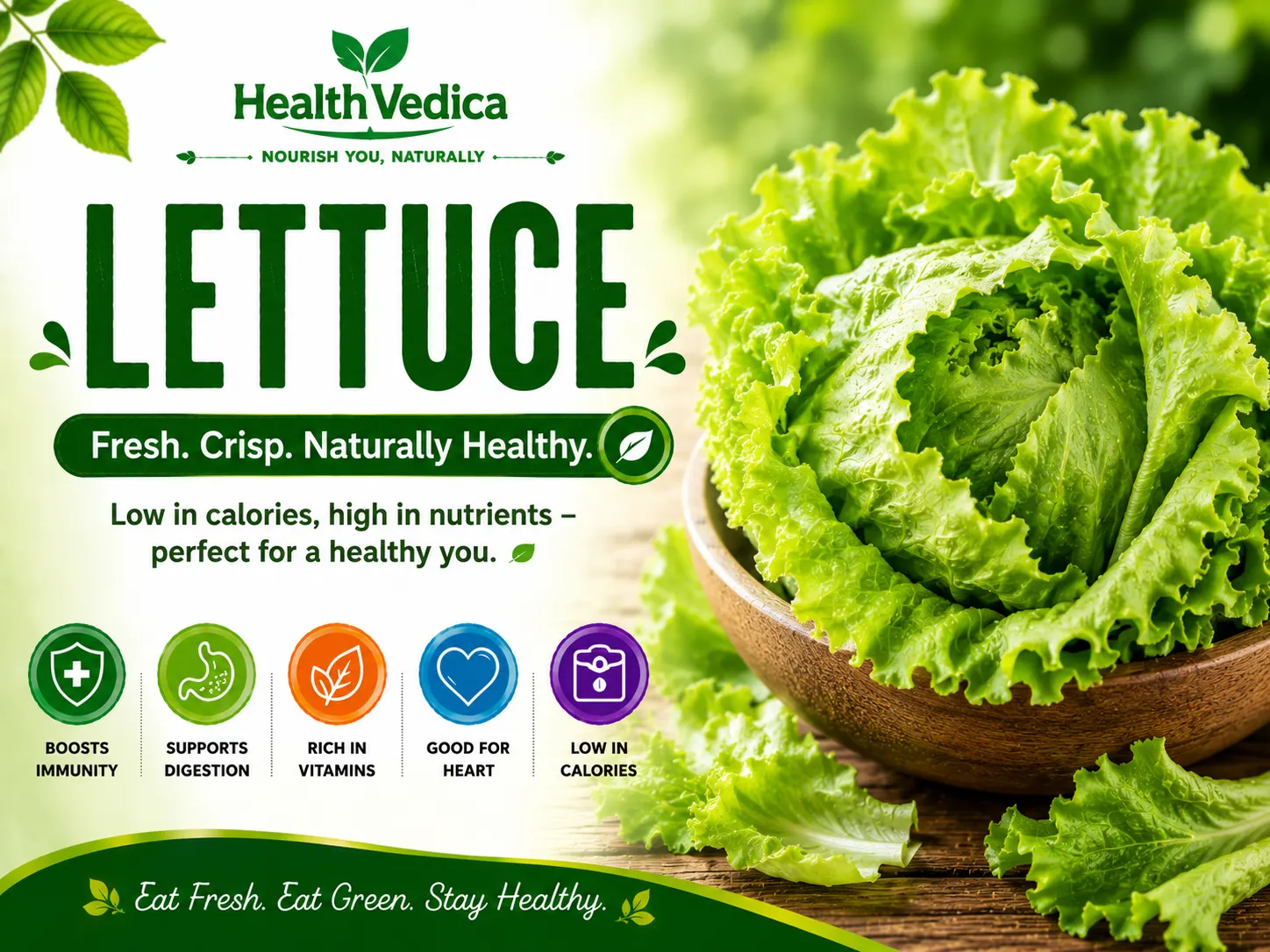
Lettuce (Lactuca sativa) is a popular leafy green vegetable known for its crisp texture, refreshing taste and exceptional water content. It is one of the most commonly consumed salad vegetables worldwide and is widely used in salads, wraps, sandwiches, soups and healthy meal preparations.
Lettuce is naturally low in calories and carbohydrates while providing fiber, vitamins, minerals, antioxidants and plant compounds that support hydration, digestion, heart health and healthy weight management.
Different varieties of lettuce such as Romaine, Iceberg, Butterhead and Leaf Lettuce differ slightly in nutrient content. Darker green varieties generally contain higher amounts of vitamins, minerals and antioxidants.
In India, lettuce has become increasingly popular in modern diets, especially in salads, burgers, wraps and healthy lifestyle meals.
📊 Nutritional Value Per 100g of Lettuce
| Nutrient | Amount | % Daily Value (DV) |
|---|---|---|
| Calories | 15 kcal | 1% |
| Protein | 1.4 g | 3% |
| Total Fat | 0.2 g | <1% |
| Carbohydrates | 2.9 g | 1% |
| Dietary Fiber | 1.3 g | 5% |
| Water Content | 95 g | — |
| Vitamin K | 126 mcg | 105% |
| Vitamin A | 436 mcg | 48% |
| Vitamin C | 9.2 mg | 10% |
| Folate | 38 mcg | 10% |
| Potassium | 194 mg | 4% |
| Calcium | 36 mg | 3% |
| Iron | 0.9 mg | 5% |
| Magnesium | 13 mg | 3% |
📉 Glycemic Index
Lettuce has an extremely low glycemic impact because it contains very little digestible carbohydrate. It is considered one of the best vegetables for people looking for blood sugar-friendly foods.
🧬 Powerful Plant Compounds
Lettuce contains lutein, beta-carotene, flavonoids, phenolic compounds and chlorophyll. These natural compounds provide antioxidant protection and support overall cellular health.
💊 Vitamins & Minerals Explained
Vitamin K: Supports normal blood clotting and bone metabolism.
Vitamin A: Supports healthy vision, skin and immune function through beta-carotene.
Folate: Important for cell growth and tissue repair.
Potassium: Helps maintain fluid balance and supports healthy blood pressure.
🕉️ Ayurvedic Perspective & Dosha Effect
Lettuce is not extensively described in classical Ayurveda because many modern salad vegetables became common in Indian diets later. Based on its qualities, lettuce can be considered a cooling, light and hydrating food.
Its cooling nature may help balance Pitta Dosha, while its high water content supports hydration. Because raw leafy vegetables can sometimes increase dryness, people with high Vata Dosha may prefer lightly cooked lettuce with warming spices.
💚 Evidence-Based Health Benefits
Supports Weight Management: Lettuce contains very few calories while adding volume to meals, helping increase fullness without excessive energy intake.
Promotes Hydration: With about 95% water content, lettuce contributes to daily fluid intake.
Supports Heart Health: Potassium, fiber and antioxidants contribute to maintaining cardiovascular wellness.
Improves Digestion: Dietary fiber supports bowel regularity and healthy gut function.
Eye Health Support: Carotenoids like lutein and beta-carotene help protect eye tissues.
Supports Immunity: Vitamin A and vitamin C contribute to normal immune function.
Bone Health: High vitamin K content supports bone metabolism and calcium regulation.
👁️ Lettuce & Eye Health
Dark green lettuce varieties contain higher amounts of lutein and beta-carotene. These antioxidants accumulate in eye tissues and help protect against oxidative stress associated with ageing.
❤️ Lettuce & Heart Health
Lettuce supports cardiovascular health by providing potassium, fiber and plant antioxidants. A diet rich in leafy greens is associated with improved overall heart-health markers.
👨👩👧 Who Should Eat Lettuce?
Lettuce is suitable for children, adults, elderly individuals and people focusing on weight management, hydration and increasing vegetable intake.
🚫 Who Should Limit Lettuce?
People with digestive sensitivity to raw vegetables may experience bloating and may prefer lightly cooked greens. Individuals taking blood-thinning medication should maintain consistent vitamin K intake.
🌿 Healthy Recipes & Preparations
Lettuce Salad: Combined with cucumber, carrots, tomatoes and lemon dressing.
Lettuce Wraps: Used as a healthy alternative to bread or tortillas.
Lettuce Soup: A light vegetable soup preparation.
Lettuce Sandwich: Added for crunch, fiber and freshness.
Green Smoothie: Blended with fruits and herbs for a nutrient-rich drink.
🥗 Best Ways to Eat Lettuce
Lettuce is commonly eaten raw, but washing thoroughly is important to remove dirt and contaminants. Combining lettuce with healthy fats such as olive oil, nuts or seeds improves absorption of fat-soluble antioxidants.
🍽️ Best Food Combinations
Lettuce pairs well with cucumber, tomatoes, carrots, avocado, nuts, seeds, sprouts, lemon, yogurt and olive oil.
🧊 Storage Tips
Store lettuce in the refrigerator wrapped in a paper towel inside an airtight container. Avoid excess moisture because it can cause faster spoilage.
📅 Daily Recommended Intake
50–150 grams of lettuce can be included daily as part of a balanced diet.
⚠️ Precautions
Always wash lettuce properly before eating. Raw leafy vegetables should be handled carefully to reduce contamination risk. People with digestive sensitivity may prefer cooked leafy vegetables.
🔬 Scientific Highlights
Research on leafy green vegetables highlights their contribution to antioxidant intake, cardiovascular health, improved dietary quality and reduced risk factors associated with chronic diseases.
❌ Common Myths & Facts
❌ Myth: Lettuce is only water and has no nutrition.
✅ Fact: Lettuce provides vitamin K, vitamin A, folate, minerals and antioxidants.
❌ Myth: Eating lettuce alone provides complete nutrition.
✅ Fact: Lettuce is nutritious but should be combined with protein, healthy fats and other vegetables.
❌ Myth: Iceberg lettuce has zero benefits.
✅ Fact: Iceberg contains fewer nutrients than darker varieties but still provides hydration and fiber.
🌍 Fun Facts
- Lettuce has been cultivated for more than 2,000 years.
- Ancient Egyptians used lettuce as both food and a symbol of fertility.
- Romaine lettuce generally contains more nutrients than iceberg lettuce.
- Lettuce belongs to the same botanical family as sunflower.
- The crunchy texture comes from its high water content.
🥬 Edible Parts & Their Benefits
| Edible Part | Health Benefits |
|---|---|
| Leaves | Provide hydration, vitamins, minerals and antioxidants. |
| Outer Dark Leaves | Contain higher levels of carotenoids and nutrients. |
| Stem/Core | Provides fiber and crunchy texture. |
🌱 Seasonality in India
| Season | Availability |
|---|---|
| Peak Season | November – February |
| Best Climate | Cool weather conditions |
| Buying Tip | Select fresh crisp leaves without yellowing or wilting. |
⏰ Best Time to Eat
Lettuce is best consumed during daytime meals, especially lunch. Eating raw salads earlier in the day may be easier to digest for many people.