🌿 Introduction
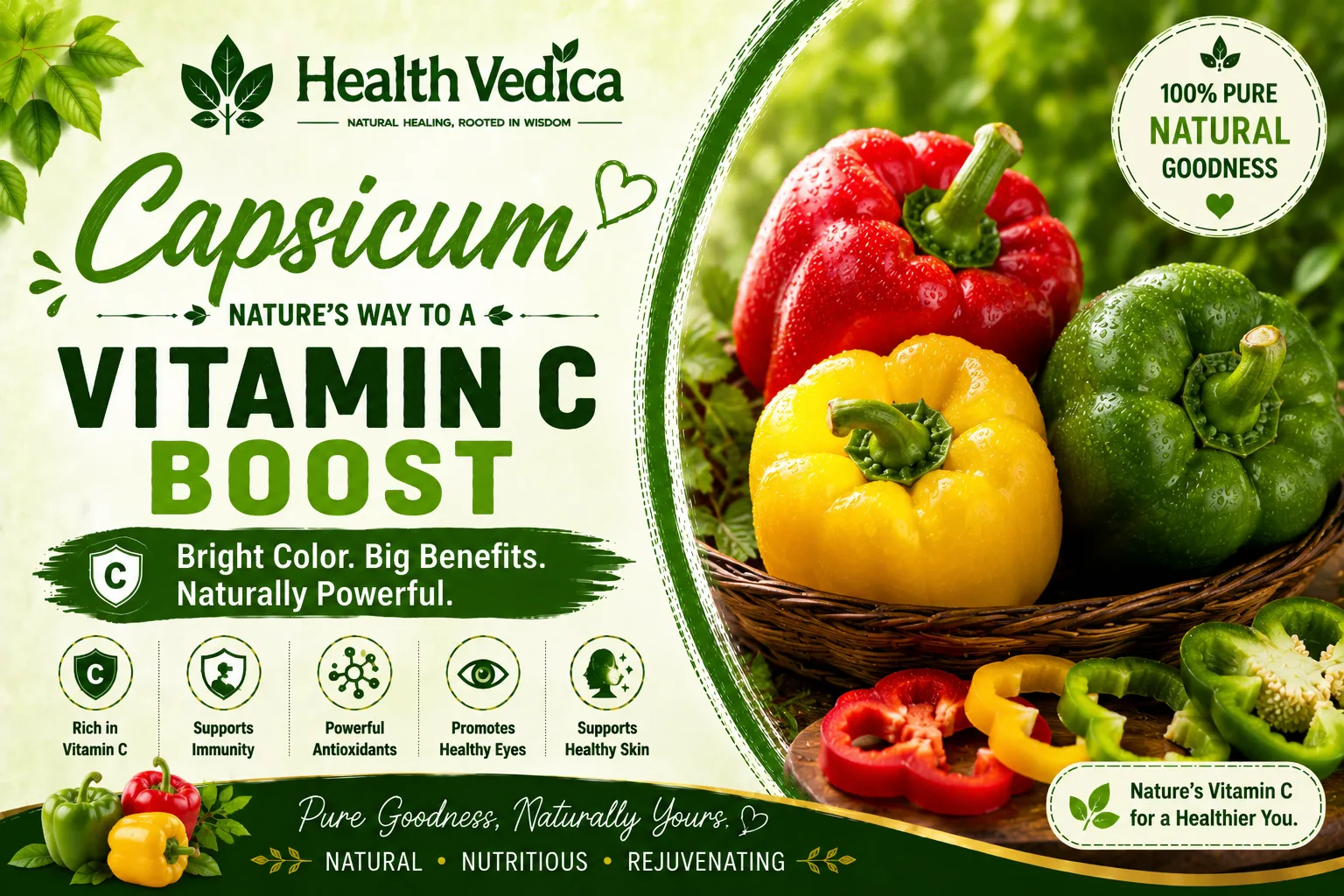
Capsicum, popularly known as Shimla Mirch in India, is a colorful, crunchy vegetable available in green, red, and yellow varieties. It is one of the richest plant-based sources of Vitamin C and antioxidants, making it a powerful immunity-boosting food. Capsicum has been an integral part of Indian cooking for centuries and is celebrated in both Ayurveda and modern nutrition for its anti-inflammatory and metabolic benefits.
📊 Nutritional Value Per 100g
| Nutrient | Amount | % Daily Value |
|---|---|---|
| Calories | 31 kcal | 2% |
| Carbohydrates | 6 g | 2% |
| Protein | 1 g | 2% |
| Fat | 0.3 g | 0% |
| Fiber | 2.1 g | 8% |
| Vitamin C | 128 mg | 142% |
| Vitamin A | 370 IU | 7% |
| Vitamin B6 | 0.3 mg | 18% |
| Folate | 46 mcg | 12% |
| Potassium | 211 mg | 6% |
| Iron | 0.4 mg | 2% |
📉 Glycemic Index
Capsicum has a very low glycemic index (GI of 15), making it an excellent vegetable for people managing diabetes and blood sugar levels. Its high fiber content slows sugar absorption into the bloodstream.
🕉️ Ayurvedic Properties & Dosha Effect
In Ayurveda, capsicum is considered Ushna (warm in potency) and Tikta (pungent in taste). It primarily pacifies Kapha dosha and Vata dosha. Red capsicum is considered more warming than green and may mildly aggravate Pitta if consumed in excess. It stimulates Agni (digestive fire) and supports metabolism.
💚 Health & Healing Benefits
Capsicum is a nutritional powerhouse with multiple proven health benefits. Its exceptionally high Vitamin C content — over 140% of daily needs per 100g — makes it one of the best natural immunity boosters. The antioxidants like capsanthin, quercetin, and lutein protect cells from oxidative stress and reduce the risk of chronic diseases. Capsicum supports eye health by providing lutein and zeaxanthin, which protect against macular degeneration. Its anti-inflammatory properties help reduce joint pain and symptoms of arthritis. Regular consumption aids weight management as it is low in calories yet filling. Capsicum also supports heart health by improving cholesterol profiles and reducing inflammation in blood vessels.
🍛 Indian Dietary Uses
Capsicum is extremely versatile in Indian cooking. It is used in sabzis (stir-fries), stuffed preparations, biryanis, salads, raita, and as a pizza and sandwich topping. Kadai Paneer and Capsicum Rice are beloved Indian dishes. It can also be consumed raw in salads for maximum Vitamin C retention.