🌿 Introduction
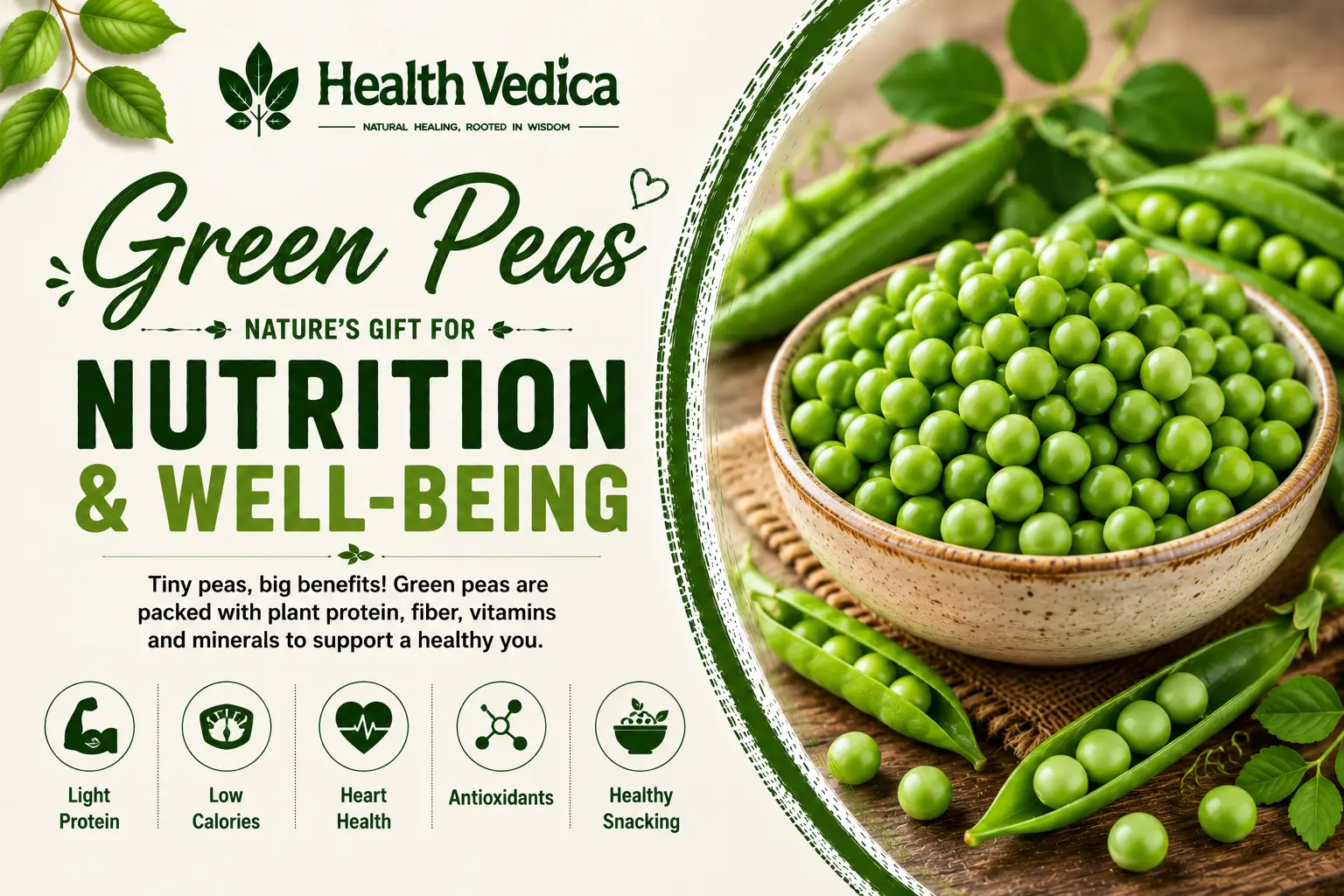
Green Peas, known as Matar in India, are small, round, sweet legume seeds widely used in Indian cooking from North to South. They are nutritional heavyweights, unusually high in protein and fiber for a fresh vegetable, and rich in Vitamins C, K, B1, B6, folate, and powerful antioxidants. Green peas have a unique combination of nutrients that support heart health, blood sugar regulation, and immunity. Both fresh seasonal peas and year-round frozen peas are commonly used in Indian kitchens.
📊 Nutritional Value Per 100g (Fresh)
| Nutrient | Amount | % Daily Value |
|---|---|---|
| Calories | 81 kcal | 4% |
| Carbohydrates | 14.5 g | 5% |
| Protein | 5.4 g | 11% |
| Fat | 0.4 g | 1% |
| Fiber | 5.1 g | 18% |
| Vitamin C | 40 mg | 44% |
| Vitamin K | 24.8 mcg | 21% |
| Vitamin B1 (Thiamine) | 0.27 mg | 22% |
| Vitamin B6 | 0.17 mg | 10% |
| Folate | 65 mcg | 16% |
| Manganese | 0.41 mg | 18% |
| Iron | 1.5 mg | 8% |
| Potassium | 244 mg | 7% |
📉 Glycemic Index
Green peas have a low to moderate glycemic index of around 48–54, significantly moderated by their very high fiber content (5.1g per 100g). The combination of protein and fiber slows gastric emptying and glucose absorption, preventing sharp blood sugar spikes. They are considered safe for diabetics when consumed in normal serving sizes.
🕉️ Ayurvedic Properties & Dosha Effect
In Ayurveda, fresh green peas are considered Madhura (sweet), Guru (slightly heavy), and Sheeta (cooling). They primarily pacify Pitta dosha. Dried peas increase Vata and should be consumed with digestive spices. Fresh seasonal peas cooked with ghee, ginger, and cumin are considered the most beneficial preparation in Ayurveda for optimal nutrient absorption and digestion.
💚 Health & Healing Benefits
Green peas stand out among vegetables for their remarkably high protein content (5.4g per 100g) and fiber (5.1g), making them among the most nutritionally complete plant foods available fresh. Their high Vitamin C (44% DV) supports immunity, collagen production, and iron absorption. Folate (65 mcg) is essential for DNA synthesis and fetal development. The coumestrol in green peas has demonstrated protective effects against stomach cancer in epidemiological studies. Their unique combination of soluble and insoluble fiber supports gut health, lowers LDL cholesterol, and prevents constipation. Green peas are rich in lutein and zeaxanthin carotenoids that protect eye health. The Thiamine (B1) content supports energy metabolism and nerve function. Green peas are also a significant plant-based source of iron.
🍛 Indian Dietary Uses
Green peas are used in Matar Paneer, Aloo Matar, Matar Rice (Pea Pulao), Matar Soup, Keema Matar, parathas, samosas, and chaat. Frozen peas retain most of their nutrition and are an excellent year-round option. Freshly harvested seasonal peas in winter are a prized delicacy in North Indian cooking.