🌿 Introduction
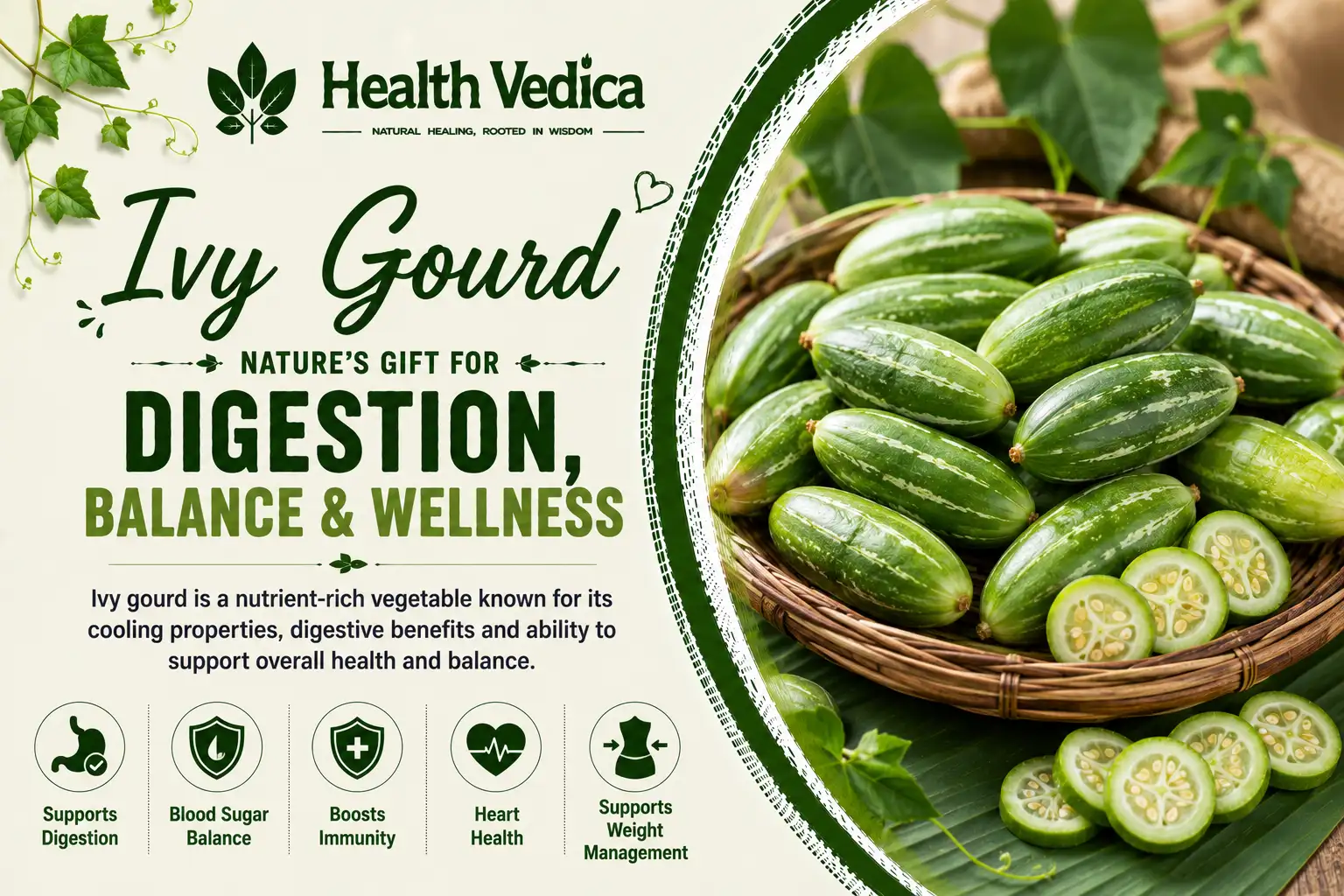
Ivy Gourd, known as Tindora, Kundru, or Dondakaya across different parts of India, is a small, striped green vegetable particularly popular in South Indian and Maharashtrian cooking. It holds an important place in traditional Ayurvedic and folk medicine, most notably for its anti-diabetic properties. Modern research has confirmed that ivy gourd contains compounds that mimic the activity of insulin and can significantly help regulate blood sugar levels.
📊 Nutritional Value Per 100g
| Nutrient | Amount | % Daily Value |
|---|---|---|
| Calories | 18 kcal | 1% |
| Carbohydrates | 3.1 g | 1% |
| Protein | 1.2 g | 2% |
| Fat | 0.1 g | 0% |
| Fiber | 1.6 g | 6% |
| Vitamin C | 1.4 mg | 2% |
| Beta-Carotene | 290 mcg | — |
| Iron | 1.4 mg | 8% |
| Calcium | 40 mg | 4% |
| Phosphorus | 30 mg | 3% |
| B-Vitamins (B1, B2, B3) | Moderate | — |
📉 Glycemic Index
Ivy gourd has an extremely low glycemic index and very low carbohydrate content, making it one of the most ideal vegetables for people with diabetes. Its natural active compounds are believed to interfere with glucose metabolism in a manner similar to insulin sensitizers.
🕉️ Ayurvedic Properties & Dosha Effect
In Ayurveda, Ivy Gourd (Bimbi) is classified as Tridoshahara — balancing to all three doshas when used appropriately. It is considered Laghu (light), Sheeta (cooling), and Tikta (slightly bitter). Traditional Ayurvedic texts describe its root and leaves as medicinal, used for managing Prameha (diabetes), skin disorders, and liver disease. It is recommended as a dietary food for people with metabolic disorders.
💚 Health & Healing Benefits
The most significant benefit of ivy gourd is its well-studied anti-diabetic activity. The plant contains active phytoconstituents including β-sitosterol and coccinin that have demonstrated insulin-like activity in multiple studies, helping lower fasting blood glucose levels. Ivy gourd is anti-inflammatory and has been used traditionally to reduce fever, joint inflammation, and skin disorders. Its beta-carotene content supports eye health and immune function. As a very low-calorie vegetable (18 kcal per 100g), it is excellent for weight management. The iron content (1.4 mg per 100g) is relatively good for a vegetable and helps in preventing mild anemia when consumed regularly. It also supports healthy liver function and is used as a liver protective food in traditional medicine.
🍛 Indian Dietary Uses
Tindora is widely used in stir-fry preparations across India — Tindora Masala, Dondakaya Vepudu (Andhra-style stir-fry), Kundru ki Sabzi (North Indian), and as a side dish in thalis. It can be sliced and sautéed with mustard seeds, curry leaves, and coconut for a classic South Indian preparation.