🌿 Introduction
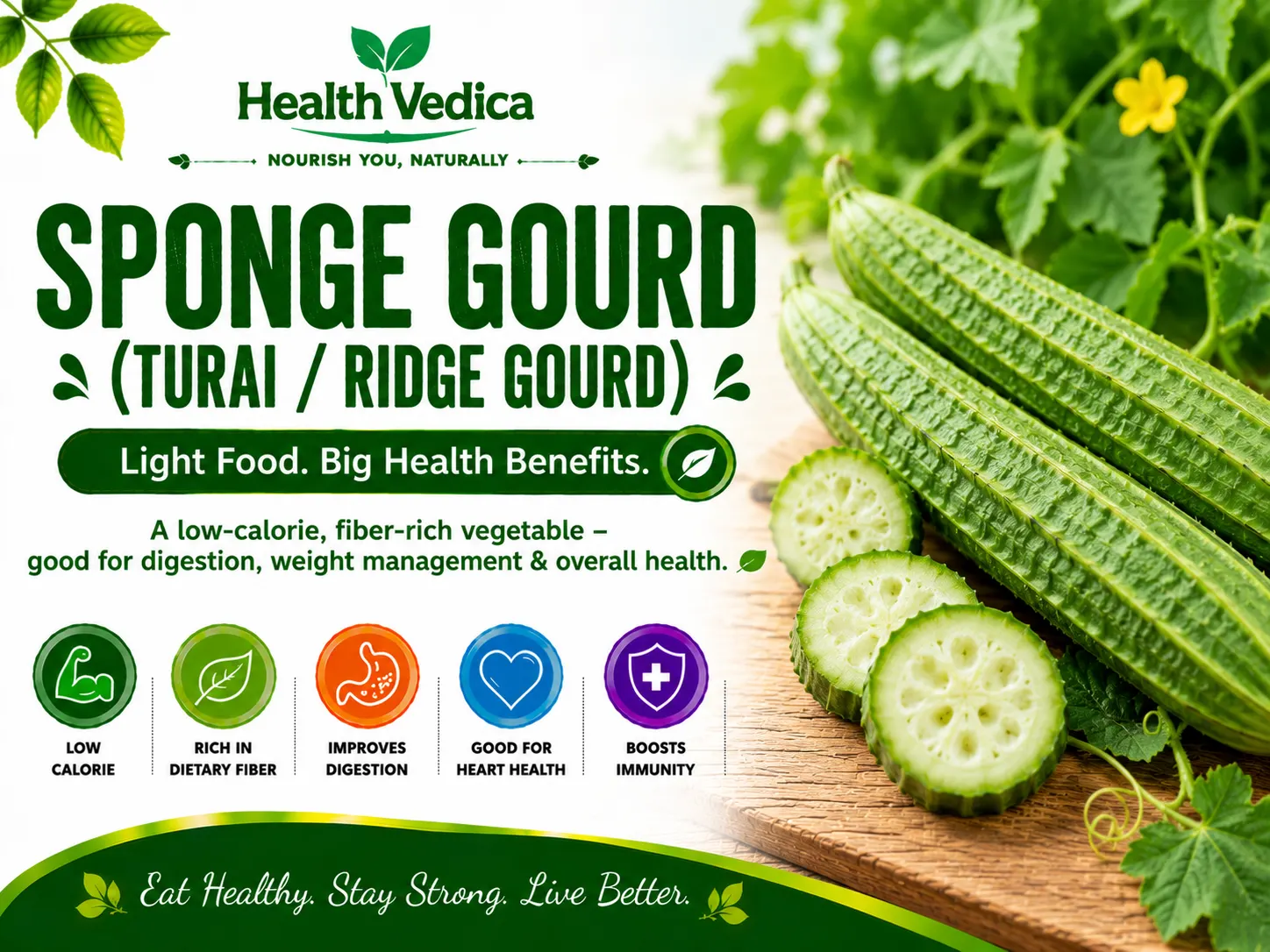
Sponge Gourd (Luffa cylindrica), also known as Nenua, Gilki or smooth Turai, is a nutritious summer vegetable belonging to the Cucurbitaceae (gourd) family. It is widely consumed across India in curries, stir-fries, dals and soups. With over 94% water content, sponge gourd is naturally low in calories yet provides dietary fiber, vitamin C, potassium and valuable antioxidants. Ayurveda considers sponge gourd a cooling vegetable that supports digestion, liver function, skin health and natural body detoxification. It is especially beneficial during hot weather due to its hydrating properties.
📊 Nutritional Value Per 100g of Sponge Gourd
| Nutrient | Amount | % Daily Value (DV) |
|---|---|---|
| Calories | 20 kcal | 1% |
| Protein | 1.2 g | 2% |
| Total Fat | 0.2 g | <1% |
| Carbohydrates | 4.3 g | 2% |
| Dietary Fiber | 1.2 g | 4% |
| Natural Sugars | 2.1 g | — |
| Vitamin C | 12 mg | 13% |
| Vitamin A | 20 mcg | 2% |
| Potassium | 139 mg | 3% |
| Calcium | 18 mg | 2% |
| Magnesium | 13 mg | 3% |
| Iron | 0.4 mg | 2% |
| Water | 94.6 g | — |
📉 Glycemic Index
Sponge Gourd has a very low glycemic index of around 15. It is low in carbohydrates and calories, making it suitable for individuals with diabetes and those following low-calorie diets.
🧬 Powerful Plant Compounds
Sponge Gourd contains flavonoids, phenolic compounds, cucurbitacins (in very small natural amounts), carotenoids, vitamin C and various antioxidant phytochemicals that help reduce oxidative stress and support healthy ageing.
💊 Vitamins & Minerals Explained
Vitamin C supports immunity and collagen production. Potassium contributes to healthy blood pressure and muscle function, while dietary fiber improves digestive health. Small amounts of vitamin A and carotenoids support healthy skin and vision.
🕉️ Ayurvedic Properties & Dosha Effect
According to Ayurveda, Sponge Gourd possesses Madhura (sweet) and mildly Tikta (bitter) tastes with Sheeta Veerya (cooling potency). It is considered Laghu (light) and easy to digest. It helps balance Pitta and Kapha Doshas, supports liver function, improves bowel movements and promotes healthy skin. Excessive intake may aggravate Vata Dosha in some individuals because of its light nature.
💚 Evidence-Based Health Benefits
Supports Digestive Health: Sponge Gourd contains dietary fiber and abundant water that help prevent constipation, improve bowel regularity and promote healthy digestion.
Promotes Healthy Skin: Vitamin C supports collagen synthesis while antioxidants help protect skin cells against oxidative damage.
Supports Liver Function: Traditional Ayurvedic medicine recommends sponge gourd for maintaining healthy liver function and natural detoxification.
Weight Management: Extremely low in calories and rich in water, sponge gourd promotes satiety while reducing overall calorie intake.
Helps Maintain Healthy Blood Sugar: Its low glycemic index and minimal carbohydrate content make it suitable for balanced diabetic diets.
Heart Health: Potassium supports healthy blood pressure while antioxidants contribute to cardiovascular wellness.
Natural Summer Hydration: Over 94% water content helps replenish fluids and maintain hydration during warm weather.
👨👩👧 Who Should Eat Sponge Gourd?
Sponge Gourd is suitable for children, older adults, pregnant women, athletes, people with diabetes, individuals aiming for weight management and anyone looking for a light, nutritious vegetable.
🚫 Who Should Limit Sponge Gourd?
Never consume sponge gourds that taste extremely bitter because excessive bitterness may indicate unusually high levels of cucurbitacins, which can cause serious gastrointestinal irritation. Individuals with chronic low blood pressure should consume very large quantities cautiously because of its mild diuretic nature.
🌿 Healthy Recipes & Home Remedies
Sponge Gourd Curry: Cook with onions, tomatoes and mild Indian spices for a healthy everyday meal.
Nenua Chana Dal: Prepare sponge gourd with Bengal gram for a protein-rich dish.
Sponge Gourd Soup: Blend cooked sponge gourd with garlic, ginger and black pepper.
Sponge Gourd Peel Chutney: Fresh peels can be transformed into a flavorful fiber-rich chutney.
Stuffed Sponge Gourd: Fill with paneer, tofu or spiced lentils for a wholesome meal.
🥗 Best Ways to Eat Sponge Gourd
Light steaming, sautéing or pressure cooking preserves nutrients while maintaining texture. Avoid prolonged cooking that may reduce vitamin C content. Young, tender gourds offer the best flavor and nutritional value.
🍽️ Best Food Combinations
Sponge Gourd pairs well with moong dal, chana dal, garlic, ginger, cumin, coriander, turmeric, tomatoes and whole-grain rotis.
🧊 Storage Tips
Store fresh sponge gourds in the refrigerator for up to one week. Choose firm, green gourds with smooth skin and avoid soft or shriveled vegetables.
📅 Daily Recommended Intake
100–200 grams of cooked sponge gourd daily is suitable for most healthy adults.
⚠️ Precautions
Do not consume extremely bitter sponge gourds. High cucurbitacin content can cause severe stomach pain, vomiting and diarrhea. Wash thoroughly before cooking to remove dirt and pesticide residues.
🔬 Scientific Highlights
Studies suggest that sponge gourd contains antioxidant flavonoids, phenolic compounds and carotenoids that may help reduce oxidative stress and support healthy liver and metabolic function. Laboratory studies also indicate anti-inflammatory and hepatoprotective properties, though additional human clinical research is needed.
❌ Common Myths & Facts
❌ Myth: Sponge gourd has almost no nutritional value because it contains mostly water.
✅ Fact: Despite its high water content, sponge gourd provides fiber, vitamin C, potassium and antioxidant phytochemicals.
❌ Myth: Sponge gourd peel should always be discarded.
✅ Fact: Fresh peels are edible and can be used to prepare nutritious chutneys rich in dietary fiber.
❌ Myth: All bitter sponge gourds are healthy.
✅ Fact: Extremely bitter sponge gourds should never be eaten because high cucurbitacin levels may cause food poisoning.
🌍 Fun Facts
- Mature sponge gourds naturally dry into the famous loofah sponge used for bathing and cleaning.
- Sponge Gourd belongs to the same family as cucumber, pumpkin, watermelon and bottle gourd.
- Young sponge gourds are harvested before the fibrous sponge develops inside.
- India is among the largest producers of sponge gourd.
- The flowers attract bees and other pollinators, making sponge gourd valuable for biodiversity.
🥬 Edible Parts & Their Benefits
| Edible Part | Health Benefits |
|---|---|
| Fruit | Rich in water, vitamin C, fiber and antioxidants. |
| Peel | Contains dietary fiber and polyphenols; commonly used in chutneys. |
| Young Leaves | Provide antioxidants and micronutrients in traditional cuisines. |
| Flowers | Edible and used in traditional recipes in several regions. |
⏰ Best Time to Eat
Sponge Gourd is best consumed during lunch or dinner, especially in summer. It combines well with dals, whole grains and legumes to create balanced meals that are easy to digest.
☠️ Toxicity Warning
If Sponge Gourd tastes extremely bitter, stop eating it immediately. Excessive bitterness may indicate unusually high concentrations of cucurbitacins, natural compounds that can cause severe stomach pain, vomiting, diarrhea and food poisoning. Always discard unusually bitter gourds.