🌿 Introduction
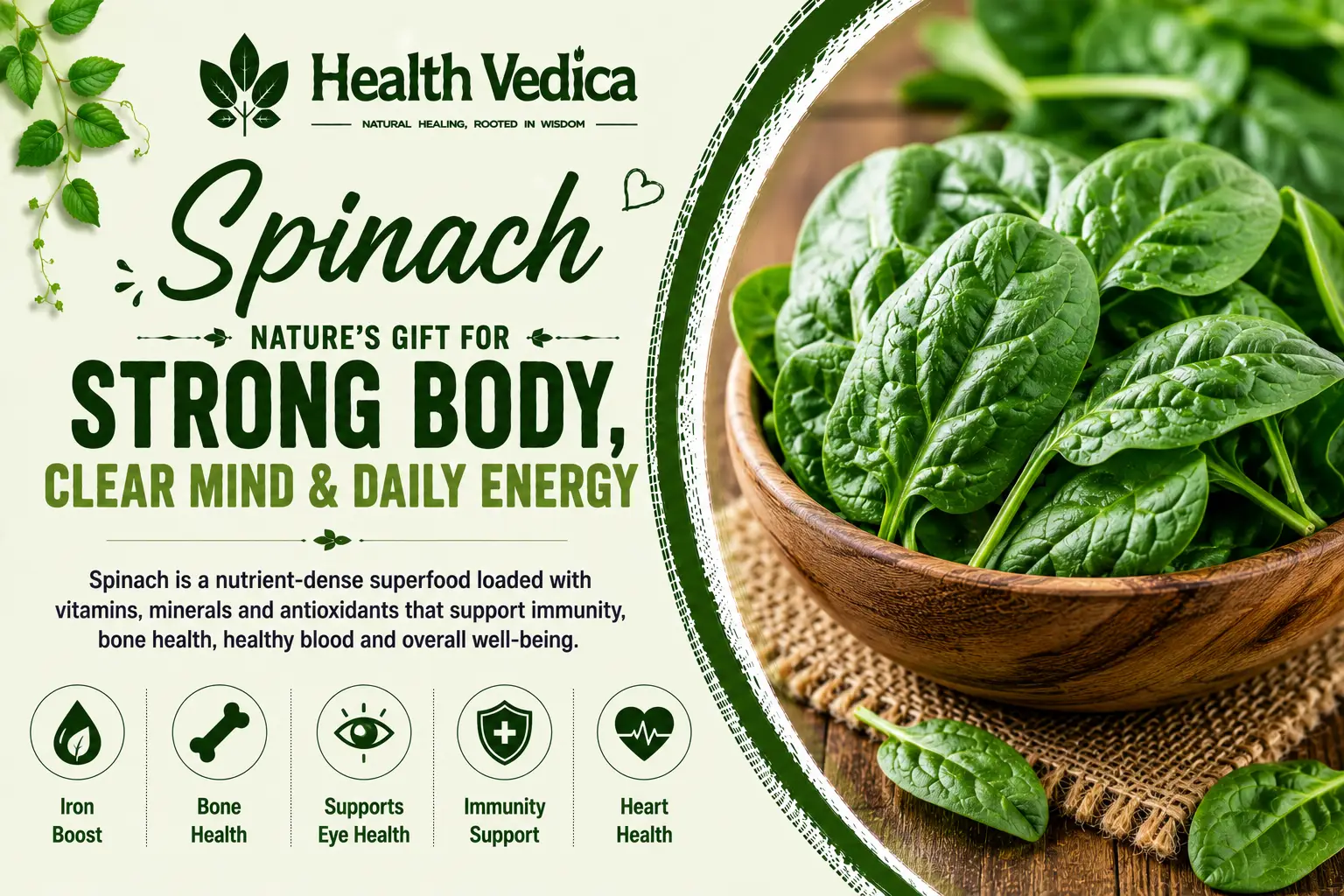
Spinach, known as Palak across India, is one of the world's most celebrated nutritional supergreens. It is extraordinarily rich in iron, calcium, Vitamin K, Vitamin A, folate, lutein, and a range of powerful antioxidants. From the beloved Palak Paneer to spinach smoothies and Palak Dal, this dark leafy green is a staple of healthy Indian cooking. While famously associated with iron (the Popeye effect), spinach's real superpowers lie in its Vitamin K content, eye-protective carotenoids, and anti-inflammatory compounds.
📊 Nutritional Value Per 100g (Raw)
| Nutrient | Amount | % Daily Value |
|---|---|---|
| Calories | 23 kcal | 1% |
| Protein | 2.9 g | 6% |
| Carbohydrates | 3.6 g | 1% |
| Fat | 0.4 g | 1% |
| Fiber | 2.2 g | 8% |
| Vitamin K | 483 mcg | 402% |
| Vitamin A | 9377 IU | 188% |
| Folate | 194 mcg | 49% |
| Vitamin C | 28.1 mg | 31% |
| Iron | 2.7 mg | 15% |
| Calcium | 99 mg | 10% |
| Magnesium | 79 mg | 19% |
| Potassium | 558 mg | 16% |
| Lutein + Zeaxanthin | 12198 mcg | — |
📉 Glycemic Index
Spinach has an extremely low glycemic index (GI around 15) and is virtually carbohydrate-free in practical serving sizes. It is one of the most diabetes-friendly foods available and can be consumed freely by people managing blood sugar. Spinach may even help reduce blood sugar by improving insulin sensitivity through its alpha-lipoic acid content.
🕉️ Ayurvedic Properties & Dosha Effect
In Ayurveda, Palak is considered Sheeta (cooling), Guru (slightly heavy), and Madhura (sweet). It pacifies Pitta and Vata doshas and nourishes Rakta (blood) dhatu. It is a Rakta Shodhak (blood purifier) and Brimhana (nourishing) herb. Ayurveda recommends cooking spinach with ghee, cumin, and black pepper to enhance iron absorption (fat-soluble nutrient absorption) and to reduce Vata-aggravating properties. Raw or poorly cooked spinach is considered harder to digest in Ayurvedic texts.
💚 Health & Healing Benefits
Spinach has the highest lutein and zeaxanthin content of any commonly consumed vegetable (12,198 mcg per 100g) — carotenoids that are directly deposited in the retina and protect against macular degeneration and cataracts. An extraordinary 402% of the daily Vitamin K requirement is met per 100g of raw spinach, supporting bone mineralization, blood clotting regulation, and arterial calcification prevention. The folate content (49% DV) supports cell division, DNA repair, and fetal neural development. Iron content (2.7 mg/100g) is significant but it is non-heme iron affected by spinach's own oxalate content — pairing with Vitamin C-rich foods and lightly cooking spinach significantly improves iron bioavailability. Magnesium (19% DV) supports energy production, muscle function, and insulin signaling. Spinach contains alpha-lipoic acid, a potent antioxidant that improves insulin sensitivity and has neuroprotective properties. The kaempferol and quercetin in spinach have demonstrated anti-cancer and anti-inflammatory effects.
🍛 Indian Dietary Uses
Palak is used in Palak Paneer, Palak Dal, Palak Paratha, Palak Rice (Hara Pulao), Palak Soup, Palak Khichdi, and Palak Raita. Adding lemon juice to palak preparations increases iron bioavailability significantly. Spinach smoothies and fresh juice are increasingly popular as part of Indian health and wellness routines.