🌿 Introduction
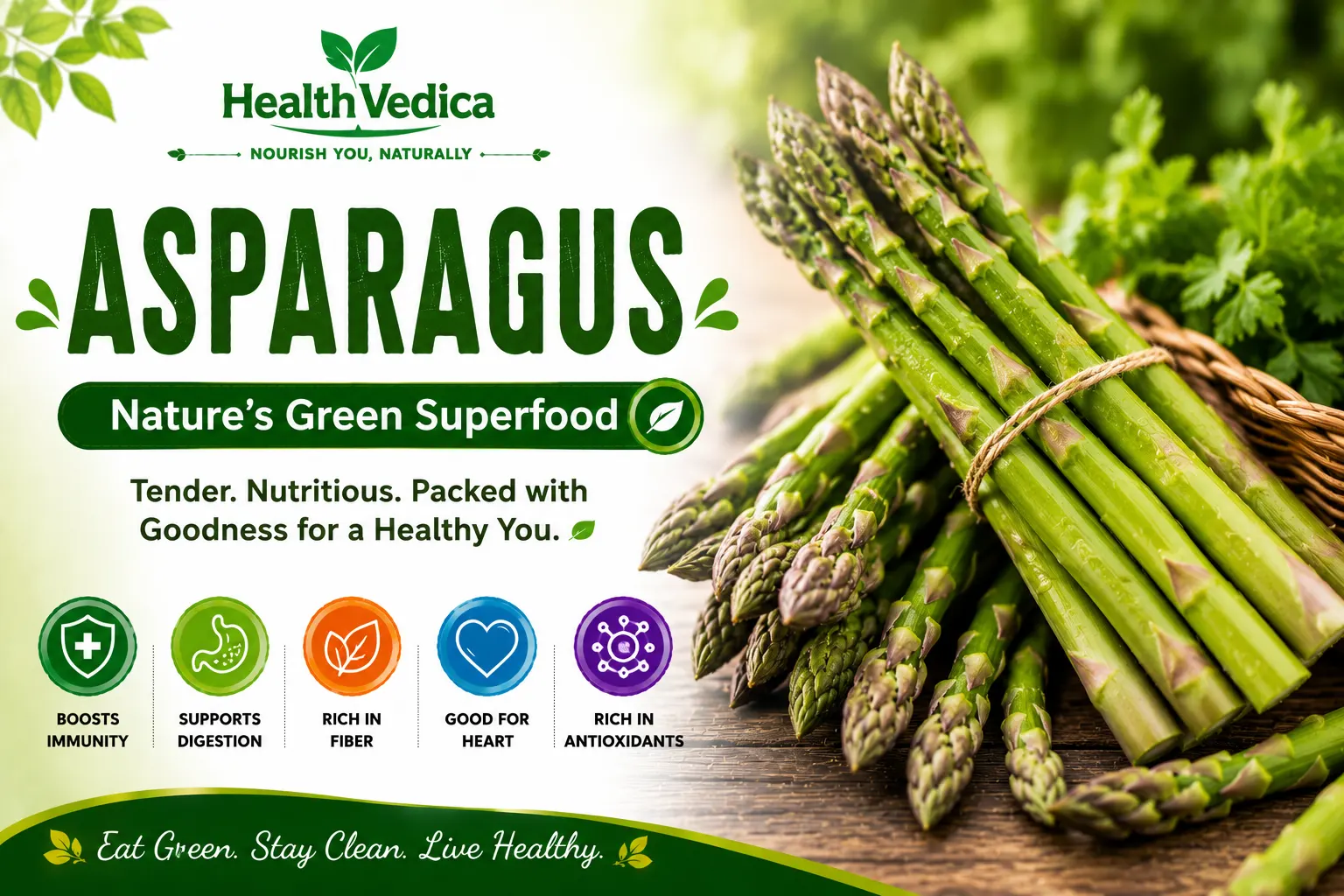
Asparagus (Asparagus officinalis) is a nutrient-rich green vegetable known for its tender shoots, delicate flavour and impressive concentration of vitamins, minerals and antioxidants. It has been consumed for thousands of years across Mediterranean, European and Asian cultures as both a food and traditional wellness ingredient.
Asparagus is naturally low in calories and carbohydrates while being rich in fiber, folate, vitamin K, vitamin C, antioxidants and a special prebiotic fiber called inulin. These nutrients make asparagus valuable for supporting digestion, metabolism, heart health and overall wellness.
In India, asparagus is sometimes associated with the Ayurvedic herb Shatavari due to similarity in names, but they are different plants. Shatavari (Asparagus racemosus) is an Ayurvedic medicinal herb, while culinary asparagus is mainly used as a vegetable.
📊 Nutritional Value Per 100g of Asparagus
| Nutrient | Amount | % Daily Value (DV) |
|---|---|---|
| Calories | 20 kcal | 1% |
| Protein | 2.2 g | 4% |
| Total Fat | 0.1 g | <1% |
| Carbohydrates | 3.9 g | 1% |
| Dietary Fiber | 2.1 g | 8% |
| Water Content | 93 g | — |
| Folate (Vitamin B9) | 52 mcg | 13% |
| Vitamin K | 41.6 mcg | 35% |
| Vitamin C | 5.6 mg | 6% |
| Vitamin A | 38 mcg | 4% |
| Potassium | 202 mg | 4% |
| Iron | 2.1 mg | 12% |
| Manganese | 0.2 mg | 9% |
📉 Glycemic Index
Asparagus has an extremely low glycemic impact because it contains very few digestible carbohydrates. Its fiber content helps slow digestion and supports stable blood glucose levels.
🧬 Powerful Plant Compounds
Asparagus contains asparagine, glutathione, rutin, flavonoids, polyphenols and saponins. These compounds contribute antioxidant activity and help protect cells from oxidative stress.
💊 Vitamins & Minerals Explained
Folate supports healthy cell division and is especially important during pregnancy. Vitamin K contributes to bone health and normal blood clotting. Vitamin C supports immunity and collagen production. Potassium helps maintain fluid balance and healthy blood pressure.
🕉️ Ayurvedic Perspective & Dosha Effect
Culinary asparagus is not extensively described in classical Ayurveda in the same way as Shatavari, but asparagus belongs to the same botanical genus as Shatavari. Traditional Ayurvedic discussions mainly focus on Asparagus racemosus (Shatavari), a medicinal root.
As a vegetable, asparagus is considered light, nourishing and supportive for digestion. It may help balance Pitta and Kapha due to its cooling and fiber-rich nature. People with high Vata may prefer cooked asparagus with warming spices and healthy fats.
💚 Evidence-Based Health Benefits
Supports Digestive Health: Asparagus contains fiber and inulin, a prebiotic fiber that nourishes beneficial gut bacteria and supports intestinal health.
Natural Detox Support: Glutathione and antioxidants in asparagus support the body's natural detoxification pathways, especially liver antioxidant systems.
Heart Health Benefits: Potassium supports healthy blood pressure, while folate helps maintain normal homocysteine metabolism.
Supports Pregnancy Nutrition: Folate is essential for normal fetal development and is an important nutrient during pregnancy.
Weight Management: Low calories and high fiber make asparagus a filling vegetable suitable for calorie-conscious diets.
Blood Sugar Support: Fiber slows carbohydrate absorption and contributes to better glucose management.
Anti-Aging Antioxidant Support: Glutathione and polyphenols help protect cells from oxidative damage.
🌿 Asparagus & Kidney Health
Asparagus has traditionally been considered a natural diuretic food because of its high water content and asparagine compound. It may support normal fluid balance, but it should not be considered a treatment for kidney disease.
👨👩👧 Who Should Eat Asparagus?
Asparagus is suitable for healthy adults, people following weight-management diets, individuals seeking high-fiber vegetables and those looking to increase antioxidant-rich foods.
🚫 Who Should Limit Asparagus?
People with gout or uric acid concerns may need moderation because asparagus contains purines. Individuals with kidney conditions should follow personalized dietary advice.
🌿 Healthy Recipes & Traditional Preparations
Grilled Asparagus: Roasted with olive oil, pepper and herbs for a simple nutritious side dish.
Asparagus Soup: A light creamy soup rich in fiber and antioxidants.
Asparagus Stir Fry: Cooked with garlic, sesame and vegetables.
Asparagus Salad: Combined with nuts, lemon and fresh greens.
Asparagus Curry: Indian-style preparation with spices and coconut.
🥗 Best Ways to Eat Asparagus
Steaming, grilling, roasting or lightly sautéing preserves nutrients. Avoid overcooking because prolonged heat can reduce vitamin content.
🍽️ Best Food Combinations
Asparagus pairs well with olive oil, lemon, garlic, black pepper, nuts, seeds, eggs, lentils and whole grains.
🧊 Storage Tips
Store asparagus in the refrigerator with the stems wrapped in a damp cloth or placed upright in water. Fresh asparagus is best consumed within a few days.
📅 Daily Recommended Intake
100–200 grams of cooked asparagus can be included regularly as part of a balanced diet.
⚠️ Precautions
Some people notice a strong urine smell after eating asparagus due to sulfur-containing compounds. This is harmless. People with gout or specific kidney conditions should consume it according to medical advice.
🔬 Scientific Highlights
Scientific research on asparagus highlights its role as a source of antioxidants, prebiotic fiber, folate and bioactive compounds. Studies suggest potential benefits for gut microbiota, cardiovascular health and cellular protection.
❌ Common Myths & Facts
❌ Myth: Asparagus and Shatavari are exactly the same plant.
✅ Fact: They belong to the same genus but are different species with different uses.
❌ Myth: Asparagus completely detoxifies the body.
✅ Fact: It supports natural antioxidant and detoxification systems but does not replace liver or kidney function.
❌ Myth: Asparagus has no protein.
✅ Fact: It provides a useful amount of plant protein compared with many vegetables.
🌍 Fun Facts
- Asparagus has been cultivated for more than 2,000 years.
- It was considered a luxury vegetable in ancient Rome.
- White asparagus is grown without sunlight exposure, preventing chlorophyll formation.
- Asparagus can grow several inches in one day under ideal conditions.
- The vegetable is known for its unique sulfur-containing compounds.
🥬 Edible Parts & Their Benefits
| Edible Part | Health Benefits |
|---|---|
| Tender Shoots | Rich in fiber, folate, antioxidants and vitamins. |
| Stems | Provide fiber and minerals when cooked properly. |
| Seeds (Rare Culinary Use) | Contain plant nutrients and oils. |
🌱 Seasonality in India
| Season | Availability |
|---|---|
| Peak Season | February – June |
| Best Climate | Cool and moderate temperatures |
| Buying Tip | Select firm bright green stalks with compact tips. |
⏰ Best Time to Eat
Asparagus can be consumed during lunch or dinner. Combining it with healthy fats improves absorption of antioxidant compounds.