🌿 Introduction
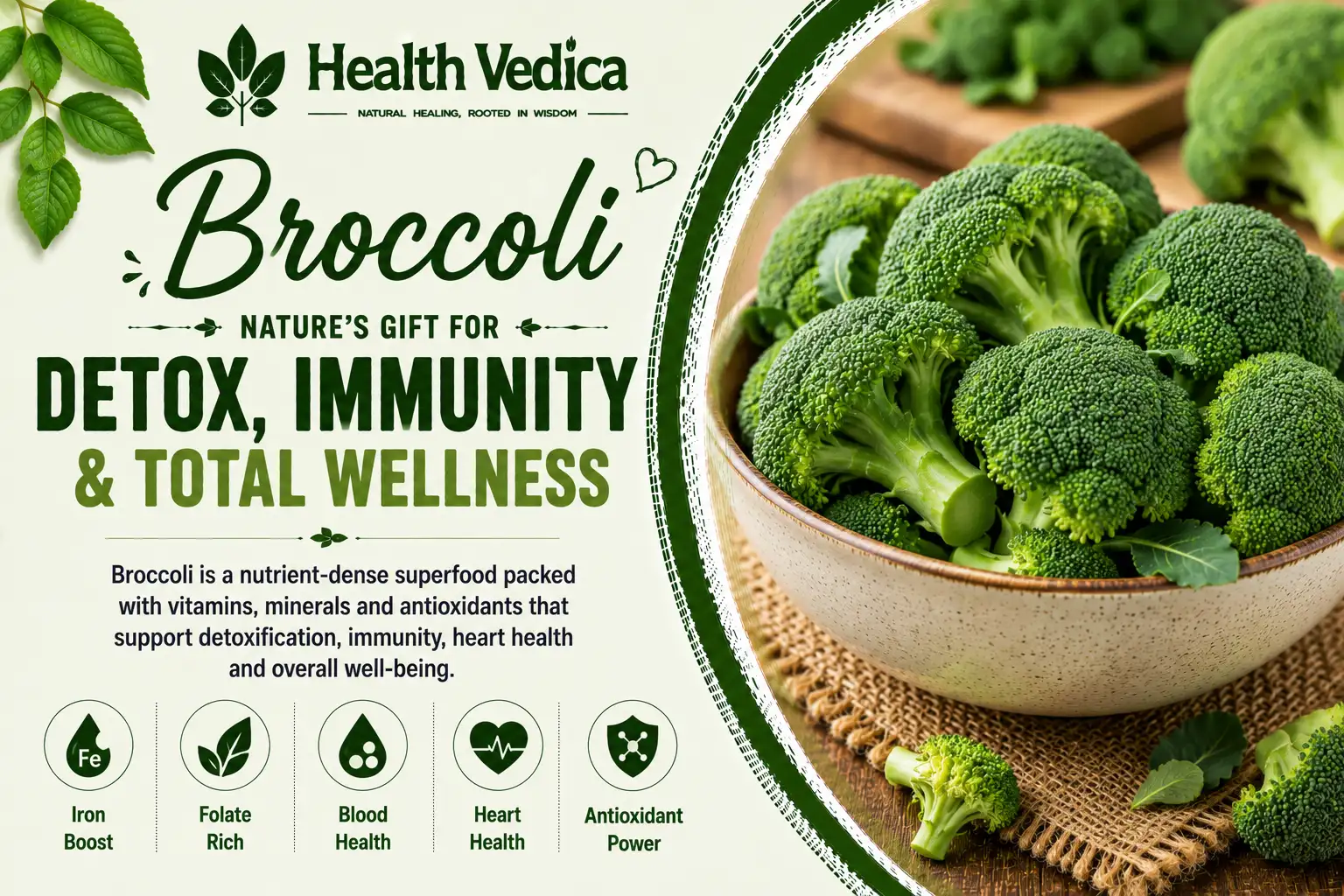
Broccoli is a cruciferous vegetable belonging to the same family as cauliflower, cabbage, and Brussels sprouts, and is widely regarded as one of the most nutritionally complete vegetables on earth. It has gained enormous popularity in India over the last two decades as awareness of its cancer-fighting, immunity-boosting, and hormonal-balancing properties has grown. Broccoli's most extraordinary compound — sulforaphane — is arguably the most studied anti-cancer phytonutrient in modern nutritional science.
📊 Nutritional Value Per 100g
| Nutrient | Amount | % Daily Value |
|---|---|---|
| Calories | 34 kcal | 2% |
| Carbohydrates | 6.6 g | 2% |
| Protein | 2.8 g | 6% |
| Fat | 0.4 g | 1% |
| Fiber | 2.6 g | 9% |
| Vitamin C | 89.2 mg | 99% |
| Vitamin K | 101.6 mcg | 85% |
| Folate | 63 mcg | 16% |
| Vitamin A | 623 IU | 12% |
| Calcium | 47 mg | 5% |
| Iron | 0.7 mg | 4% |
| Potassium | 316 mg | 9% |
| Vitamin B6 | 0.18 mg | 11% |
| Sulforaphane (via Glucoraphanin) | Highest in broccoli sprouts | — |
| Lutein + Zeaxanthin | 1403 mcg | — |
| Indole-3-Carbinol | Significant | — |
📉 Glycemic Index
Broccoli has a very low glycemic index of around 15 and minimal carbohydrate content, making it one of the best vegetables for blood sugar management. It is safe for daily consumption by diabetics and is actively beneficial due to its chromium content, which improves insulin sensitivity.
🕉️ Ayurvedic Properties & Dosha Effect
While broccoli is not explicitly mentioned in classical Ayurvedic texts (being a relatively modern introduction to India), modern Ayurvedic practitioners classify it similarly to cauliflower (Phool Gobhi). It is considered Laghu (light), Ruksha (dry), and cooling in nature. It pacifies Pitta and Kapha and may slightly aggravate Vata when eaten raw or in excess. Cooking broccoli lightly with warming spices like cumin, turmeric, and ginger in ghee makes it more Vata-friendly and digestible.
💚 Health & Healing Benefits
Sulforaphane in broccoli is perhaps the most powerful anti-cancer compound found in any food. It activates the body's own antioxidant and detoxification enzymes, inhibits cancer cell growth, and promotes cancer cell apoptosis (programmed death). Research has shown sulforaphane to be particularly effective against breast, prostate, colon, lung, and bladder cancers. Broccoli contains nearly 99% of the daily Vitamin C requirement per 100g — supporting collagen synthesis, immune function, and wound healing. Vitamin K (85% DV) is critical for bone density and blood clotting. Indole-3-carbinol (I3C) in broccoli is a potent hormone regulator that helps balance estrogen levels, making broccoli particularly beneficial for women with PCOS, estrogen dominance, and hormone-sensitive cancers. Lutein and zeaxanthin protect eye health. Folate supports DNA repair and fetal development. Broccoli's fiber supports gut health and microbiome diversity. Chromium in broccoli enhances insulin sensitivity and supports blood sugar management.
🍛 Indian Dietary Uses
Broccoli is used in Indian cooking as a stir-fry (broccoli sabzi), in soups, salads, pasta, stir-fried rice, mixed vegetable preparations, and increasingly as a pizza topping. Lightly steaming or stir-frying broccoli for 3–5 minutes is the optimal cooking method to retain maximum sulforaphane and nutrient content while improving digestibility.