🌿 Introduction
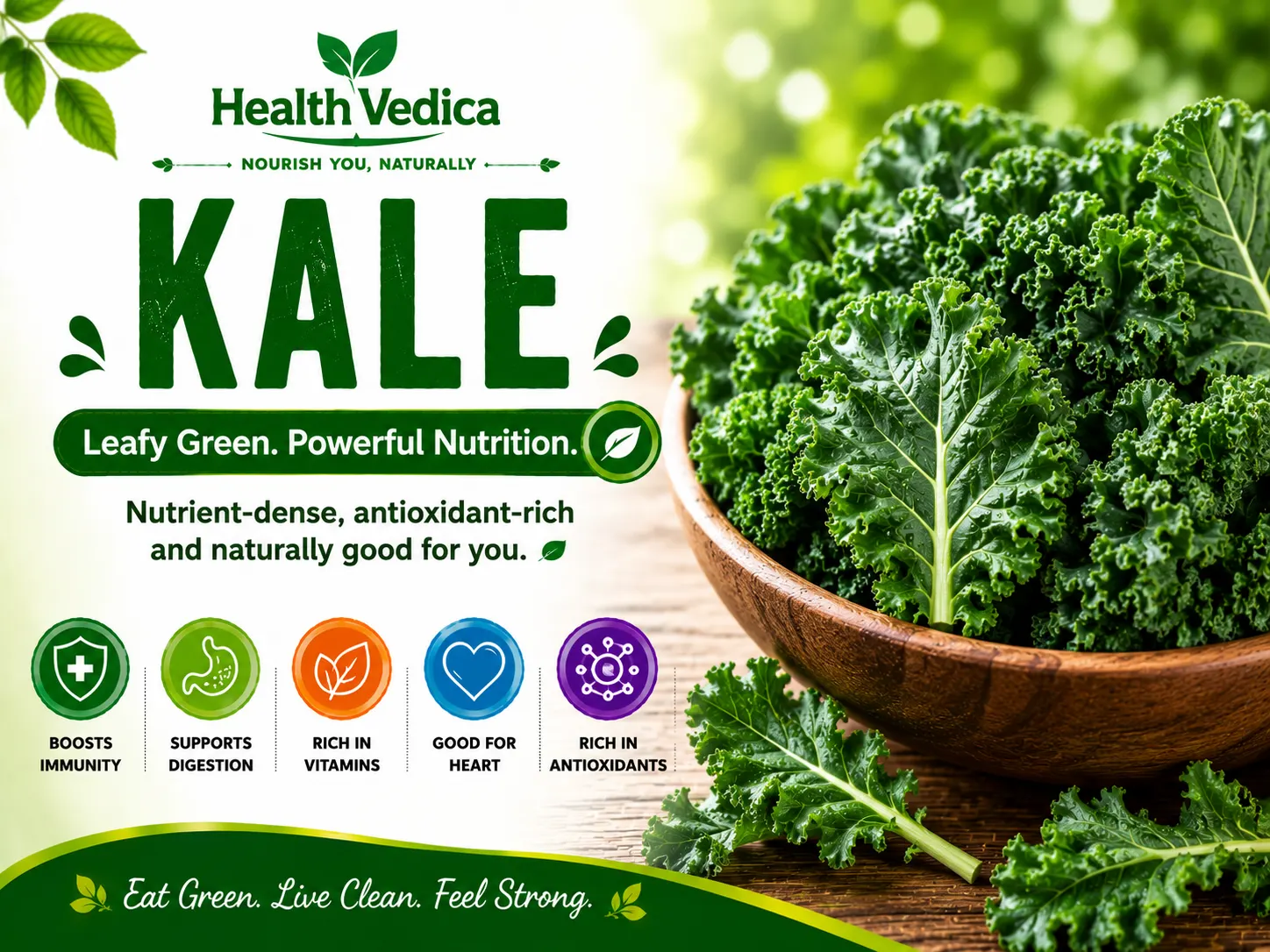
Kale (Brassica oleracea var. sabellica) is one of the most nutrient-dense leafy green vegetables in the world. It belongs to the cruciferous vegetable family, along with cabbage, broccoli, cauliflower and Brussels sprouts.
Known as a modern superfood, kale has gained worldwide popularity because of its exceptionally high concentration of vitamins, minerals, antioxidants and protective plant compounds. It provides vitamin K, vitamin C, beta-carotene, calcium, fiber and powerful phytonutrients while being very low in calories.
Although kale is not traditionally common in Indian cuisine, it can be incorporated into Indian-style preparations such as saag, stir-fries, soups and smoothies. It is especially valuable for people looking to increase leafy green vegetable intake.
📊 Nutritional Value Per 100g of Raw Kale
| Nutrient | Amount | % Daily Value (DV) |
|---|---|---|
| Calories | 35 kcal | 2% |
| Protein | 2.9 g | 6% |
| Total Fat | 1.5 g | 2% |
| Carbohydrates | 4.4 g | 2% |
| Dietary Fiber | 4.1 g | 15% |
| Vitamin K | 704 mcg | 587% |
| Vitamin C | 93.4 mg | 104% |
| Vitamin A (Beta-Carotene) | 241 mcg | 27% |
| Folate | 62 mcg | 16% |
| Calcium | 254 mg | 20% |
| Potassium | 348 mg | 7% |
| Magnesium | 33 mg | 8% |
| Manganese | 0.92 mg | 40% |
📉 Glycemic Index
Kale has an extremely low glycemic impact because it contains very few digestible carbohydrates. It is considered one of the best vegetables for maintaining balanced blood sugar levels.
🧬 Powerful Plant Compounds
Kale is rich in glucosinolates, sulforaphane, lutein, zeaxanthin, flavonoids and chlorophyll. These compounds are responsible for its antioxidant and protective properties.
💊 Vitamins & Minerals Explained
Vitamin K: Kale is one of the richest natural sources of vitamin K, supporting bone metabolism and normal blood clotting.
Vitamin C: Supports immunity, collagen formation and antioxidant defence.
Calcium: Helps maintain strong bones and teeth.
Beta-Carotene: Converted into vitamin A and supports vision, skin and immunity.
🕉️ Ayurvedic Perspective & Dosha Effect
Kale is not traditionally described in classical Ayurveda because it is a relatively modern leafy vegetable in Indian diets. However, based on its qualities, it can be considered a light, dry, cooling and fiber-rich vegetable.
Kale may support Pitta and Kapha balance because of its cooling and cleansing nature. Due to its dry and fibrous quality, people with increased Vata Dosha may prefer cooked kale with ghee, sesame oil or warming spices like cumin, ginger and black pepper.
💚 Evidence-Based Health Benefits
Powerful Antioxidant Protection: Kale contains high levels of vitamin C, carotenoids and flavonoids that help protect cells from oxidative stress.
Heart Health Support: Fiber, potassium and plant compounds in kale contribute to cardiovascular wellness by supporting healthy cholesterol and blood pressure levels.
Bone Health: Vitamin K and calcium support bone strength and healthy mineral metabolism.
Eye Health: Lutein and zeaxanthin accumulate in the retina and help protect against oxidative damage.
Supports Natural Detoxification: Glucosinolates support the body's natural detoxification enzyme systems.
Digestive Health: High fiber content supports bowel regularity and healthy gut bacteria.
Weight Management: Low calories with high nutrient density makes kale useful for calorie-controlled diets.
👁️ Kale & Eye Health
Kale is among the richest vegetable sources of lutein and zeaxanthin. These carotenoids help protect the macula, the central part of the retina responsible for detailed vision.
❤️ Kale & Cholesterol Support
Studies suggest that cruciferous vegetables like kale may support healthier cholesterol levels by providing soluble fiber and plant compounds that influence fat metabolism.
👨👩👧 Who Should Eat Kale?
Kale is suitable for healthy adults, fitness enthusiasts, people focusing on heart health, individuals wanting more antioxidants and those increasing vegetable intake.
🚫 Who Should Limit Kale?
People taking blood-thinning medication should maintain consistent vitamin K intake. Individuals with thyroid concerns may avoid excessive raw kale consumption because very high amounts of raw cruciferous vegetables may affect thyroid function in sensitive individuals.
🌿 Healthy Recipes & Preparations
Kale Saag: Indian-style cooked greens prepared with spices and lentils.
Kale Smoothie: Blended with fruits, yogurt or nuts for a nutrient-rich drink.
Kale Chips: Lightly baked kale leaves with herbs.
Kale Soup: A warming vegetable soup rich in fiber.
Kale Stir Fry: Cooked with garlic, spices and vegetables.
🥗 Best Ways to Eat Kale
Cooking kale lightly improves digestibility and reduces bitterness. Massaging raw kale leaves with lemon juice or olive oil can soften texture and improve taste.
🍽️ Best Food Combinations
Kale pairs well with lemon, garlic, ginger, turmeric, lentils, beans, nuts, seeds, yogurt and olive oil.
🧊 Storage Tips
Store kale in the refrigerator in a sealed container with a paper towel to absorb moisture. Fresh leaves should be firm and dark green.
📅 Daily Recommended Intake
50–100 grams of kale can be included regularly as part of a balanced diet.
⚠️ Precautions
Wash kale thoroughly before use. People taking anticoagulant medicines should monitor vitamin K intake. Those with thyroid disorders should avoid excessive consumption of large amounts of raw kale.
🔬 Scientific Highlights
Kale is extensively studied for its high antioxidant capacity, carotenoid content, vitamin K concentration and glucosinolate compounds. Regular consumption of cruciferous vegetables is associated with improved overall diet quality and protective health benefits.
❌ Common Myths & Facts
❌ Myth: Kale is only useful as a weight-loss food.
✅ Fact: Kale supports heart health, eye health, immunity and antioxidant protection.
❌ Myth: Raw kale is always healthier than cooked kale.
✅ Fact: Light cooking can improve digestibility while preserving many nutrients.
❌ Myth: Kale contains more protein than animal foods.
✅ Fact: Kale provides plant protein but is mainly valuable for vitamins, minerals and antioxidants.
🌍 Fun Facts
- Kale has been cultivated for more than 2,000 years.
- It survived harsh climates because of its cold tolerance.
- Kale belongs to the same family as broccoli and cabbage.
- Some kale varieties become sweeter after frost exposure.
- Kale was considered a traditional winter vegetable in Europe.
🥬 Edible Parts & Their Benefits
| Edible Part | Health Benefits |
|---|---|
| Leaves | Rich in vitamins, minerals, fiber and antioxidants. |
| Stems | Provide fiber and can be cooked in soups or stir-fries. |
| Young Leaves | Tender and suitable for salads. |
🌱 Seasonality in India
| Season | Availability |
|---|---|
| Peak Season | November – February |
| Best Climate | Cool weather |
| Buying Tip | Select dark green, firm leaves without yellow spots. |
⏰ Best Time to Eat
Kale is best consumed during lunch or dinner. Cooking with digestive spices can make it easier to digest, especially for people new to leafy greens.