🌿 Introduction
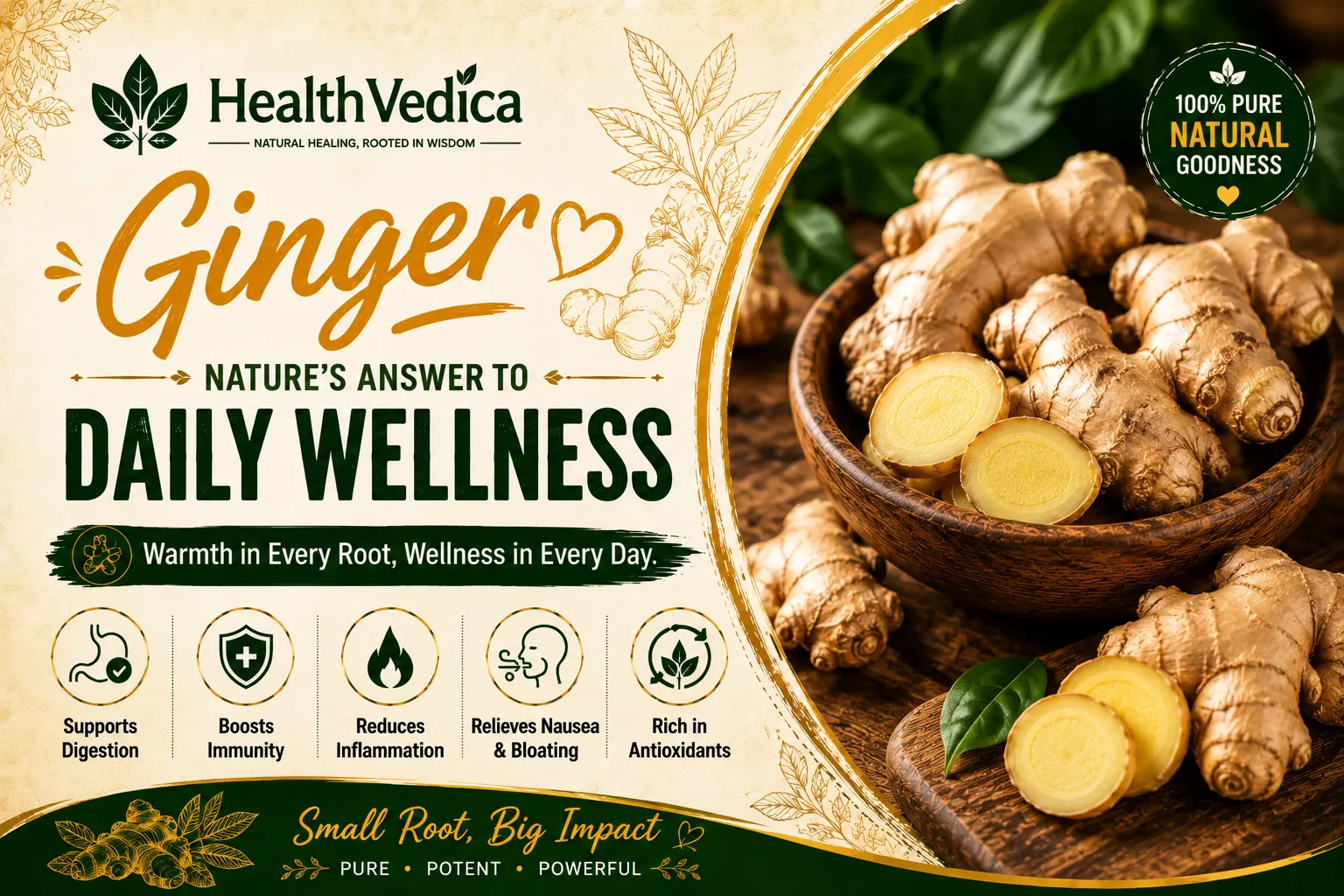
Ginger, known as Adrak (fresh) and Sonth (dried) in India, is one of the world's most beloved and medicinally proven spices. The underground rhizome of Zingiber officinale, ginger has been used in Indian cooking and Ayurveda for over 5,000 years. It is described in the ancient Ayurvedic text Charaka Samhita as Mahoushadha — the Great Medicine — a distinction given to very few herbs. Today, ginger is globally the most consumed spice for medicinal purposes, backed by hundreds of clinical trials. India produces nearly 40% of the world's ginger, with Kerala, Karnataka, and Assam being primary producers. From stopping nausea to fighting cancer, ginger's healing range is extraordinary.
⚖️ Fresh vs. Dried Ginger (Adrak vs. Sonth)
| Property | Fresh Ginger (Adrak) | Dried Ginger (Sonth) |
|---|---|---|
| Primary Compounds | Gingerols (most potent) | Shogaols (formed during drying, more anti-cancer) |
| Flavor | Bright, citrusy, fresh, mildly pungent | Warmer, spicier, more pungent |
| Best For | Nausea, fresh tea, digestion, cooking | Heating body, joint pain, chronic conditions |
| Ayurvedic Nature | Less heating | More heating (Ushna) |
| Shelf Life | 2–3 weeks refrigerated | Years when stored properly |
📊 Nutritional Value Per 100g (Fresh Ginger)
| Nutrient | Amount | % Daily Value |
|---|---|---|
| Calories | 80 kcal | 4% |
| Carbohydrates | 17.8 g | 6% |
| Dietary Fiber | 2.0 g | 8% |
| Protein | 1.8 g | 4% |
| Fat | 0.8 g | 1% |
| Calcium | 16 mg | 2% |
| Iron | 0.6 mg | 3% |
| Magnesium | 43 mg | 11% |
| Phosphorus | 34 mg | 3% |
| Potassium | 415 mg | 12% |
| Zinc | 0.34 mg | 2% |
| Vitamin C | 5 mg | 8% |
| Vitamin B6 | 0.16 mg | 8% |
| Folate | 11 mcg | 3% |
| Niacin (B3) | 0.75 mg | 4% |
| Manganese | 0.23 mg | 11% |
⚗️ Key Bioactive Compounds
Gingerols are the primary bioactive compounds in fresh ginger, responsible for its characteristic pungency. [6]-Gingerol is the most studied, with proven anti-nausea, anti-inflammatory, antioxidant, and anti-cancer properties. When ginger is dried or heated, gingerols transform into Shogaols (particularly [6]-shogaol) which are approximately twice as potent in anti-inflammatory and anti-cancer activity. Zingerone forms during cooking and has antioxidant and anti-diarrheal properties with a milder, sweeter flavor. Paradols contribute additional anti-cancer effects. Zingiberene is the primary terpene giving ginger its distinctive aroma and contributing to its digestive and antimicrobial effects. Galanolactone has specific anti-serotonin (anti-nausea) action at 5-HT3 receptors.
🕉️ Ayurvedic Properties & Dosha Effect
Ginger holds a legendary position in Ayurveda — fresh ginger (Ardraka) and dried ginger (Shunti/Sonth) are actually considered separate medicines with distinct properties. Ardraka (fresh) is pungent, slightly sweet, and moderately warming — excellent for immediate digestive and respiratory complaints. Shunti (dried) is more pungent, significantly more heating, and penetrates deeper — used for chronic conditions, arthritis, and deeper body warming. Both balance Vata and Kapha doshas powerfully. Dried ginger is one of the three components of the essential Ayurvedic formula Trikatu (with black pepper and long pepper). Ginger is described as Sarva Roga Niwarinim — the remedy for all diseases — in ancient texts.
💚 Health & Healing Benefits
Anti-Nausea (Ginger's Most Proven Benefit): Ginger is the most clinically validated natural anti-nausea remedy. Clinical trials confirm its effectiveness for morning sickness in pregnancy (safe and effective), chemotherapy-induced nausea (reduces severity by up to 40%), postoperative nausea, motion sickness, and general nausea from various causes. [6]-gingerol and galanolactone block serotonin (5-HT3) receptors in the gut — the same receptors targeted by pharmaceutical anti-nausea drugs.
Anti-Inflammatory (Comparable to NSAIDs): Ginger's gingerols and shogaols simultaneously inhibit both COX and LOX inflammatory pathways — a broader anti-inflammatory action than most NSAIDs which only target COX. This makes ginger particularly effective for inflammatory conditions including osteoarthritis and rheumatoid arthritis. Clinical trials show ginger extract significantly reduces knee pain and stiffness in arthritis patients.
Digestive Health: Ginger accelerates gastric emptying (food moves faster through the stomach), reduces digestive discomfort including bloating and flatulence, and stimulates digestive enzyme production. It is the go-to Ayurvedic remedy for indigestion (dyspepsia) and is often taken before meals as a digestive stimulant.
Blood Sugar Control: Multiple studies show ginger improves insulin sensitivity, reduces fasting blood glucose, and lowers HbA1c. A meta-analysis of clinical trials confirmed ginger supplementation significantly improves blood sugar control in Type 2 diabetics.
Anti-Cancer Research: [6]-shogaol (from dried ginger) has shown remarkable anti-cancer activity in laboratory studies — inducing apoptosis, inhibiting cancer cell migration, and suppressing tumor angiogenesis in breast, colon, ovarian, and skin cancer models. Ginger is being actively studied in cancer prevention research.
Brain Health: Ginger's antioxidants protect the brain from oxidative stress and inflammation associated with Alzheimer's disease and age-related cognitive decline. Animal studies show improved memory and learning with ginger supplementation.
Menstrual Pain Relief: Clinical trials comparing ginger (250mg, 4 times daily) to ibuprofen for menstrual pain show equivalent effectiveness. Ginger is now medically recognized as an effective, natural alternative for dysmenorrhea (painful periods).
Cholesterol & Heart Health: Ginger reduces LDL cholesterol and triglycerides while preventing LDL oxidation (a key step in atherosclerosis). It also has mild blood-pressure-lowering effects and prevents platelet aggregation (dangerous clotting).
Immune Enhancement & Antimicrobial: Ginger activates immune cells, has proven activity against respiratory viruses, inhibits bacterial growth in respiratory infections, and is a core component of virtually every Ayurvedic immunity-boosting preparation.
🍵 Ginger Tea — India's All-Purpose Healing Drink
Adrak chai (ginger tea) is arguably India's most beloved medicinal beverage. Basic Recipe: Slice or grate 1 inch of fresh ginger, add to 2 cups cold water, bring to a boil and simmer 10 minutes. Strain and add honey and lemon to taste. Drink 1–3 cups daily. Variations: Add tulsi for enhanced immunity; add turmeric for anti-inflammatory benefits; add mint for digestive and cooling effects; add cinnamon for blood sugar benefits; add black pepper for maximum bioavailability of all compounds.
🏠 Ayurvedic & Home Remedies Using Ginger
| Remedy | Preparation | Benefit |
|---|---|---|
| Adrak Lemon Honey Tea | Grate 1 inch ginger, boil in 2 cups water 10 min, strain, add 1 tsp honey + half lemon | Cold, cough, immunity, weight loss, detox |
| Adrak Juice for Nausea | Extract 1 tsp fresh ginger juice, mix with honey, take slowly | Nausea, vomiting, morning sickness, travel sickness |
| Sonth Milk (Dried Ginger Milk) | Boil 1/4 tsp sonth powder in 1 cup milk with jaggery | Joint pain, arthritis, Vata disorders, cold prevention |
| Adrak Ghee (Ginger Clarified Butter) | Add freshly grated ginger to warm ghee, cook 2 min, use in meals | Digestive stimulation, Vata balance, absorption |
| Ginger Turmeric Shot | Blend 1 inch ginger + 1/2 inch turmeric + black pepper + lemon into 60ml shot | Anti-inflammatory, immunity, detox, metabolism |
| Sonth Ajwain Jeera Churna | Equal parts dried ginger + ajwain + jeera powder, 1/4 tsp with warm water before meals | Chronic indigestion, Agni stimulation, bloating |
| Ginger Poultice for Joints | Grate fresh ginger, wrap in cloth, apply warm on painful joints for 20 min | Arthritis pain, joint inflammation, muscle soreness |
| Ginger Honey for Sore Throat | Grate ginger, extract juice, mix 1 tsp with 1 tsp honey, take every 4 hours | Sore throat, throat infections, cough |
🍛 Indian Culinary Uses
Ginger is fundamental to Indian cooking — used in some form in almost every dish. Fresh ginger is grated, sliced, or made into paste (combined with garlic) as the base of countless curries, gravies, and marinades. The ginger-garlic paste is perhaps the most universally used cooking base in Indian cuisine. Adrak chai (ginger tea) is India's most beloved everyday beverage. Ginger is used in chutneys, pickles, and ginger candy (adrak ki goli). It features in biryanis, kormas, sambhar, and virtually all North and South Indian dishes. Dried ginger (sonth) is used in Rajasthani and Kashmiri winter preparations, garam masalas, and festive sweets like Rajasthani dry ginger halwa (sonth ka halwa).
💡 Tips for Best Use
How to peel ginger easily: Use the edge of a spoon rather than a knife to scrape off ginger skin — it removes the thin skin efficiently without wasting the flesh underneath the skin where many nutrients concentrate. Grating vs. slicing: Grating releases more juices and bioactive compounds; slicing is preferred when you want subtler ginger flavor without intensely releasing its oils. Freeze for convenience: Fresh ginger can be frozen whole (unpeeled) for up to 6 months — grate directly from frozen when needed. Storage: Fresh ginger keeps for 2–3 weeks refrigerated, loosely wrapped. Dried ginger powder maintains potency for 6–12 months in airtight containers away from moisture. Daily dose: 1–4g of fresh ginger (about 1 teaspoon grated) or 0.5–1g dried ginger daily is considered safe and effective for most adults.
⚠️ Precautions & Side Effects
Ginger is one of the safest medicinal spices with an excellent safety profile. It is classified as GRAS (Generally Recognized As Safe) by the FDA. Large amounts (above 5g daily) may cause heartburn, gas, or mouth irritation in sensitive individuals. Ginger has mild blood-thinning effects — people on anticoagulants (warfarin, aspirin, heparin) should consult a doctor before high-dose supplementation, especially before surgery. Pregnant women can safely consume culinary amounts and standard doses for nausea (up to 1g/day) — this use is clinically supported. Ginger may enhance the effects of diabetes medications, causing low blood sugar — monitor accordingly. Some individuals may experience allergy, particularly with topical ginger application (contact dermatitis).