🌿 Introduction
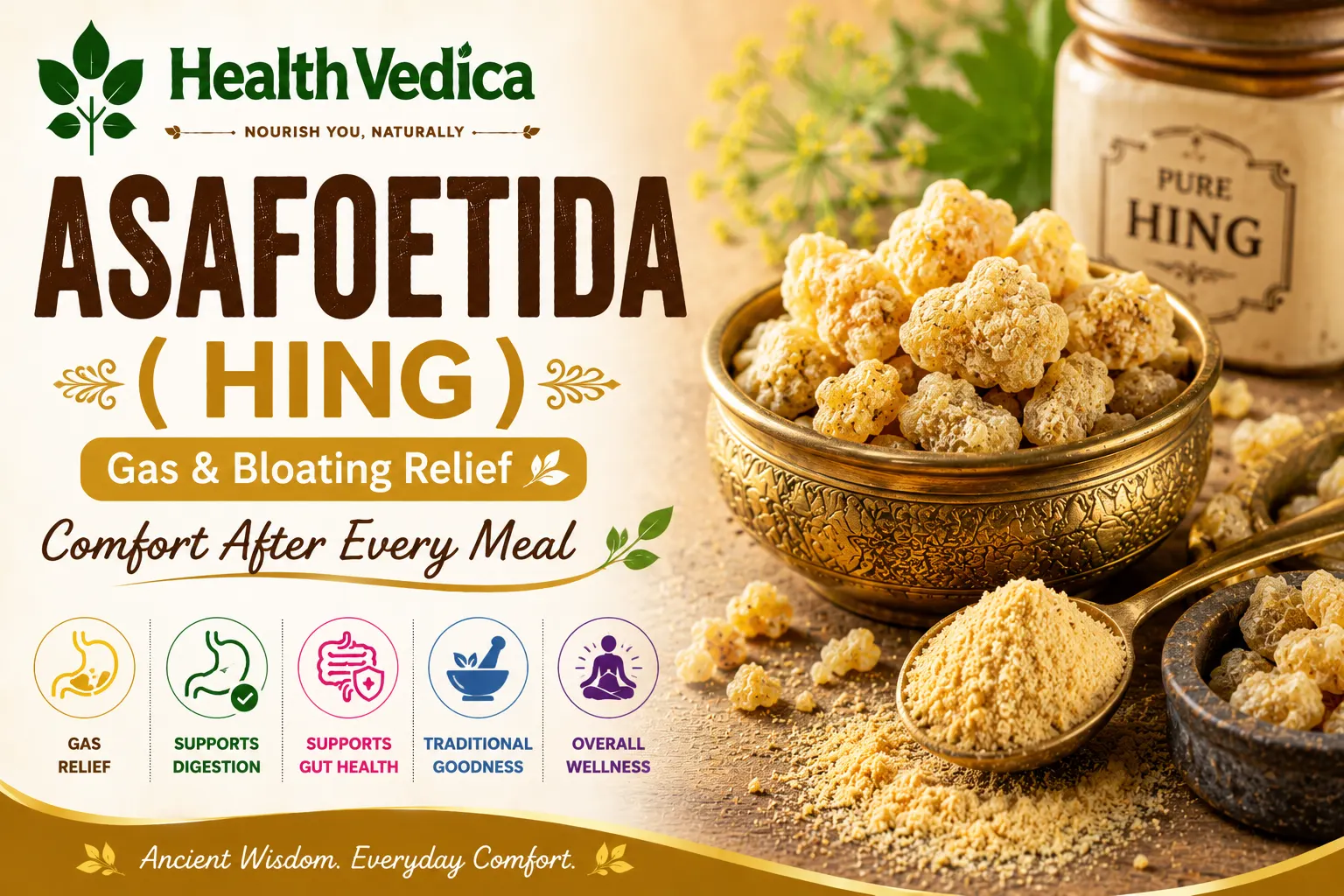
Asafoetida, popularly known as Hing in India, is a dried resin obtained from the roots of Ferula asafoetida, a perennial herb belonging to the carrot family (Apiaceae). Despite its strong aroma in its raw form, hing develops a pleasant savoury flavour when cooked, making it an indispensable ingredient in Indian dals, curries, pickles and spice blends. Ayurveda has valued hing for over 2,000 years as one of the finest digestive spices. Rich in sulfur-containing compounds, volatile oils, ferulic acid and natural antioxidants, asafoetida is traditionally used to relieve gas, bloating, indigestion and abdominal discomfort while supporting respiratory and digestive health.
📊 Nutritional Value Per 100g of Asafoetida
| Nutrient | Amount | % Daily Value (DV) |
|---|---|---|
| Calories | 297 kcal | 15% |
| Protein | 4 g | 8% |
| Total Fat | 1.1 g | 1% |
| Carbohydrates | 67.8 g | 25% |
| Dietary Fiber | 4.1 g | 15% |
| Calcium | 690 mg | 69% |
| Iron | 39 mg | 217% |
| Phosphorus | 50 mg | 7% |
| Potassium | 450 mg | 10% |
| Niacin (Vitamin B3) | 3 mg | 19% |
| Riboflavin (Vitamin B2) | 0.2 mg | 15% |
📉 Glycemic Index
Asafoetida has a very low glycemic index because it is used only in tiny culinary quantities. It has negligible impact on blood sugar levels when added to food.
🧬 Bioactive Compounds
Hing contains several biologically active compounds including ferulic acid, sulfur-containing volatile oils, umbelliferone, sesquiterpene coumarins, pinene and various flavonoids. These phytochemicals contribute to its digestive, antioxidant, antimicrobial and anti-inflammatory properties.
💊 Vitamins & Minerals Explained
Although asafoetida contains minerals such as calcium and iron, it is consumed in extremely small amounts. Therefore, its health benefits are attributed primarily to its bioactive compounds rather than its vitamin or mineral content.
🕉️ Ayurvedic Properties & Dosha Effect
According to Ayurveda, Hing has a pungent (Katu) taste with a heating potency (Ushna Veerya) and pungent post-digestive effect (Katu Vipaka). It is highly effective in balancing Vata Dosha by relieving gas, abdominal pain and bloating. It also helps reduce excess Kapha by clearing congestion. Due to its heating nature, individuals with aggravated Pitta should consume it in moderation. Hing is regarded as one of Ayurveda's best spices for improving digestion (Deepana), enhancing metabolism (Pachana) and relieving intestinal discomfort.
💚 Evidence-Based Health Benefits
Excellent Digestive Aid: Hing stimulates digestive enzyme secretion, reduces intestinal gas, relieves bloating and supports smoother digestion. It is commonly added to lentils and beans to improve digestibility.
Reduces Flatulence: Traditional Indian cooking uses hing specifically to minimise gas formation from legumes such as chickpeas, kidney beans and lentils.
Antioxidant Protection: Ferulic acid and other plant compounds help neutralise harmful free radicals and protect cells from oxidative stress.
Supports Respiratory Health: Ayurveda traditionally recommends hing to help loosen mucus and support relief from mild coughs and congestion.
Natural Antimicrobial Activity: Laboratory studies suggest that compounds in asafoetida exhibit antibacterial and antifungal activity against several microorganisms.
Supports Heart Health: Preliminary studies indicate that hing's antioxidants may contribute to healthy circulation and cardiovascular function, although further human research is needed.
Relieves Menstrual Discomfort: Traditional medicine has long used hing to support comfort during menstrual cramps, although scientific evidence is still limited.
👨👩👧 Who Should Use Asafoetida?
Hing is particularly beneficial for people who frequently experience bloating, indigestion, excessive gas, slow digestion or discomfort after eating legumes. It is also widely used in vegetarian diets because it enhances flavour while improving digestibility.
🚫 Who Should Limit or Avoid Asafoetida?
Pregnant women should avoid medicinal doses unless advised by a qualified healthcare professional. Individuals taking blood-thinning medication or those with bleeding disorders should consult their healthcare provider before consuming large quantities. Babies and young infants should not be given concentrated hing preparations.
🌿 Ayurvedic Remedies & Traditional Uses
Digestive Water: Dissolve a tiny pinch of hing in warm water after heavy meals to help relieve bloating and gas.
Tempering for Lentils: Fry a small pinch of hing in ghee along with cumin seeds before adding it to dal to improve digestion and flavour.
Traditional Abdominal Massage: In some traditional practices, a paste of hing mixed with warm water is applied externally around the navel to help relieve infant colic. This practice should only be performed under appropriate guidance and should never involve ingestion by infants.
🥗 Best Ways to Use Asafoetida
Always cook hing briefly in hot oil or ghee before adding other ingredients. This reduces its pungent aroma while releasing its characteristic flavour. It pairs especially well with lentils, beans, vegetables, curries, sambhar, rasam and pickles.
🍽️ Best Food Combinations
Asafoetida works particularly well with cumin, mustard seeds, turmeric, curry leaves, ginger, coriander, fenugreek, lentils, chickpeas, kidney beans and vegetable curries to improve flavour and digestion.
🔥 Raw vs Cooked Hing
Raw hing has an extremely strong sulphurous aroma. Cooking it briefly in oil or ghee mellows its flavour and helps release its aromatic compounds, making it far more pleasant and effective in cooking.
🧊 Storage Tips
Store hing in an airtight container away from moisture and direct sunlight. Because of its powerful aroma, keep it sealed tightly and preferably stored separately from other spices to prevent flavour transfer.
📅 Daily Recommended Intake
50–250 mg (a small pinch) is generally sufficient for culinary purposes. Only very small amounts are required to flavour food and support digestion.
⚠️ Precautions & Drug Interactions
Asafoetida is generally safe when used in cooking. However, excessive intake may cause stomach irritation, headache or nausea in sensitive individuals. It may interact with blood-thinning medicines and medications that affect blood pressure. Choose high-quality asafoetida, as many commercial products are blended with wheat flour, rice flour or gum arabic. Individuals with coeliac disease or gluten sensitivity should ensure they purchase certified gluten-free hing.
🔬 Scientific Highlights
Research supports the traditional use of asafoetida for digestive health, antimicrobial activity and antioxidant protection. Experimental studies have also investigated its anti-inflammatory, antispasmodic and respiratory-supporting properties. While laboratory findings are encouraging, additional high-quality human clinical trials are needed to confirm many of these potential benefits.
🌍 Fun Facts
- Asafoetida is often called the 'Devil's Dung' because of its strong raw aroma, which transforms into a pleasant onion-garlic flavour during cooking.
- It is commonly used in Jain cuisine because it provides a savoury taste without using onion or garlic.
- The resin is collected by making careful incisions in the roots of mature Ferula plants.
- Just a tiny pinch of hing is enough to flavour an entire pot of dal or curry.